Mechanistic interpretability
32
MENTIONS
11
EPISODES
10
PODCASTS
Search complete. 32 mentions across 11 episodes found for "Mechanistic interpretability".
Oct 26, 2026

Andrew LeeGUEST
I'm a postdoctoral fellow at Harvard.
Andrew LeeGUEST
I'm working on mechanistic interpretability research.
Ian MartinHOST
Mechanic indescribability.
Ian MartinHOST
Machiavellian interpolation.
Sadie WitkowskiHOST
Mechanistic interpretability.
Sadie WitkowskiHOST
It's totally a mouthful.
Sadie WitkowskiHOST
Lots of people just shorten it to mechinterp.
Ian MartinHOST
You're telling me.

Naomi Cardona-CasillanosHOST
I'll direct this to you, Hariam.
Naomi Cardona-CasillanosHOST
What are sparse autoencoders and what is mechanistic interpretability?
Hariom TatsatGUEST
Yeah, so first let's start with mechanistic interpretability.
Hariom TatsatGUEST
I mean, it's a loaded term, and it's very difficult for us to pronounce.
Hariom TatsatGUEST
So I call it McInterf.
12 MINS LATER
Hariom TatsatGUEST
So there are three different variants which can be applied to many, many use cases in finance and beyond.
Ariye ShaterGUEST
And I would add that I think our main contribution is awareness about the toolkit that's available for practitioners to do this.
Ariye ShaterGUEST
I think the McIntyre mechanistic interpretability is still somewhat niche, even in technology industry.

Type III AudioNARRATOR
Thoughts on the Persona Selection Model, Sam Marks, September 2026.
Type III AudioNARRATOR
Open Problems in Mechanistic Interpretability, Sharkey et al., TMLR 2025.
Type III AudioNARRATOR
Canonical Methods List.
Type III AudioNARRATOR
Character Garden Reading List, which ends with a short list of gaps that are still folklore, such as how to prompt a base model into a character.

Stephen BaccusGUEST
This is a way, because of the mechanistically interpretable nature of these models, that you can go right from fitting a natural scene, testing phenomena that occur in silico, and then generating a hypothesis that you can go back and test.
Stephen BaccusGUEST
So in the remaining few minutes, I'm going to talk about very recent developments for approaches of mechanistic interpretability.
Stephen BaccusGUEST
To ask even more sophisticated questions, you might think, OK, well, you know what every neuron does.
Stephen BaccusGUEST
That gives an answer.
19 MINS LATER
Stephen BaccusGUEST
And there's a multiple of questions.
Stephen BaccusGUEST
So some of the questions that came up, how do you give a sufficient stimulus to recover the properties of a model? If one's thinking about course projects, think of something that's somewhat tractable, and that is maybe a tractable thing that one can do.
Stephen BaccusGUEST
There's various types of mechanistic interpretability approaches that I mentioned.
Stephen BaccusGUEST
Yeah, I think there's a

Type 3 AudioNARRATOR
Thoughts on the Persona Selection Model, Sam Marks, September 2026.
Type 3 AudioNARRATOR
Open Problems in Mechanistic Interpretability, Sharkey et al., TMLR 2025.
Type 3 AudioNARRATOR
Canonical Methods List.
Type 3 AudioNARRATOR
Character Garden Reading List, which ends with a short list of gaps that are still folklore, such as how to prompt a base model into a character.

Zvi MowshowitzHOST
17.
Zvi MowshowitzHOST
The default outcome of mech interp is Goodhart's law.
Zvi MowshowitzHOST
18.
Zvi MowshowitzHOST
Interpretability is dual use.
Sydney KatzGUEST
And so I'm really excited about where this field is going.
Sydney KatzGUEST
The way that, that we can answer these questions is using a new idea called mechanistic interpretability.
Sydney KatzGUEST
Uh, this has really become popular in relation to large language models.
Sydney KatzGUEST
Um, but it's kind of ex- percolating into lots of other parts of AI as well because what it allows you to do is kind of understand the different processing that's going on inside of these large transformer models.
Sydney KatzGUEST
So I'm really excited about where this is going.
Sydney KatzGUEST
I think it has a lot of potential to help us build safety cases for these systems.
Sydney KatzGUEST
So if you're interested, those are kind of the, the keywords to look up, which would be mechanistic interpretability.
Sydney KatzGUEST
All right, so that's three of the four categories.

Katie MaloneHOST
And we've been kind of circling around it for a while now, talking about all these different things that we try, but none of them quite work.
Katie MaloneHOST
And that's why I'm excited about today's episode, where we're going to talk about one more method that's fundamentally different called mechanistic interpretability, getting inside the model's brain, so to speak, to try to use that to understand why it's doing what it's doing.
Katie MaloneHOST
You're listening to Linear Digressions.
Katie MaloneHOST
I'm going to start with a quick recap of a few things that we've covered in recent episodes.
Katie MaloneHOST
Once the model is out there, how do we know that it's actually adhering to those principles that we've tried to teach it during alignment? All of these are working on the model from the outside.
Katie MaloneHOST
It's looking at the outputs of the model and from that trying to understand how the model might be doing what it's doing.
Katie MaloneHOST
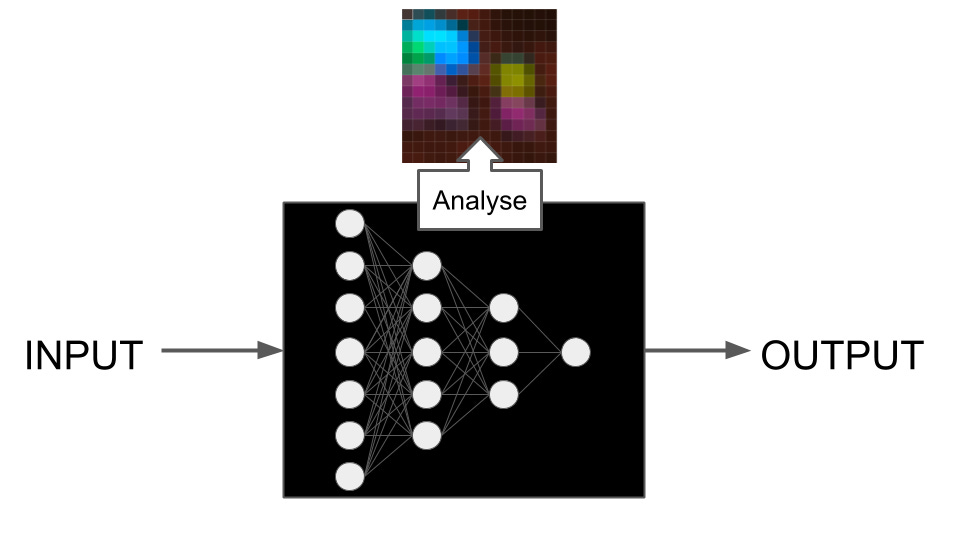
Mechanistic interpretability tries to go inside the algorithm.
Katie MaloneHOST
So think about it a little bit similar to a human.

Aengus LynchGUEST
Being pragmatic here.
Scott PhoenixHOST
Okay, so, so was it always in your mind that this is, like, a temporary fix when you think of for as long as possible? I mean, with, with true mechanistic interpretability, right, you can, you can shape the mind, right? You can, you can intervene and design a mind that has the properties that you want and doesn't know how to build a bioweapon and, or would never do that because of the structure of, of the thing that you've engineered, right?
Aengus LynchGUEST
I think what was always in my mind was the realization that ultimately the models are making better decisions than you.
Aengus LynchGUEST
There's a future out there where there are machine gods which are hard to even imagine how they come, come to decisions, but are benefiting the people they're giving the advice to.
1 more episode mentions Mechanistic interpretability.
Create an account to see the whole feed, search across every transcript, and follow the entities you care about.