McGirt v. Oklahoma
Court caseWikipedia
14
MENTIONS
10
EPISODES
9
PODCASTS
Search complete. 14 mentions across 10 episodes found for "McGirt v. Oklahoma".
Oct 21, 2026

Trey DavisCORRESPONDENT
The Pawnee Tribe had challenged EPA's May 2025 approval for the state to extend more than two dozen environmental programs across Oklahoma.
Trey DavisCORRESPONDENT
Governor Stitt says the ruling clarifies that the McGirt criminal ruling does not erase Oklahoma's civil, tax, or environmental authority.
Ann RobertsCORRESPONDENT
A rematch of the Western Conference Finals last night in San Antonio between Oklahoma City and the Spurs for the season opener.
Ann RobertsCORRESPONDENT
The Thunder won with a final score of 116-104.

speaker_0HOST
How the case got here.
speaker_0HOST
Section 1211 of the Safe, Accountable, Flexible, Efficient Transportation Equity Act, SAFE, lets Oklahoma ask EPA to administer programs in Indian country.
speaker_0HOST
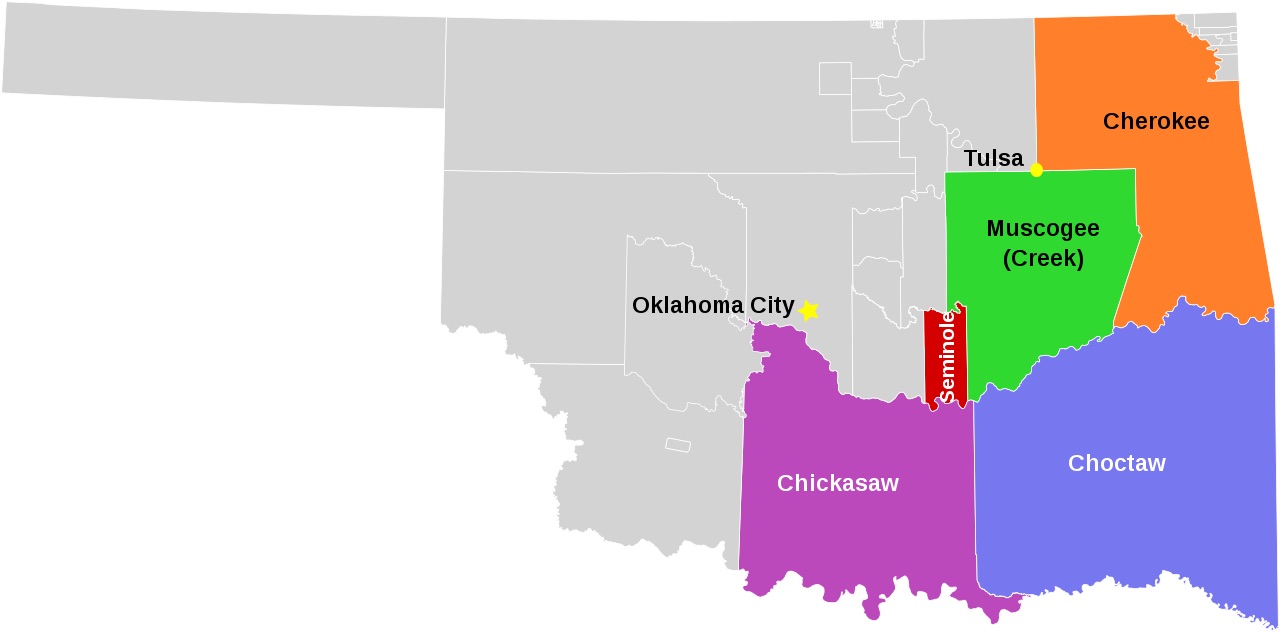
The state applied in July 2020, weeks after McGirtville, Oklahoma recognized much of eastern Oklahoma as reservation land and EPA approved on October 1st, 2020.
speaker_0HOST
After proposing to reconsider in 2021, EPA approved the request again on January 13, 2025, this time with a condition requiring Oklahoma to consult affected tribes.
speaker_0HOST
Earthjustice, the advocacy group representing the Pawnee Nation, had pushed for an outright denial and called the condition a compromise.

Justin BarrettGUEST
Yeah.
Justin BarrettGUEST
Danielle, I don't know if you wanna talk about any specific court cases, but you know, I think there's a lot of, you know, a lot of times there's a Supreme Court case that comes out in tribes' favor, and then there's rollbacks to that, right? Like, just key example is McGirt, right, was very pro-tribe, and then you had the rollback with Cashwere case, um, diminishing that sovereignty.
Justin BarrettGUEST
And then there's the Elephant case as well.
Justin BarrettGUEST
And then just recently, there's a Stroble case for taxes, right? You know, we've had established precedent that if you live on the reservation and work on the reservation, you're not subject to state income taxes.
Danielle FinnGUEST
They know what's happening, and likewise, um, their perception will change along with the public's.
Danielle FinnGUEST
And so it's, um, favorable for the tribes to keep exercising their sovereignty, um, to keep amplifying their voices, to find community and allies that amplify it with them because, um, that is how we stay in good grounds with the Supreme Court as well.
Danielle FinnGUEST
But that is to say, sometimes they do things that are ch- you know, tricky and kind of changey and, um, like Justin, you were, you were am- you were talking about McGirt and then Castro-Huerta.
Danielle FinnGUEST
Yes, they, they will do this, and, um, they've done this before.

Peter D'ErricoGUEST
we're thinking, well, wait a minute, 1823, let's see in 1490, I mean, how far back these leaps in time they're taking.
Peter D'ErricoGUEST
And so now you go from that to you said 2005, then you get into just a couple of years ago, the McGirt v. Oklahoma case.
Peter D'ErricoGUEST
And here's where the confusion comes in again, Sam, is that These cases are not only sort of, the doctrine is not only sort of invisible, but it is sometimes celebrated because the McGirt case was held, the media all over the place, great win for the Creek Nation, the Choctaw Nation, great win.
Sam SederHOST
Just to remind people of what was the issue at that case.

Michelle ShenandoahPANELIST
Remember being a child tucked away in my grandmother's cabin while gunfire was going off and my mom's on the roof with her shotgun Holding it down while the police are trying to fight us over jurisdiction and we said no Because we're sovereign people.
Michelle ShenandoahPANELIST
We're a sovereign nation and we're going to continue to exist as such so now Years forward, our lands have expanded because we've either bought them back or the McGirt case, which changed the landscape in this country.
Michelle ShenandoahPANELIST
We're able to gain back a decent part of our land, but not as much as we had lost.
Michelle ShenandoahPANELIST
And so Louise Mama Bear asked me today to share the story of my great grandmother and recently being in the archives in New York City and looking at the letters that she wrote to the president because that's what she did.

Liz DyeHOST
She's a journalist, a citizen of the Cherokee Nation, and host of the podcast This Land.
Liz DyeHOST
Her show followed the litigation that became the Supreme Court's 2020 decision in McGirt v. Oklahoma, and the book is a long-form version of that story, and it's, it's a terrific book.
Andrew TorrezHOST
Mm-hmm.
Liz DyeHOST
Uh, it follows one criminal case and the Muscogee Nation's much longer fight, and it manages to be about procedure and history and jurisprudence and, most of all, real people.
32 MINS LATER
speaker_5ADVERTISER
Save up to 30% with promo code NEWS at lifelock.com.
speaker_5ADVERTISER
Terms apply.
Andrew TorrezHOST
[upbeat music] On July 9th, 2020, the last day of the Supreme Court's 2020 term, Justice Gorsuch wrote the majority opinion in McGirt v. Oklahoma.
Andrew TorrezHOST
It is, uh, as we said at the outset of the show, a 5-4 decision with Justices Ginsburg, Breyer, Sotomayor, and Kagan joining in the majority and the other four conservatives in dissent.
Andrew TorrezHOST
She's a citizen of the Cherokee Nation.
Andrew TorrezHOST
She's the host of the podcast This Land, and that podcast tracked the litigation that became the Supreme Court's 2020 decision in McGirt versus Oklahoma, and we're gonna do a, a deep dive into that story, kind of cover the litigation, the legal aspects, uh, for, of this really, really fascinating story, and I'm excited to bring that to our listeners.
Liz DyeHOST
I absolutely am.
Liz DyeHOST
So, um, I, that show's gonna run sometime, uh, in the next two weeks, and so, uh, if you wanna read in advance and, and keep your eye out for it.

Ryan WeltonHOST
And so it feels like at the federal level, it's pretty good.
Ryan WeltonHOST
But there's that McGirt decision.
Ryan WeltonHOST
So it's complicated, isn't it?
N'Kiyla Jasmine ThomasGUEST
It is.

Joey CliftGUEST
He is friends with people and he has been to these communities kind of way.
Joey CliftGUEST
I mean, he was like one of the one of the most consequential decisions in the Supreme Court in the past couple of years was the it was the McGirt decision.
Joey CliftGUEST
I think it was like McGirt versus the state of Oklahoma or something like that.
Joey CliftGUEST
And that was in, I want to say, like 2020, 2021. that is basically what made it so that half of the state of Oklahoma is reservation land like literally like it gave half didn't give but like it like underlined that half of the state of Oklahoma is like legally reservation land by you know the various tribes in Oklahoma and Neil Gorsuch wrote the majority opinion in that and I think that he was like a really big vote in that and he like in his opinion said something to the effect of at the end of the Trail of Tears was a promise which is like in fucking poetry you know like and uh like so he does stuff like that where it's like whenever there's a ruling about indian law that native people are nervous about like there was a recent ruling about ikwa the indian child welfare act um i want to say in the past two years and like you know various folks in the country myself included were really worried about that being rescinded because that's the thing that um that's the ikwa was the thing that made it so that indian boarding schools went away which i talk about a ton in my book yeah, and Like it basically was like potentially gonna get struck down and like I think it was like a fairly close ish decision as to whether it should be struck down or not and like yeah one of the big voices who was like we got to keep this in the books was Neil Gorsuch and he Really once again stood up like wrote a really amazing majority opinion about the importance of you know honoring tribal sovereignty and protecting Native people and Native rights and you know like it really boils down to like if you've been around native people you probably are going to be supportive of native people i mean the same deal with president nixon it's like the reason that he was so supportive of native people in the 70s signing dozens of bills into law that gave you know native people you know increased rights and things like that is that just when he was in college his coach was native his football coach was native you know so he just like was around a native person who he respected and it just put native issues on his like radar in a way that they probably wouldn't be if he didn't just have a native person in his life, you know? Yeah.
Sam BeckerHOST
Yeah.

Joey CliftGUEST
But one aspect that he has always showed up and always done such a great job at is any, any, um, legal rulings surrounding Indian country, the Supreme court and stuff like that.
Joey CliftGUEST
I mean, um, And he's like he was a very big voice in pushing for the McGirt decision, which was, I believe, a case that was in the I want to say 2020 or 2021.
Joey CliftGUEST
It was like the state of Oklahoma versus McGirt.
Joey CliftGUEST
And that decision is what made it so that half of Oklahoma right now is reservation land.
Joey CliftGUEST
Um, like literally I think half or if not over half of the state is legally reservation land that, um, belongs to the tribes in Oklahoma, which is nuts.