May Fourth Movement
14
MENTIONS
11
EPISODES
9
PODCASTS
Search complete. 14 mentions across 11 episodes found for "May Fourth Movement".
Oct 16, 2026

Joseph TorigianGUEST
The Great Leap Forward, the famine, the violence of the Cultural Revolution.
Joseph TorigianGUEST
And they look back at the period that we've been discussing, right? Before the Chinese Communist Party defeated the Nationalists, and they reflected that at the time there was a debate about how do we save China? And that's what people really deeply cared about because they came from what is legitimately an ancient civilization, and they saw how far it had fallen, and this-- th-they debated, right? And so we-- if we think about, for example, the May Fourth Movement, right? And that's not familiar, I'm sure, to many of your listeners, but it was in the, the, the, the 1910s, right? And many people said that it was science and democracy, enlightenment essentially, that was the way out.
Joseph TorigianGUEST
That all of these feudal traditions had clouded, um, the minds of Chinese people and that it was, uh, moving in a direction that was more similar towards, uh, the West, but in a, um, a more liberal sense, a constitutionalist sense.
Joseph TorigianGUEST
Um, and then, uh, by the 1980s, after having experienced, uh, the implications of a different answer, which was what class struggle, violence, transformation, order, discipline.

speaker_0NARRATOR
It overthrew the monarchy and built the Republic of China.
speaker_0NARRATOR
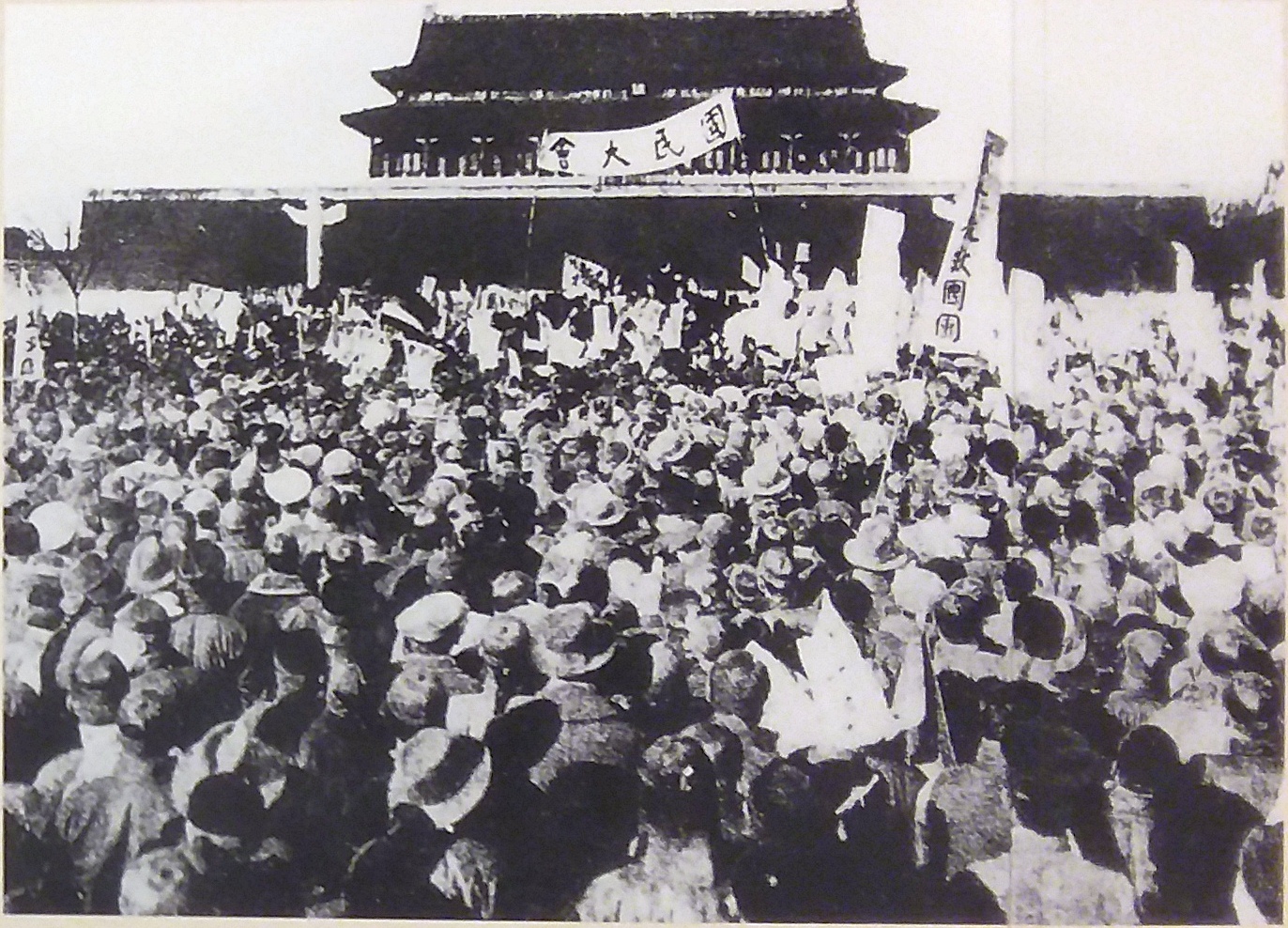
In 1918, at the end of the First World War, though China emerged victorious, its benefits were not considered at the Paris Peace Conference by stronger powers at that time, which led to the May Fourth Movement.
speaker_0NARRATOR
Many Chinese believed that the first three episodes of response had failed.
speaker_0NARRATOR
In extreme disappointment and anger, some people chose to follow the path of violent revolution, as had just occurred in Russia.

speaker_0NARRATOR
It overthrew the monarchy and built the Republic of China.
speaker_0NARRATOR
In 1918, at the end of the First World War, though China emerged victorious, its benefits were not considered at the Paris Peace Conference by stronger powers at that time, which led to the May Fourth Movement.
speaker_0NARRATOR
Many Chinese believed that the first three episodes of response had failed.
speaker_0NARRATOR
In extreme disappointment and anger, some people chose to follow the path of violent revolution, as had just occurred in Russia.

Katherine L. AlexanderGUEST
And it goes into the early Republican era, which means my new project does take me into the 20th century, because we have a, a revitalization of new collections of this Qing Dynasty collection of ghost stories and, um, in the 1920s and the 1930s.
Katherine L. AlexanderGUEST
And it's a conservative response to sort of the, uh, May Fourth Movement and to kind of the beginnings of the Nationalist Movement, and this is saying, "Let's go back to Qing values.
Katherine L. AlexanderGUEST
This is the core of society.
Katherine L. AlexanderGUEST
We will use this 10-installment collection of ghost stories in the 1920s and '30s to really teach people what true Chinese culture was about." And so if I'm not writing a biography of a literati, can I write a biography of a book? That's kinda where I'm going with this project and thinking about why we share stories.

Katherine L. AlexanderGUEST
And so it's also kind of going through this process of reimagination, um, and buying into kind of a social network and buying into, like, what's the use and function and fun of these stories.
Katherine L. AlexanderGUEST
And it goes into the early Republican era, which means my new project does take me into the twentieth century because we have a, a revitalization of new collections of this Qing Dynasty collection of ghost stories and, um, in the 1920s and the 1930s, and it's a conservative response to sort of the, uh, May Fourth Movement and to kind of the beginnings of the nationalist movement, and this is saying, "Let's go back to Qing values.
Katherine L. AlexanderGUEST
This is the core of society.
Katherine L. AlexanderGUEST
We will use this ten-installment collection of ghost stories in the 1920s and '30s to really teach people what true Chinese culture was about." And so if I'm not writing a biography of a literati, can I write a biography of a book? That's kind of where I'm going with this project and thinking about why we share stories.

Katherine L. AlexanderGUEST
And it goes into the early Republican era, which means my new project does take me into the 20th century because we have a, a revitalization of new collections of this Qing Dynasty collection of ghost stories and, um, in the 1920s and the 1930s.
Katherine L. AlexanderGUEST
And it's a conservative response to sort of the, uh, May Fourth Movement and to kind of the beginnings of the nationalist movement, and this is saying, "Let's go back to Qing values.
Katherine L. AlexanderGUEST
This is the core of society.
Katherine L. AlexanderGUEST
We will use this 10-installment collection of ghost stories in the 1920s and '30s to really teach people what true Chinese culture was about." And so if I'm not writing a biography of a literati, can I write a biography of a book? That's kind of where I'm going with this project and thinking about why we share stories.

Hans van de VenGUEST
But, um, well, you, you probably know all this.
Hans van de VenGUEST
You get the f- sort of the May Fourth Movement in China that calls for democracy, uh, science and democracy.
Hans van de VenGUEST
It actually begins in Korea.
Hans van de VenGUEST
You have mass protests, uh, and the, the Japanese there, uh, suppress it.
Hans van de VenGUEST
So I think that's a very interesting legacy, uh, and that should be given due regard in understanding these mass political movements that break out in the 1920s.
Tyrel Cameron EskelsonHOST
So once these global ideas from Wilson's self-determination to the Russian Revolution reached Asia, how did local intellectuals and leaders actually turn those concepts into real political power on the streets?
Hans van de VenGUEST
It's kind of like a light bulb went on, right? So you have suddenly the May Fourth movement or May Fourth movements across Asia, these type of movements.
Hans van de VenGUEST
Um, they, they sort of suggest, "Well, you can actually get power from mass political protests in the streets." Then the question becomes, "Well, how do you get power from that? How do you organize it? What do we say is our political identity? Who do we mobilize? What is our constituency? How do we actually get power out of..." Well, it is very powerful and very, you know, that's clear, uh, from ...
1 more episode mentions May Fourth Movement.
Create an account to see the whole feed, search across every transcript, and follow the entities you care about.