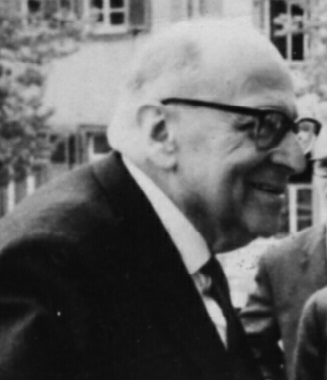
Max Horkheimer
German philosopher and sociologistWikipedia
71
MENTIONS
31
EPISODES
29
PODCASTS
Search complete. 71 mentions across 31 episodes found for "Max Horkheimer".
Sep 22, 2026

Daniel MorleyHOST
And I'll explain why.
Daniel MorleyHOST
One of the earliest works of the Frankfurt School was something in 1927 by Horkheimer, who's one of its perhaps three key figures.
Daniel MorleyHOST
He wrote an article titled The Impotence of the German Working Class.
Daniel MorleyHOST
The title obviously gives it away.
7 MINS LATER
Daniel MorleyHOST
It doesn't mean it's a good explanation of things, but you can clearly see that tendency with them.
Daniel MorleyHOST
Just to give some quotations from them that really show exactly how they think on this.
Daniel MorleyHOST
Adorno and Horkheimer wrote a book called Dialectic of Enlightenment, possibly the most central book of their school.
Daniel MorleyHOST
It says the following in it.

JacobHOST
Um, so Gramsci's work echoes on, obviously we're talking about him, his writer on writing on cultural hegemony, working class, intellectual life, Italian history, fascism, adjustments to economic determinism, and more cannot be overstated following the second world war academics, such as those of the Frankfurt school found him as a source of deep inspiration for their writing and the fit about the failed promise of revolution.
JacobHOST
If you see like Max Horkheimer is the father of critical theory.
JacobHOST
Gramsci is kind of, it's like grandfather or weirdly influential uncle.
JacobHOST
That's like just hanging around the house.

Radhika DesaiGUEST
Yes, of course, once you arrive at the age of monopoly capitalism, the intensity with which capital needs to repress working people grows so that it becomes an added temptation.
Radhika DesaiGUEST
But, you know, there, Horkheimer's very famous statement, you know, before he went all mainstream and practically anti-communist, you know, he said those who do not wish to talk about capitalism should stay silent about fascism.
Radhika DesaiGUEST
I think that the two are very deeply connected.
Radhika DesaiGUEST
Because also, remember, it is capitalism that enables mass society.

Seth GruberGUEST
We get in the Fathers of the Frankfurt.
Seth GruberGUEST
We could talk about Max Horkheimer.
Seth GruberGUEST
We could talk about, you know, all the weird sex perverts out of the Frankfurt School and Herbert Marcuse and all these people and Wilhelm Reich.
Seth GruberGUEST
We just probably don't have time.

E.W. JacksonHOST
But it had a number of different, if you will, thought leaders that were part of it.
E.W. JacksonHOST
A guy named Max Horkheimer, Theodore Adorno, Herbert Marcuse.
E.W. JacksonHOST
You've probably heard of him.
E.W. JacksonHOST
I think he is the most prominent.

Robert P. GeorgeGUEST
If you look at the courses I teach, I assign people, among the readings you'll see me assigned are Karl Marx, Antonio Gramsci, the famous Italian Marxist.
Robert P. GeorgeGUEST
Frankfurt School thinkers like Max Horkheimer and Theodore Adorno and even Herbert Marcuse, people on the Marxist left.
Robert P. GeorgeGUEST
Now, why am I assigning those people? Well, it's not because I agree with them.
Robert P. GeorgeGUEST
I radically disagree with them.

JuliHOST
Ich beginne mit dem Antisemitismus.
JuliHOST
Max Horkheimer und Theodor Adorno haben in der Dialektik der Aufklärung einen strukturtheoretischen Ansatz innerhalb der Antisemitismusforschung formuliert, der hier zum Ausgangspunkt genommen wird, weil mit ihm die Ambivalenzen des Antisemitismus in seinen Beziehungen zwischen Individuum und Gesellschaft am ehesten begreifbar gemacht werden können.
JuliHOST
Horkheimer und Adorno haben betont, dass der Antisemitismus nicht den ökonomischen Nutzen im Blick hat, sondern dass es vielmehr um psychische Disposition geht.
JuliHOST
Die Intention bildet der unbewusste Affekt, der entladen werden soll.

Bradley GreenGUEST
And Richard Weaver is writing in the late 40s, Right when the critical theorists, you know, it's one of the eras they're writing in.
Bradley GreenGUEST
So Horkheimer and Adorno, two of these gentlemen, write a book called Dialectic of Enlightenment.
Bradley GreenGUEST
We can define those terms and all, but they're writing right at the end of World War II, and that's when Weaver's writing.
Bradley GreenGUEST
And they're asking the same question.
28 MINS LATER
Bradley GreenGUEST
And the more I read, the more I realized, yeah, Marcuse is the link between Because some of the critical theorists were accused by their students of not being radical enough.
Bradley GreenGUEST
A funny story, this part's not funny, but a number of the critical theorists moved to the U.S. to escape Nazism and came back at some point after World War II.
Bradley GreenGUEST
And Horkheimer and Adorno go back to, these two of the men, they go back to the Institute for Social Research, and at some point some students begin to boycott and do a sit-in in the Institute And Horkheimer and Adorno called the police on the protesters.
Bradley GreenGUEST
And, you know, you have to laugh a little bit, you know, or you'll just cry.

Thomas777GUEST
You know, like I said last session, it, it-- these people basically broke with Marx completely.
Thomas777GUEST
You know, the, uh-- Like don't get me wrong, people like Max Horkheimer, um, Georg Lukács, Herbert Marcuse, Theodor Adorno, they saw capitalist organizational models and the sociological aspects of those models as, as a profound source of psychological scarring.
Thomas777GUEST
But they didn't, they didn't view it as some problem in and of itself.
Thomas777GUEST
And they, and they didn't view capitalist organizational modalities as some primary target that once eradicated would usher in some sort of perfect paradigm of social justice or something.
Thomas777GUEST
Um, you know, so the, the-- So in other words, the Frankfurt School's account of the capitalist system was that labor modalities being, uh, one aspect of systemic alienation owes to, you know, the philosophical turn towards scientism.
Thomas777GUEST
Which is another way that they deviated from the Marxian paradigm, because Marxists held out- Their historical paradigm and the, you know, and, and the dialectical materialist process, they held this out as a scientific, uh, process or something that could be interpreted scientifically according to rational criteria.
Thomas777GUEST
Um, Horkheimer in particular rejected that.
Thomas777GUEST
He said that any total theory of society, you know, had to account for the basic irrationality of human desires and things.

ThomasGUEST
You know, the, uh...
ThomasGUEST
Like, don't get me wrong, people like Max Horkheimer, um, Georg Lukács, Herbert Marcuse, Theodor Adorno, they saw capitalist organizational models and the sociological aspects of those models as, as a profound source of psychological scarring.
ThomasGUEST
But they didn't, they didn't view it as some problem in and of itself.
ThomasGUEST
And they didn't, and they didn't view capitalist organizational modalities as some primary target that once eradicated would usher in some sort of perfect paradigm of social justice or something.
ThomasGUEST
Um, you know, so the, the-- so in other words, the Frankfurt School's account of the capitalist system was that labor modalities being, uh, one aspect of systemic alienation owes to, you know, the philosophical turn towards scientism, which is another way that they deviated from the Marxian paradigm.
ThomasGUEST
Because Marxists held out their historical paradigm and the, you know, and, and the dialectical materialist process, they held this out as a scientific, uh, process, or something that could be interpreted scientifically according to rational criteria.
ThomasGUEST
Um, Horkheimer in particular rejected that.
ThomasGUEST
He said that any total theory of society, you know, had to account for the basic irrationality of human desires and things.
21 more episodes mention Max Horkheimer.
Create an account to see the whole feed, search across every transcript, and follow the entities you care about.