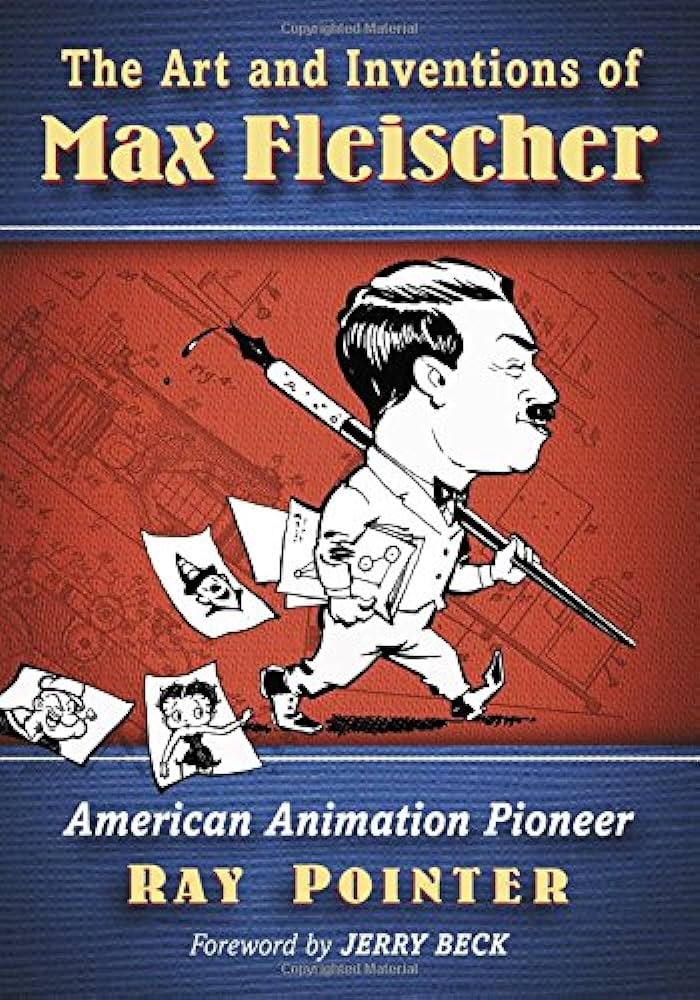
Max Fleischer
American animatorWikipedia
21
MENTIONS
11
EPISODES
11
PODCASTS
Search complete. 21 mentions across 11 episodes found for "Max Fleischer".
Sep 5, 2026

GregHOST
But some asshole animator John Randolph Bray took advantage of this, and he went on to patent several of McKay's techniques, like registration marks and tracing paper, though Bray's legal attempts to monopolize them ultimately failed.
GregHOST
And the dinosaur itself, with its personality and lovable quirkiness, Gertie deeply influenced the next generation of animation pioneers, including Walt Disney, the Fleischer Brothers, Otto Mesmer, Paul Terry, and Walter Lantz, who all came a little bit later in the world of animation.
GregHOST
Now, Gertie the Dinosaur is the best preserved of McKay's films because of its influence, and in 1991, the U.S. Library of Congress selected it for preservation in the National Film Registry, recognizing it as, quote, culturally, historically, or aesthetically significant, end quote there.
GregHOST
And the next huge step in animation came not long after Gertie, and it was the rotoscope, which was invented in 1917.
GregHOST
Max and Dave Fleischer, who we just mentioned, patented rotoscoping, which was tracing live action footage frame by frame, creating the series out of the inkwell, In the process of rotoscoping, it is where animators use live action reference footage and trace its outlines or details frame by frame.
GregHOST
And originally, physical film was projected onto a glass panel or easel for manual tracing, but today the process is predominantly digital, heavily integrated with motion tracking, onion scanning, and specialized software.
GregHOST
and the technique was invented and patented around 1917 by Polish-American animator Max Fleischer, and he designed the original rotoscope device to project live-action film onto a drawing board, and Fleischer famously used it in his Out of the Inkwell series featuring Coco the Clown with his brother Dave Fleischer acting as the live-action model, and it was utilized in Fleischer's Betty Boop shorts for jazz artist Cab Calloway, Dance for Reference, Gulliver's Travels in 1939, and the classic Superman theatrical shorts in the early 1940s.
GregHOST
Walt Disney Studios frequently utilized rotoscoping as a reference guide for human characters and features like Snow White and the Seven Dwarfs in 1937, and Cinderella in 1950, Alice in Wonderland in 1951, and Sleeping Beauty in 1959.

Chris AntistaHOST
It is now not that it's like the biggest melting pot in Florida, but everything there is a testament to how big things were in the fucking fifties where Jackie Gleason is shooting a talk show.
Chris AntistaHOST
Max Fleischer is making Popeye cartoons and the mob is running wild against stucco backdrops and beach.
Chris AntistaHOST
It's fucking awesome.
TL FosterHOST
I really do think, I thought about this, like if I had a podcast when the original Vice City came out, came out i think required reading should be cocaine cowboys like if you really want to get the essence of south beach in miami because and what i loved about what the trailer did and we talked about the boom the boom bass like you saw the opening of like section 8 housing like when they go and they go in and then you go into the opulence that is like south beach and i think like the original white city game, it is just South beach.

Robert CrumbGUEST
So that was the first thing I was attracted to.
Robert CrumbGUEST
Early Fleischer's? That stuff, oh yeah, Max Fleischer's stuff is among the best.
Robert CrumbGUEST
And also the Leroy Shields.
Robert CrumbGUEST
themes in Hal Roach comedies.

Tegan CliveGUEST
Steroids, go for it.
Tegan CliveGUEST
Max, look max, max looks.
Tegan CliveGUEST
Hormone replacement therapy, you know, when you're 14.
Tegan CliveGUEST
Okay, so...
22 MINS LATER
John SiuntresHOST
And not to mention all the superhero stuff that you guys did.
John SiuntresHOST
I mean, I just find it interesting that...
John SiuntresHOST
And I mean, well, good Lord, HBO Max isn't running the new Batman animated series.
John SiuntresHOST
Caped Crusader, it's on Amazon.

Addy GhaniHOST
Okay.
Joey DaoudHOST
It's H3 Max, a new post-trained video model by Foul Research.
Joey DaoudHOST
They don't say it here.
Joey DaoudHOST
But yeah, basically, they took Minimax and then did their own training on top of it.
Addy GhaniHOST
This might be a full-weight train then, sounds like.
Joey DaoudHOST
Yeah, I'm curious what this process is like and then how doable that is if you wanted to just make a very specific Minimax for like your own animated style or something.
Joey DaoudHOST
They had someone who was at Fallout also training a Minimax that was just sort of trained on, what's his name, a Max...
Joey DaoudHOST
Who was one of the early animation pioneers? Why am I blanking on the name? There was Disney, and then there was Fleischer.

Aeric AzanaHOST
Obviously, we've spoken about this very much before.
Aeric AzanaHOST
I love the Max Fleischer design for Superman.
Aeric AzanaHOST
And so does Darwin Cook.
Aeric AzanaHOST
And so does Darwin

JohnHOST
What people usually reference when trying to pin plagiarism on an animated sequence is, quote, rotoscoping.
JohnHOST
Tracing live footage frame by frame in a process created by Max Fleischer in 1915.
JohnHOST
I think he was animating a clown or something crazy, I don't know.
JohnHOST
All I know is that they did it in Prince of Persia.

John BleasdaleHOST
Let's talk a little bit about Fleischer's background, because I was at Pordenone Silent Film Festival once.
John BleasdaleHOST
last year, and they had a whole season of shorts by his father, Max Fleischer, the Inkpot shorts.
John BleasdaleHOST
And I thought these were amazing.
John BleasdaleHOST
And I know, obviously, maybe today you can explain who Max was, Richard's father.
John BleasdaleHOST
But at the time that these shorts came out, he was famous.
John BleasdaleHOST
He was like, you know, he was famous in the world of animation when Walt Disney was still sharpening his pencils
Jason A. NeyGUEST
And so that's what he went to college for.
Jason A. NeyGUEST
Um, he got his degree in psychology from Brown.

Adam RitchieHOST
Is it Herman? I've got, I've got-
Richard JohnsonGUEST
I keep thinking Max Fleischer, and I don't think that's right.
Adam RitchieHOST
I, I think you are right.
Adam RitchieHOST
Um, I have the technology.

Liam SpillaneGUEST
Like, you know, I watched – I remember as a kid I watched the old, like, 1940s Superman animated show.
Liam SpillaneGUEST
Yeah, wasn't that still fascinating? Yeah, I think – was it Max Fleischer did that one? Is that – Yeah, you're right.
Liam SpillaneGUEST
But anyway, so seeing Superman, the Superman from that long ago – It's so interesting to see the things that were part of the character then and then seeing the things that had not become part of the character yet.
Liam SpillaneGUEST
So like the S symbol didn't look the same.
1 more episode mentions Max Fleischer.
Create an account to see the whole feed, search across every transcript, and follow the entities you care about.