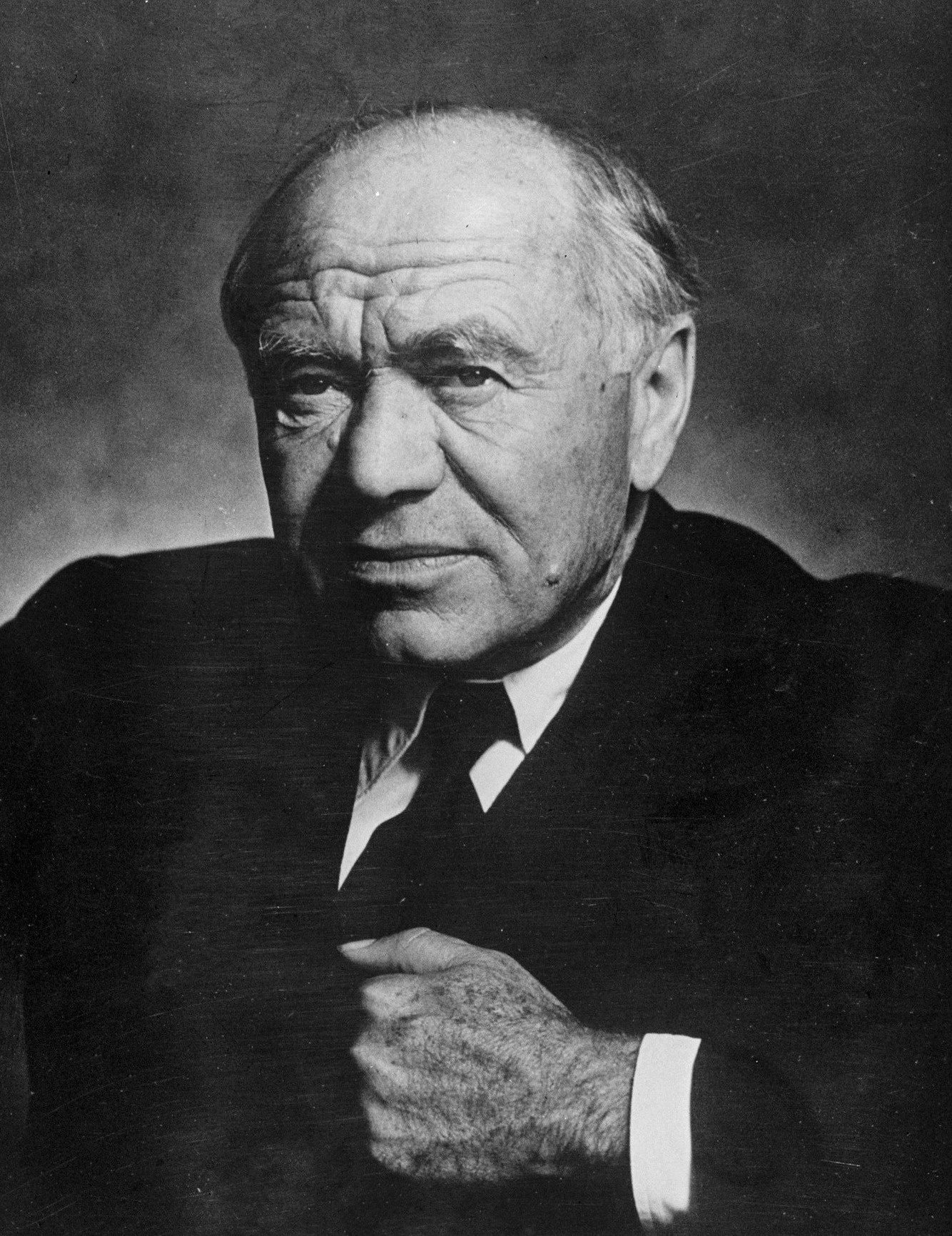
Max Aitken, 1st Baron Beaverbrook
Publisher and former Minister of Aircraft Production of the United KingdomWikipedia
29
MENTIONS
12
EPISODES
12
PODCASTS
Search complete. 29 mentions across 12 episodes found for "Max Aitken, 1st Baron Beaverbrook".
Oct 28, 2026

Ian DuntHOST
It was as simple as that.
Dorian LynskeyHOST
Well, that's what Northcliffe and Beaverbrook, you know, they helped... bring down Asquith and replace him with Lloyd George.
Dorian LynskeyHOST
And then when Lloyd George didn't reward them suitably, then they turned on him.
Dorian LynskeyHOST
That was the sort of thing at the time, this sense of entitlement that you could just...
8 MINS LATER
Ian DuntHOST
Like this is a guy that's going places.
Ian DuntHOST
So even though he probably went in with this sort of sense of, oh, I have to start from the ground floor out here rather than at home, there was clearly something, especially in the young age, really compelling about him because people who don't have to pay much attention to him very quickly think, I want to put some money where you are because I think that I'm going to make money back on the basis He does sort of finish off his degree, like I said, third class.
Ian DuntHOST
He goes to write for Beaverbrook, another of the great press barons, at the Daily Express.
Ian DuntHOST
The Daily Express then, a very impressive agenda-setting newspaper, nothing like what it is now.

Llewellyn KingHOST
And that was a bit of an impediment.
Llewellyn KingHOST
Secondly, I realized I possibly had the wrong personality, assuming that I would, like Lord Beaverbrook, go to Britain, as so many colonials did.
Llewellyn KingHOST
They all prospered in journalism.
Llewellyn KingHOST
It was a well-known path.

Simon BaughHOST
But when Neville Chamberlain decided to resign as Prime Minister in 1940, it was far from certain that Churchill would take over.
Simon BaughHOST
To quote the press baron Lord Beaverbrook, Chamberlain wanted Lord Halifax, Labour wanted Halifax, the Lords wanted Halifax, the King wanted Halifax.
Simon BaughHOST
And on 9th May 1940, Neville Chamberlain held a meeting at 10 Downing Street with Lord Halifax and Winston Churchill to press that case.
Simon BaughHOST
Turning to Churchill, he asked whether Winston could see any reasons why, in these times, a member of the House of Lords should not be Prime Minister? Churchill realised that either agreeing or disagreeing was a trap.

James HollandHOST
Yeah, you gotta do what you gotta do is, is what this is all about.
James HollandHOST
Twenty-second of September, Lord Beaverbrook, the press baron, also the Minister of, um, of, of Aircraft Production.
James HollandHOST
You know, he's Minister of Production by this point.
James HollandHOST
Yeah.

Patrick McAfeeNARRATOR
There thus remained the work against Turkey and Bulgaria.
Patrick McAfeeNARRATOR
By arrangement between Lord Northcliffe and Lord Beaverbrook, propaganda against Turkey was ably conducted by the Near East section of the Ministry of Information, in charge of Mr. now Sir Hugo Cunliffe Owen.
Patrick McAfeeNARRATOR
This was obviously wise in the interests of economy and efficiency.
Patrick McAfeeNARRATOR
Propaganda in Bulgaria, however, was directed from Crewe House.
7 MINS LATER
speaker_1ADVERTISER
AXA XL, facing into risk for a future to be imagined.
speaker_1ADVERTISER
This advertisement doesn't constitute an offer or solicitation, nor a description of any products or services of AXA XL.
Patrick McAfeeNARRATOR
Most valuable assistance was readily given to Crew House by the Ministry of Information, so efficiently organized by Lord Beaverbrook.
Patrick McAfeeNARRATOR
Close consultation was maintained between heads of sections of the two departments wherever cooperation could be advantageous.

KingfishVOICE_ACTOR
Oh, yeah, sir.
KingfishVOICE_ACTOR
Yeah, sir, he done buttled and valeted for a lot of the big people, the Duke of Wales, Lord Beaverbrook, Sir Cedric Harewick and all them big people.
speaker_11UNKNOWN
[laughs]
KingfishVOICE_ACTOR
Uh, ain't that right, Reginald?

Adrian BrackenNARRATOR
Bracken was now the terrier at bulldog Churchill's kennel door.
Adrian BrackenNARRATOR
Brendan Bracken, along with Lord Beaverbrook, now the Minister of Aircraft Production, were the men who saw Churchill after midnight, the close advisors and friends who supported Churchill day and night.
Adrian BrackenNARRATOR
But the defining moment in the Bracken-Churchill relationship came in 1940.
Adrian BrackenNARRATOR
Britain's war was not going well.

Thomas777GUEST
Churchill found himself once again nearly destitute.
Thomas777GUEST
Lord Beaverbrook, who was kind of Churchill's last remaining, you know, patron in the newspaper, in the publication business, you know, who wasn't quite literally, you know, paying out to him for charity like the focus was in order to corral him into, you know, being the frontman of their position.
Thomas777GUEST
Beaverbrook simply got sick of his warmongering.
Thomas777GUEST
And Beaverbrook, among other publications, ran the Evening Standard.
Thomas777GUEST
He banned Churchill's content, canceled his contract, you know, deprived him, among other things, of substantial income.
Thomas777GUEST
And who Churchill found himself in such dire straits that his family's ancestral estate at Chartwell was literally listed for sale.
38 MINS LATER
Thomas777GUEST
You know, as, uh, as 1938 became, uh, 1939, you know, he started saying like, "Look, you know, like Chamberlain, uh, Chamberlain took a knee because Chamberlain's weak, you know? And he, he's not a man who can stand up to, who can stand up to the Nazi threat," you know? And, and Churchill literally said in 1939 springtime, you know, on the floor of Parliament, you know, he said, you know, "The Nazi threat is, is, is represents a, a mortal danger to our 'freedom and peace.'" You know, that's him literally invoking, you know, the phraseology of Frankfurter and FDR, you know, which is interesting.
Thomas777GUEST
And you gotta, you gotta keep in mind, in these days, you know, we're talking about 1939.

ThomasGUEST
Churchill found himself once again nearly destitute.
ThomasGUEST
Uh, Lord Beaverbrook, uh, who was, uh, kind of, um, who was kind of, uh, Churchill's last remaining, uh, you know, patron in, in, in the, in the newspaper, uh, um, in the publication business.
ThomasGUEST
You know, who, who wasn't quite literally, you know, paying out to him for charity like the, the Focus was in order to, in order to corral him into, you know, being the frontman of their position.
ThomasGUEST
Uh, Beaverbrook simply got sick of his warmongering, and he-- Beaverbrook, among other publications, ran the Evening Standard.
ThomasGUEST
He banned Churchill's content, um, canceled his contract, uh, you know, deprived him, among other things, of substantial income.
ThomasGUEST
Um, and who, uh...
38 MINS LATER
ThomasGUEST
You know, this is, you know, a man like, particularly a personage of this, of the status of Churchill, like literally parroting what some, you know, Jewish, uh, Supreme Court justice from America said, who himself kind of borrowed, you know, the phraseology from the President of the United States, you know, that's, that's, that's notable, okay? And it, it's indicative of very much a, a relationship of patronage, and it's indicative of, uh, of a very managed career, you know, and, and Churchill being the managed, uh, uh, uh, quantity here.
ThomasGUEST
Okay? Now, immediately after Frankfurter's departure from London, you know, a, a, this massive media campaign was unleashed.

Greg KoabelHOST
Over the course of the Laurier boom, multiple Canadian industries underwent serious bouts of consolidation, as small and medium-sized companies merged into nationally dominant powerhouses.
Greg KoabelHOST
We saw those developments through the eyes of Max Aitken, the master of mergers and acquisitions.
Greg KoabelHOST
From cement to steel to utilities, Aitken made a fortune by creating behemoths that sat astride the Canadian economy, crushing smaller rivals through the power of economies of scale and close ties to government officials.
Greg KoabelHOST
However, there were some drawbacks to being a consolidated firm that dominated a single industry.
2 more episodes mention Max Aitken, 1st Baron Beaverbrook.
Create an account to see the whole feed, search across every transcript, and follow the entities you care about.