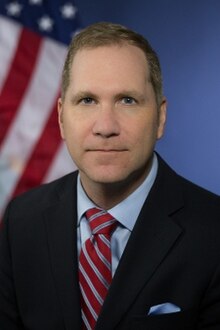
Matthew J. Schneider
Attorney
17
APPEARANCES
4
PODCASTS
Aug 26, 2026


Matthew SchneiderGUEST
Well, Attorney General Nessel produced the report and she said it was for historical purposes.
Matthew SchneiderGUEST
That is true, but it really is Dana Nessel's account and the prosecutor's account.
Matthew SchneiderGUEST
So this would be akin to if we looked at the historical record of a legal proceeding or a case.
Matthew SchneiderGUEST
It's relatively one-sided, and then it explains from the prosecutor's perspective and their view how we viewed this and the decisions we made and what the outcome was.
Matthew SchneiderGUEST
Well, attorney general Nessel produced the report and she said it was for historical purposes.
Matthew SchneiderGUEST
Exactly what you said, Chris, it's an account of what took place in the prosecution side of this case.
Matthew SchneiderGUEST
That is true, but it really is Dana Nessel's account and the prosecutor's account.
Matthew SchneiderGUEST
So this would be akin to if we looked at the historical record of a legal proceeding or a case.
Matthew SchneiderGUEST
It's relatively one-sided, and then it explains from the prosecutor's perspective and their view how we viewed this and the decisions we made and what the outcome was.
Matthew SchneiderGUEST
It doesn't include a lot of the defense's arguments and the positions they put forth and how they ultimately prevailed in this case.

Lloyd JacksonHOST
But does merely hearing the president's opinion compromise the prosecution or does the real question involve what the attorney general does with that opinion?

Matthew SchneiderGUEST
What's improper is for a prosecutor to do things that are not allowed by the rules of ethics.
Matthew SchneiderGUEST
For example, you can only bring a criminal charge if it's based on a probable cause and you have to follow the law and not one individual.
Matthew SchneiderGUEST
So as long as the prosecutor does that, it's not a problem to have interaction between the white house and the president.
Matthew SchneiderGUEST
I mean, let's think about the context about, as I was saying, Before, earlier in American history, when John F. Kennedy was the president, who was his attorney general? It was his brother, Robert Kennedy, his own brother.
Lloyd JacksonHOST
How can a public distinguish a legitimate prosecution from a politically motivated one?

Jamie EdmondsHOST
Blanche says he would take President Trump's views into consideration in some prosecution decisions, but does merely hearing the president's opinion compromise the prosecution, or does the real question involve what the attorney general does with that opinion?
Matthew SchneiderGUEST
What's improper is for a prosecutor to do things that are not allowed by the rules of ethics.
Matthew SchneiderGUEST
For example, you can only bring a criminal charge if it's based on probable cause and you have to follow the law and not one individual.
Matthew SchneiderGUEST
So as long as the prosecutor does that, it's not a problem to have interaction between the White House and the president.
Matthew SchneiderGUEST
I mean, let's think about the context about, as I was saying, Before, earlier in American history, when John F. Kennedy was the president, who was his attorney general? It was his brother, Robert Kennedy, his own brother.
Jamie EdmondsHOST
How can a public distinguish a legitimate prosecution from a politically motivated one?

Chris RenwickHOST
What's their responsibility now that it didn't go through the normal- ... chain of command.
Matthew SchneiderGUEST
Is it a referral to the Justice Department, or is it a contempt resolution, or is it both? It looks like it's a little bit both.
Matthew SchneiderGUEST
The contempt, you, you're correct, that would have to go in front of the full Senate, and it didn't.
Matthew SchneiderGUEST
So the Justice Department, they sent it to the US attorney in the District of Columbia.
Matthew SchneiderGUEST
Senator Gary Peters sent a letter to the committee members reiterating his previous comments, which were about why this shouldn't be done and why this shouldn't be sent out for contempt.
Matthew SchneiderGUEST
And one of the issues is whether or not there's a federal prosecution, there are state attorney generals who have, in fact, 17 of them have sent a letter saying, we intend to investigate Dr. Fauci.
Matthew SchneiderGUEST
So they're already on the record saying that we want to look into prosecuting Dr. Fauci for federal crimes.
Matthew SchneiderGUEST
But if that's not covered, then yes, you could be exposed to state prosecution by an attorney general or perhaps by a county prosecutor.
Chris RenwickHOST
And now the questions, Matthew, are, okay, well, is he protected and should he have to answer those questions, or does the Fifth Amendment still play into factor here?
Matthew SchneiderGUEST
So let's kind of start with the context about what the Fifth Amendment actually is.
Matthew SchneiderGUEST
It says that no person shall be compelled basically to be a witness against themselves, and it's in the context of a criminal case.
Matthew SchneiderGUEST
So the Supreme Court took this up years ago, and they looked at is it possible for you to actually plead the Fifth in front of Congress? And this was way back in the days of the House Un-American Committee where people were asked questions about their affiliations with the Communist Party.
Chris RenwickHOST
Did it strike you? Do you look at these cases as an attorney, as a steward of the law, or do you look at it as somebody like me who goes, well, that's fascinating that you wouldn't answer some of these questions?
Chris RenwickHOST
And now the questions, Matthew, are, okay, well, is he protected and should he have to answer those questions or does the Fifth Amendment still play into factor here?
Matthew SchneiderGUEST
So let's kind of start with the context about what the Fifth Amendment actually is.
Matthew SchneiderGUEST
It says that no person shall be compelled basically to be a witness against themselves, and it's in the context of a criminal case.
Matthew SchneiderGUEST
So the Supreme Court took this up years ago, and they looked at is it possible for you to actually plead the Fifth in front of Congress today? And this was way back in the days of the House Un-American Committee where people were asked questions about their affiliations with the Communist Party.
Chris RenwickHOST
Did it strike you? Do you look at these cases as an attorney, as a steward of the law, or do you look at it as somebody like me who goes, well, that's fascinating that you wouldn't answer some of these questions?

1 HR 6 MINS LATER

Louis FernandesHOST
What has to happen operationally before an asset can be tokenized responsibly? A lot,
Chris RenwickHOST
And how often would this, can we look back at history and say something like this has happened?
Matthew SchneiderGUEST
Before the U S Supreme court, there is a Supreme court rule on this rule 44.
Matthew SchneiderGUEST
And it says that if you want one of these re hearings, you've got to file it within a certain amount of time.
Lloyd JacksonHOST
What would President Trump's legal team have to show to convince the Supreme Court that it should take the extraordinary step of rehearing this case?
Chris RenwickHOST
And how often would this, can we look back in history and say something like this has happened?
Matthew SchneiderGUEST
Before the U S Supreme court, there is a Supreme court rule on this rule 44.
Matthew SchneiderGUEST
And it says that if you want one of these re hearings, you've got to file it within a certain amount of time.
Lloyd JacksonHOST
What limits does the Constitution place on a president that's, you know, trying to reinterpret constitutional rights through an executive order?


Jose Cruz JrHOST
Like, what does it mean to verify? And when documentation is coming in for you to assess, how do you create a baseline? Like, how do you think about that?
Matthew SchneiderGUEST
First, I'd like to begin by saying that Matthew Schneider and Nord Building are verifying your documents.
Matthew SchneiderGUEST
And that actually puts you in a better situation because your stakeholders are credentialed.
9 MINS LATER
Jose Cruz JrHOST
What inspired you to start building? You know, how do you see the team growing maybe in two, three years from now? Like what's true? What are you building?
Matthew SchneiderGUEST
It's pretty significant, and there was a lot of dispute among the justices about it.
Matthew SchneiderGUEST
It's not about using the mail to mail in ballots or even about early voting or counting the votes after Election Day, it's extremely narrow.
Matthew SchneiderGUEST
The issue is whether counting ballots that are postmarked or mailed by Election Day, but then they're not received until five days later violates federal law.
Matthew SchneiderGUEST
It's pretty significant, and there was a lot of dispute among the justices about it.
Matthew SchneiderGUEST
It's not about using the mail to mail in ballots, or even about early voting or, or counting the votes after Election Day.
Lloyd JacksonHOST
You know, for health care providers, Matthew, who operate legitimately, what kind of compliance measures should they have in place to avoid becoming, you know, entangled in these questionable arrangements?
Matthew SchneiderGUEST
It's a great question because most health care providers operate appropriately.
Matthew SchneiderGUEST
There are bad apples that got caught and are being charged, but the grand majority of healthcare providers and doctors and physicians, they're doing the right thing.
Matthew SchneiderGUEST
Sometimes they have nefarious employees, or sometimes they don't have the proper systems to know whether or not their data is being hacked.
Matthew SchneiderGUEST
When you have a data hack like that, you also have to report that to the state authorities.
Matthew SchneiderGUEST
If you have an intrusion in your systems, you've got to report that, for example, to the state attorney general.
Lloyd JacksonHOST
And, you know, when you look at the sheer size of this nationwide takedown, Matthew, does it suggest the system is working because investigators caught these schemes, or does it reveal just how vulnerable our health care system remains?
Chris RenwickHOST
You know, for health care providers, Matthew, who operate legitimately, what kind of compliance measures should they have in place to avoid becoming, you know, entangled in these questionable arrangements?
Matthew SchneiderGUEST
It's a great question, because most health care providers operate appropriately.
Matthew SchneiderGUEST
There are bad apples that got caught and are being charged, but the grand majority of healthcare providers and doctors and physicians, they're doing the right thing.
Matthew SchneiderGUEST
Sometimes they have nefarious employees, or sometimes they don't have the proper systems to know whether or not their data is being hacked.
Matthew SchneiderGUEST
When you have a data hack like that, you also have to report that to the state authorities.
Matthew SchneiderGUEST
If you have an intrusion in your systems, you've got to report that, for example, to the state attorney general.
Chris RenwickHOST
And, you know, when you look at the sheer size of this nationwide takedown, Matthew, does it suggest the system is working because investigators caught these schemes, or does it reveal just how vulnerable our health care system remains?

Matthew SchneiderGUEST
And I, you know, I think one of Tortorella's biggest strengths generally as a coach, he gets his best players on the ice as much as he can.
Matthew SchneiderGUEST
But when you look at any Stanley Cup winner, they have to be able to put four lines on the ice.
Matthew SchneiderGUEST
They have to be at y- you know how many times you see a Stanley Cup winner, oh, their fourth line came up with the biggest goal of the game, and their, you know, their, your third and four, fourth line are the ones pitching in a lot of nights because your first two are, are jammed up so much because it is so tight out there.

Colby CohenHOST
There's not [laughs] a lot of rope left, um, for, for Vegas to, to get some of those guys scoring and putting pucks in the back of the net.