Matthew effect
8
MENTIONS
5
EPISODES
4
PODCASTS
Search complete. 8 mentions across 5 episodes found for "Matthew effect".
Sep 20, 2026

Seth HolehouseHOST
My guest today, Mark Wilburn, is the president and co-founder of Neos Capital Development Group.
Seth HolehouseHOST
He's the author of a book called Understanding the Matthew Effect, which goes into why the rich keep getting richer and how everyday people can tap into those exact same strategy.
Seth HolehouseHOST
Mark has trained thousands of people on how to properly trade the stock market, not gambling or guessing or following some talking head on CNBC.
Seth HolehouseHOST
actually reading the charts and understanding what the big money is doing.
12 MINS LATER
Seth HolehouseHOST
I mean, and you wrote a whole book on it.
Seth HolehouseHOST
Right.
Seth HolehouseHOST
So which is the effect, the Matthew effect.
Seth HolehouseHOST
Right.

Herman PoppleberryHOST
institution.
Herman PoppleberryHOST
Which brings us to the knock-on effect, the Matthew Effect.
Herman PoppleberryHOST
Rich, prestigious universities attract more resources, which improves their rankings, which attracts more resources.
Herman PoppleberryHOST
Harvard's endowment grew from $4.5 billion in 1980 to over $50 billion by 2024.

Kaitlin HagueGUEST
And I certainly would never say, you know, don't do competitions or don't do exams or anything like that.
Kaitlin HagueGUEST
But I think it's really important to hold those results lightly in the early years, especially because you can have what's called a Matthew effect.
Kaitlin HagueGUEST
This is really interesting.
Kaitlin HagueGUEST
It's one of my like key takeaways that I found interesting in the research.
Kaitlin HagueGUEST
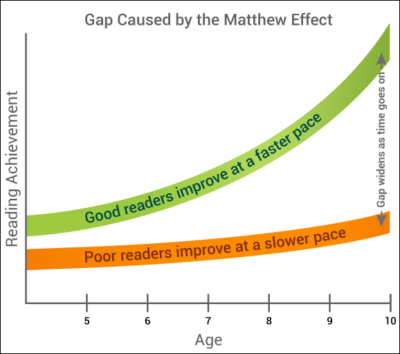
So the Matthew effect is where like if a child is identified as talented early on, they're often given some sort of preferential treatment or they might be put in some sort of preferential program.
Kaitlin HagueGUEST
and given more resources in terms of, say, time or things like that, then that means that they then progress faster.
Kaitlin HagueGUEST
And so there's an affirmation of the presence of talent, which means they're given more resources or more of a labelling as talented.
Kaitlin HagueGUEST
And so then they improve more.

Jordan PetersonSOUNDBITE_SPEAKER
It's way less dangerous, and you could do it.
Jordan PetersonSOUNDBITE_SPEAKER
There's a statement in the New Testament, it's called the Matthew Principle, and economists use it to describe how the economy and the world works.
Jordan PetersonSOUNDBITE_SPEAKER
"To those who have everything, more will be given.
Jordan PetersonSOUNDBITE_SPEAKER
From those who have nothing, everything will be taken." It's like, well, it's very pessimistic in some sense, because it means that as you start to fail, you fail more and more rapidly.
Seth HolehouseHOST
We help you to connect what's happening today to decisions that powerful people made in the past so we can learn something from it and build something better.
Seth HolehouseHOST
So today's guest is a guy named Mark Wilburton, and he's the president of Neos Capital, and he's the author of a book called Understanding the Matthew Effect, Unlocking the Mystery Behind Why the Rich Get Richer.
Seth HolehouseHOST
So Mark has built an incredible track record of anticipating major market moves, including stocks like Tesla, AMD, and Meta, even Bitcoin, and then even Target, right? Their rally this year where he warned people to take profits before the drop.
Seth HolehouseHOST
Now, whether you're a complete beginner or you've been investing for years and you want to understand what's happening right now, pay attention to what Mark is talking about.