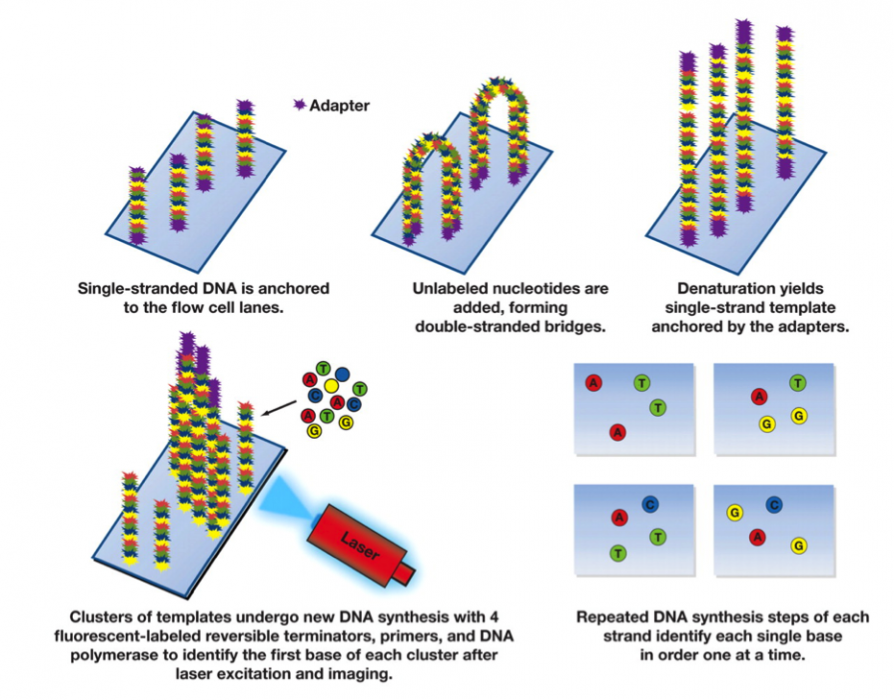
Massively parallel sequencing
28
MENTIONS
8
EPISODES
7
PODCASTS
Search complete. 28 mentions across 8 episodes found for "Massively parallel sequencing".
Oct 27, 2026

Kate BakerHOST
Ronan, what's your approach to biomarker testing? I'm curious.
Kate BakerHOST
Are you sending just like a broad NGS panel? Are you doing multiple different tests? How do you approach that at diagnosis?
Ronan HsiehGUEST
Yeah.
Ronan HsiehGUEST
For metastatic disease, I often send next-generation sequencing right away.
Kate BakerHOST
And so in somebody where you have a need to initiate therapy right away, that can be a helpful guide.
Kate BakerHOST
I'm curious if there's any scenarios where you're starting treatment on someone before getting all of the molecular testing results back.
Ronan HsiehGUEST
Yeah, so in my practice, actually, I only do chemotherapy for cycle one while waiting for the NGS results.
Ronan HsiehGUEST
And once NGS results, either this is liquid biopsy or this is tissue biopsy, I added the target drugs in the second dose.

Bobby CapucciHOST
Now, the last area I want to ask you about is, are you familiar with something called NGS? Answer, yes.
Bobby CapucciHOST
Question, what is NGS? Answer, NGS stands for Next Generation Sequencing.
Bobby CapucciHOST
It's a DNA technique that sequences your DNA so it looks at the individual sequence of your DNA.
Bobby CapucciHOST
Question, and is it true, in your field, that whole area of NGS is something that's at the forefront of everybody's attention? For instance, when you go to seminars and you look at the presentations, there's a lot of talk about NGS, right? Answer, that's correct.

Bobby CapucciHOST
Now, the last area I want to ask you about is, are you familiar with something called NGS? Answer, yes.
Bobby CapucciHOST
Question, what is NGS? Answer, NGS stands for Next Generation Sequencing.
Bobby CapucciHOST
It's a DNA technique that sequences your DNA, so it looks at the individual sequence of your DNA.
Bobby CapucciHOST
Question, and is it true, in your field, that whole area of NGS is something that's at the forefront of everybody's attention? For instance, when you go to seminars and you look at the presentations, there's a lot of talk about NGS, right? Answer, that's correct.

Bobby CapucciHOST
Question, and the reason it's designed to look at this is because it has been found that there are DNA areas that are different in sequence, even though they're the same length.
Bobby CapucciHOST
Is that true? Answer, I think the reason for developing NGS software is to add another tool to a forensic biologist's tool belt.
Bobby CapucciHOST
Question, okay.
Bobby CapucciHOST
Now, could you go to 154, please, for the witness only? You're familiar with this chart.
Bobby CapucciHOST
Yeah, that's the point, is that she didn't do it, and therefore she's not in a position to draw conclusions.
Bobby CapucciHOST
Judge Graff, prosecution.
Bobby CapucciHOST
Prosecution, the proffer is inaccurate and she's not able to draw conclusions because she did not do the NGS or the sequencing analysis.
Bobby CapucciHOST
She's testified that her lab and the analysis she did here is not sequencing analysis.
Bobby CapucciHOST
Now, the last area I want to ask you about is, are you familiar with something called NGS? Answer, yes.
Bobby CapucciHOST
Question, what is NGS? Answer, NGS stands for Next Generation Sequencing.
Bobby CapucciHOST
It's a DNA technique that sequences your DNA so it looks at the individual sequence of your DNA.
Bobby CapucciHOST
Question, and is it true, in your field, that whole area of NGS is something that's at the forefront of everybody's attention? For instance, when you go to seminars and you look at the presentations, there's a lot of talk about NGS, right? Answer, that's correct.

Lisa CrawfordHOST
His work spans everything from solid tumor biomarker testing to liquid biopsies.
Jordan RuggieriHOST
In our conversation, Javier shares incredible insights into biomarker classifications, assay designs, and how technologies like DPCR, qPCR, and NGS all have their moments to shine in the lab.
Lisa CrawfordHOST
It's a thoughtful and engaging discussion, so let's get started.
Jordan RuggieriHOST
Javier, thank you so much for joining us on today's episode of Absolute Genius.
11 MINS LATER
Jordan RuggieriHOST
And MRD is definitely something that we've seen an increase in interest as well in terms of research.
Jordan RuggieriHOST
Is there any technology considerations looking at these types of studies? I mean, I can imagine, you know, you're looking, like you said, you know, a drop in the sea sometimes for some of these biomarkers.
Jordan RuggieriHOST
How do you consider technologies to use like a qPCR or dPCR or NGS in your laboratory?
Javier Hernández LosaGUEST
Yeah, usually I think that depending on the intended of use or maybe what are you searching in terms of, say, lead technology for these purposes.

Caroline SeymourHOST
MET exon fourteen skipping mutations, found in approximately two percent to four percent of patients, are genomic alterations detectable by next-generation sequencing on tissue or liquid biopsy and are treated with the MET inhibitors capmatinib or tepotinib.
Caroline SeymourHOST
Dr. Bazanova cautioned that DNA-based NGS can miss MET exon fourteen skipping mutations, making RNA-based testing a valuable complement.
Caroline SeymourHOST
MET amplification, which can arise de novo or as a resistance mechanism after third-generation EGFR inhibition, lacks a specific FDA-approved therapy, although Dr. Patel described combining an EGFR inhibitor such as osimertinib with a MET inhibitor in the acquired resistance setting.
Caroline SeymourHOST
So MET protein overexpression, amplification, and MET exon fourteen skipping mutations are often lumped together as MET-altered non-small cell lung cancer.
Caroline SeymourHOST
How do you explain the differences between these aberrations, and why does it matter whether a patient's MET status comes from IHC or from NGS?
Sandip PatelGUEST
Great question.
Sandip PatelGUEST
Um, I-I-I'm Sandip Patel.
Sandip PatelGUEST
Here we use small molecule inhibitors to block the cancer cells from growing.

Sean GlennGUEST
Thanks for having me on.
Theral TimpsonHOST
I love talking to, you know, directors of pathology because that's really where the rubber hits the road in most, you know, of what we're talking about, applying NGS or molecular diagnostics to the clinic.
Sean GlennGUEST
Yeah, absolutely, especially in this day and age where it seems as though genomics has kind of taken over for helping us to diagnose and prognose and treat our patients.
Theral TimpsonHOST
So it's been like a decade we were talking before we turned the mic on that I've talked to someone at Roswell Park.
Sean GlennGUEST
So for every gene or every mutation that was important, you'd have to run a single analyte assay, like a PCR or pyro sequencing.
Sean GlennGUEST
And that is really cumbersome, you know, to run, especially as more and more molecular targets are identified.
Sean GlennGUEST
um you know if you're looking at 50 60 100 200 genes um that gets extremely cumbersome so using next generation sequencing we have these capabilities to multiplex all these gene mutations into a single assay but even more importantly instead of looking at copy number variations at the chromosome level or at the arm level or even at the gene level using things like fish or cytogenetics, we can do that within this NGS panel.
Sean GlennGUEST
We can actually look for these rearrangements at the exact same time that we're looking for these point mutations.