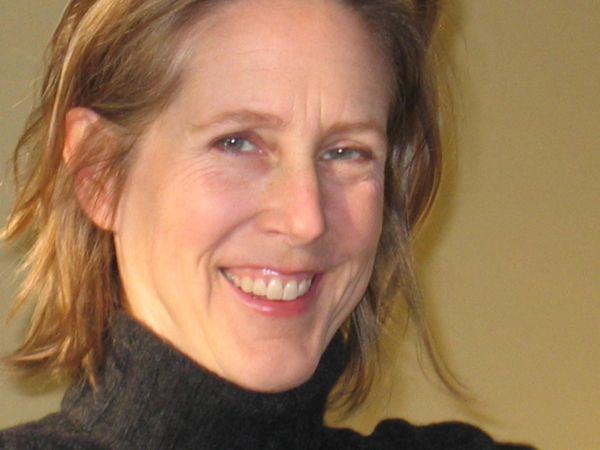
Mary Roach
American authorWikipedia
18
MENTIONS
10
EPISODES
9
PODCASTS
Search complete. 18 mentions across 10 episodes found for "Mary Roach".
Sep 18, 2026

Dave HarbargerHOST
There's some battle scenes, right? Yeah.
Shane BeepsHOST
But I mean, perhaps more importantly, though, is I don't think that's necessarily a bad thing, right? Like, I don't think that all writing does not need to be literature, right? I've read my fair share of, like, Hunger Games and Harry Potter's and any other, you know, Mary Roach even, right? Like, easily digestible pop-sci.
Shane BeepsHOST
That's just like, hey, this is a fun read that's, like, told well.
Shane BeepsHOST
Like, it's interesting.

BugHOST
And to be clear, like, it's also, really quick, it's also, like, kind of hard to choose that.
BugHOST
There's a really good book that I would recommend about this called Stiff, uh, by Mary Roach, and it's, uh, kind of a dive into a lot of the different things you can do with your body after you die.
BugHOST
But one of the central themes of the book is that, like, there's not a lot you can just choose to do unless you have a lot of means.
BugHOST
We have these, like, standard ways of dealing with, uh, people who have passed away and dealing with their bodies, and if you don't pick one of those, you sort of have to have, you have to have the means to not pick one of them.

QuinnHOST
They all had to turn the key at the same time.
QuinnHOST
Now, on that point of they just didn't know, there's a great quote in Mary Roach's book Packing for Mars that I think sums it up all very nicely.
QuinnHOST
Quote, "Aerospace professionals at the time were gripped with an almost universal foreboding at the prospect of cutting loose from gravity's hold.
QuinnHOST
What if man's organs depended on gravity to function? What if the pumping of his heart failed to push his blood through his veins and instead merely churned it in place? What if his eyeballs changed shape and compromised his visual acuity? If he cut himself, would his blood still coagulate? They worried about pneumonia, heart failure, debilitating muscle cramps.
QuinnHOST
Still, I've pulled together what I can, and I have some sources to give you, listener.
QuinnHOST
First off, the book Animals in Space by Colin Burgess and Chris Dubbs.
QuinnHOST
Second, of course, Packing for Mars by Mary Roach.
QuinnHOST
And finally, an article from NASA titled A Brief History of Animals in Space.

Timothy C. WinegardGUEST
So the books you always see in the airport, there's only a select few.
Timothy C. WinegardGUEST
So you get Guns, Germs and Steel and Sapiens, these, you know, these Mary Roach's Grunt or these kind of general books for the masses.
Timothy C. WinegardGUEST
I call them airport books because it's the only ones that are ever in those stores.
Timothy C. WinegardGUEST
And so we sat down and my dad's a medical emergency doctor.

Harrison GeorgeHOST
It's a blast.
Harrison GeorgeHOST
I'm also going to recommend the book Packing for Mars by Mary Roach.
Harrison GeorgeHOST
I don't know if you've read any of Mary Roach's books, but they're usually science or bodily function related.
Harrison GeorgeHOST
She wrote Gulp, Grunt, Spook, and Stiff.
Harrison GeorgeHOST
But Packing for Mars is about the psychological impact and process for selecting astronauts.

speaker_0HOST
So welcome to the Deep Dive.
speaker_0HOST
Today, we are unpacking a really fascinating stack of source materials, specifically excerpts from Mary Roach's incredible book, Packing for Mars: The Curious Science of Life in the Void.
speaker_0HOST
And the mission of our conversation today is to look at the absolute chaotic mess that is space biology.
speaker_1HOST
And it really is a mess.
46 MINS LATER
speaker_1HOST
It's a fascinating case study and rumor.
speaker_1HOST
The story claimed that during his orbital flight, Enos removed his diaper and began compulsively masturbating in the capsule, horrified the press, and forced NASA to invent a balloon catheter for the human astronauts.
speaker_0HOST
But the author, Mary Roach, actually tracks down the original handlers, and it is completely 100% false.
speaker_0HOST
Enos did have a catheter inserted before the flight, but it was threaded into his femoral artery simply to monitor his blood pressure.

Matt CoyneGUEST
But I read such bizarre stuff.
Matt CoyneGUEST
At the moment, I'm reading something called which is The Curious Lives of Human Cadavers by a lady called Mary Roach, which tells you what happens to what people do with bodies after they've been left to science and stuff.
Matt CoyneGUEST
Sometimes they'll put them on a 747 and crash it into the desert and see what happens to bodies and things like that.
Matt CoyneGUEST
Your crime writing pals will know all about this.
QuinnHOST
And I, I'm rethinking some things now.
QuinnHOST
So for those who don't know, a lot of the initial inspiration for this podcast came from author Mary Roach, who has been on House of Pod.
QuinnHOST
Go check it out.
Other ChrisHOST
Yeah.
14 MINS LATER
Other ChrisHOST
Oh.
QuinnHOST
Anyway, I have got a couple of sources for this.
QuinnHOST
First off, as previously mentioned, the book Packing for Mars by Mary Roach.
QuinnHOST
Buy it, read it, listen to it.

MagdaHOST
I think it's really fun.
MagdaHOST
So if you're really into that, I kinda highly recommend Stiff by Mary Roach.
MagdaHOST
This is another book that I have talked about a lot in the podcast.
MagdaHOST
It is a nonfiction book about the story of cadavers, and, like, all of the things that we have learned because of them and the story behind it.
MagdaHOST
Like, at what ages we started, like, dissecting them, and the legal history of it because, you know, at that, it was illegal for a lot of doctors and scientists to be able to conduct research on them, so there was a lot of, like, cadaver stealing, uh, in the early, in the early ages where people, like, doing grave, uh, grave robbing of them to try to be able to learn a little bit more about the science and the medicine and things that we can learn from cadavers.
MagdaHOST
We also learn about how they were used as, like, uh, crash test dummies in, like, safety for, you know, for driving and things like that.
MagdaHOST
Like, there's a lot of history that goes behind our cadavers, and Mary Roach is one of those people that she becomes obsessive about learning a topic.
MagdaHOST
So she's telling you the way that, like, "I just learned about this really cool thing, and I wanna tell you all about it." So it's really engaging in a way that, like, for us people that may not be as science-y, you know, we don't really have a lot of background, she's coming at you from the way of, like, "I'm gonna tell you this really cool gossip story about, like, how the cadavers made a really big impact throughout history." So it's really fun way of learning.