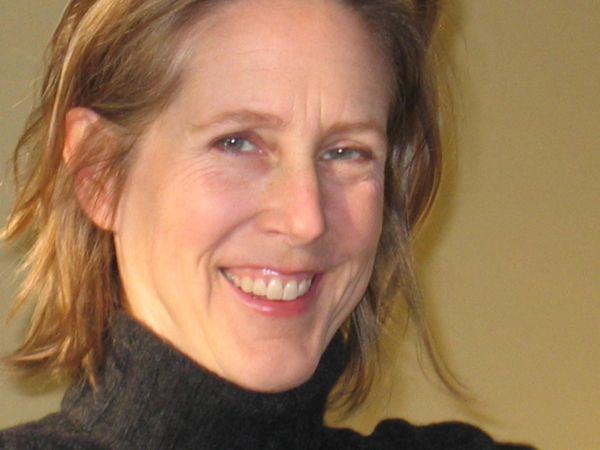
Mary Roach
American author
25
APPEARANCES
18
PODCASTS
Aug 25, 2026


Shannon BalloonHOST
Can you tell us why middle grade and why this particular book for middle grade?
Mary RoachGUEST
I want to be able to have many different streams, so I, I had to pick, um, different places that I could write in simultaneously.
Mary RoachGUEST
So if you aren't aware of how traditional publishing works, if I write a young adult with one publisher, they then have the, um, something called an option clause, where they get to take the first look at my next young adult of whatever.
8 MINS LATER
Shannon BalloonHOST
Can you tell us why you decided to include this sort of foster care situation?


Luke BurbankHOST
W- what are some of the early examples of humans trying to kind of like replace or augment our bodies with non-human stuff?

Mary RoachGUEST
Um, there's long been a demand for, um, artificial noses because nasal mutilation, like hacking off somebody's nose, has been a punishment kind of throughout history and globally.
Mary RoachGUEST
Like, the whole population would see that, you know, your nose has been hacked off, and it's not an appealing thing to have happen.
8 MINS LATER
Luke BurbankHOST
Um, when did [laughs] we first get the idea that this was a thing that could, that could even happen? What's the history of the hair transplant?
Mary RoachGUEST
Uh, there was, um, a guy named Okuda, a Japanese physician, and, um, he got very excited 'cause he realized you could take, um...
Mary RoachGUEST
There's something called donor dominance where if you, wherever you take the hair from, that's how it's going to be.

Aug 9 · 37m
21 MINS LATER


Mary RoachGUEST
And, uh, an agent contacted me and, and said, "You know, you should think about books and, and maybe, like, look at which columns were popular," and those were popular.
Mary RoachGUEST
And he said, "You should think about a book about cadavers," and I thought, that's a terrible-
Mary RoachGUEST
And then I called this woman who works in a lab that has to do with fat, but turns out it's, it's stem cells from fat.
Mary RoachGUEST
But then the conversation kind of veered and she told me she had come across a study by a surgeon who r- rebuilt a man's penis using his, his middle finger.


Mary RoachGUEST
Like you, I mean, I, I, I imagine-- I know rationally that there's a lot of false negatives and a lot of false positives.
Mary RoachGUEST
So even if everything is A-okay, you can't really trust it 'cause maybe the signals weren't strong enough yet for the cancer that is growing in there, but there's also a lot of false positives.
Mary RoachGUEST
The scans, though, yeah, everybody has some weird little lump or cyst or irregularity on them that's gonna now require, uh, further follow-up imaging, uh, opening you up and taking a look.


Ann JonesHOST
For example, elephants kill over 400 people a year in India, but Mary Roach, who wrote the book Animal, Vegetable, Criminal, says the general approach is not necessarily violent.
Mary RoachGUEST
And in this case, I, I spoke to a woman whose shop had been twice damaged, you know, wall torn down, and I said, "How do you feel about these elephants? Do you want them dead? Do you want someone to come in and deal with them and shoot them?" And she said, "No.
Mary RoachGUEST
We just say namaste and please go away." And part of that is that the elephant is an avatar, if you will, for the deity, Ganesh.

speaker_2HOST
For those who've never really thought about it, why is this a mystery?
Mary RoachGUEST
You know, you have your ejaculation, which delivers the semen, and that is how conception happens, so it's o- obvious what function it serves.
Mary RoachGUEST
Um, but there was for centuries this belief that it was tied to conception and that w- the, the contractions, uterine contractions that happen during orgasm, they thought...
Mary RoachGUEST
There was this belief that they were sucking up the semen, like, delivering it more quickly and, and therefore, and boosting the odds of conception.
18 MINS LATER


Mary RoachGUEST
... weirdly, and this was carried on by Jack Kevorkian in the US and some other people in the US saying like, "Why are we wasting this? This is per- this is perfectly good blood." Uh, and it did...
Mary RoachGUEST
The weird thing is, if somebody had died suddenly, the blood wouldn't co- coagulate in the same way.
Mary RoachGUEST
I'm like, "Ha- really? Do we know that? Did anybody look into that whole violent death means the blood keeps longer?"
21 MINS LATER
Mary RoachGUEST
There's a similar story about the Apollo astronauts because the [clears throat] urine collection device was this condom-ended, you know, it s- slipped on the penis and with a tube, then there'd be a bag kinda strapped to the leg or whatever.
Mary RoachGUEST
And the eye, the optic nerve is m- it's really part of the brain, so it's, it would be a...
Mary RoachGUEST
But the cornea, uh, which is the very, very thin layer o-on the exterior of the eye, which can be removed and can be, um, transplanted.


Mary RoachGUEST
You are, first of all, you're taking your food apart, you're grinding it up, taking it apart, and then you need to reassemble it in the swallowable state, which is a cylindrical bolus, which is one of my favorite words.
Mary RoachGUEST
If you st- if you try to think about it, if you try to pay attention, it's, it's very, very...

Mary RoachGUEST
... and, and, uh, you can find examples of it in nature, you know, those shells like that and the design of sunflowers on a sunflower plant.
Mary RoachGUEST
One was on the perfect calf, and one was on the perfect proport- buttock proportions.
27 MINS LATER

Gary O'ReillyHOST
But it seems a lot like a conversation we have in so many other areas, which leads us towards, is it going to be misdirected in some way for people using it for immortality, for wanting to live an extended lifetime beyond two, three, four, five hundred years of age?

Mary RoachGUEST
Fairly far along in the process of writing this book, I was like, "Is there anything that we humans have built or designed or cooked up that is 100% perfect or- or pretty much just does what the original part does?" And I thought, "Okay.
Mary RoachGUEST
How about tears? Have we got a perfect artificial tear?" You know, and I found this guy who works for Tear Lab, and he's spent decades working on tears, and we got onto a Zoom call, and I said, "Okay, so artificial tears?" He's like, "Yeah.
Mary RoachGUEST
They'll help for an hour or two, but they kind of wash away the good stuff." So we don't even have ...
Regina BarberHOST
From hair, to pig organs, to her experience visiting a burn unit at a hospital in Boston.
Mary RoachGUEST
Third degree burns are really tough because the cells that would regenerate from below, like on a second degree burn, those are destroyed, so the body tries to heal by contracting.


Mary RoachGUEST
In other words, a chimera being, you know, part, two different creatures in, in one.
Mary RoachGUEST
So this would be, uh, you would take a pig, uh-... m- blastocyst, say? It was that, like, tiny cluster of cells.
Mary RoachGUEST
And you would edit it such that it's not going to produce, say, a kidney, and then you're introducing, um, pluripotent human cells that could grow into a kidney so that this pig would literally be growing a human kidney within its body.
Mary RoachGUEST
In the eye, the optic nerve is m- it's really part of the brain, so it's, it would be a re- uh, that's the, that's the tricky one to replace.
Mary RoachGUEST
But the cornea, uh, which is the very, very thin layer on, on the exterior of the eye, which can be removed and can be, um, transplanted.
Mary RoachGUEST
There are certain diseases, Fuch's dystrophy is one of them, where, uh, a corneal transplant is the, uh, the most common treatment for that.
Mary RoachGUEST
So, uh, and it's, it's a, it's a tremendous gift, uh, and, and there's a, uh, there's a big need, uh, because, uh, you know, they don't always take, sometimes several efforts are need- are needed before one takes, um, they're, they're getting much better at it, at taking a thinner and thinner layer, uh, of the cornea.
Mary RoachGUEST
Well, uh, in Chengdu, I was visiting researchers who were working on, um, xenotransplantation, which is genetically editing a pig, in this case, so that its heart is less reactive so that, uh, you're knocking out a protein called the alpha-gal protein that causes a very, very vigorous rejection from humans.
Mary RoachGUEST
But in the course of my visit and my conversation with these researchers, they mentioned work, uh, that a colleague was doing called chimerism.
Mary RoachGUEST
A chimera, if you're familiar with the word from mythology, it's, uh, it's a, a b- a, a being that is two parts at once, two different creatures at once.
5 MINS LATER
Mary RoachGUEST
Uh, there are ambitions, yes, but I would say, uh, um, i- it's in the early phases.
Mary RoachGUEST
It should be pretty simple." Uh, you load the material, and the printer lays down the cells.
Mary RoachGUEST
But in fact, you need to consider, um, what's th- you know, how are those individual muscle cells aligned? Because it depends on what the function of that muscle is.
Mary RoachGUEST
The, the difference is an important one because with a second-degree burn, the body regenerates skin from below.
Mary RoachGUEST
And so the skin regenerates in a way that's, um, you know, it appears as new skin on the surface of the burn.
Mary RoachGUEST
But with a third-degree burn, those regenerative cells are destroyed and so the body tries to heal in a different way.
Mary RoachGUEST
It tries to contract and pull together to cover that wound, and when it pulls like that, it causes the kind of hallmark disfigurement that you see with victims of severe burns.
6 MINS LATER

John BatchelorHOST
She's many years after the original accident and you had dinner with her, and how is she today?
Mary RoachGUEST
Right now, we have, uh, um, there are fewer than 10, I believe, uh, kidney and heart trans-... xenotransplants.
Mary RoachGUEST
Um, this month, the, the, trial, uh, eGenisis has a pig kidney trial underway just starting, uh, either this month or last month.

Mary RoachGUEST
And the thing about that is that it will retain the characteristics of where you took it from.

Sean MoncrieffHOST
Is that the gist of what happened? That you emailed the person you lost your virginity to?


Flora LichtmanHOST
That, like, the whole body is better than some incomplete body, and you know, as I, as I was reading it, I was thinking that culturally, like, in other ways, we do accept m- body modification all the time, Botox, collagen, rhinoplasty, and then sometimes we don't at all, and I wondered what you m- you made of that.
Mary RoachGUEST
Well, we, I think we accept it if it's, um, making us, quote-unquote, "more attractive" or more cutting edge or trendy.
Mary RoachGUEST
In other words, let's keep the foot, but let's just do surgery after surgery after surgery and try and get it to the point where it's almost as good as new.
Mary RoachGUEST
Versus let's be realistic, this is unlikely to get to 100%, let's amputate now, uh, and the person will ultimately be better off in terms of discomfort and f- function.
Mary RoachGUEST
And time and again, things land on the side of amputation, but I think because it feels drastic, you know, no matter how problematic that foot has been, it's you, you know? It's you, and it's, now it's gone.


Mary RoachGUEST
I remember when I was reporting for Packing for Mars, I was up in the Arctic on Devon Island, which NASA uses as a, an analog for the Moon and Mars, and I had a week there when I didn't really need the whole week, so I just talked to a lot of people thinking, "I don't know, see what they do, these researchers." And there was a guy who studied, he was a suit guy, and he was working on creating an escape suit.
Mary RoachGUEST
So this would be a suit where if something goes wrong, either as the spaceship is going up or the capsule is coming down at any different altitude, and it's really tricky because depending on how much atmosphere you have, you know, your parachute has no air to unfold, or you're gonna burn up, so it's a very tricky suit to create and system to create.
Mary RoachGUEST
Anyway, he's explaining it all to me, and I'm like, "Eh, maybe I'll write something about this.
Mary RoachGUEST
The, the company that was, uh, involved in the stem cell-derived follicle project needed some follicles for study.
Mary RoachGUEST
They needed to understand, you know, what is going on in every stage of development of hair follicles.
Mary RoachGUEST
So, uh, they, uh, they worked with a hair transplant surgeon nearby, uh, Dr. Chafoo, and they had, uh...
Mary RoachGUEST
When someone was coming in to get a hair transplant, they would say, "Hey, would you donate some for science?"... and when I was there interviewing Dr. Chaffoo for another chapter, the hair transplant chapter, I volunteered to, uh, donate some h- hair follicles, and w- while this was going on, I asked if they wouldn't mind taking some hairs from my head and transplanting them to my leg, and the reason (laughs) I wanted this done, I wanted to have a living example of what's called donor dominance, and i- in hair transplants, this is why hair transplants work, because the hair at the sides and the back of the head are not sensitive to testosterone like the hair on the top of the head, so you can take follicles from the back and sides, put them up at the front, at the top, where the person is losing their hair, and they will now stay there, and they will behave like they did on the back or the side of the head.

Mary RoachGUEST
Whereas, uh, um, negative pressure, which is an iron lung, uh, it's done by vacuum.

Mary RoachGUEST
A xenotransplantation, I mean, this work has been going on about 30 years at least, and it is just now, over the past year, year and a half, are actually being used in humans.
Mary RoachGUEST
I mean, th- pigs' hearts are, are similar, especially a smaller pig, smaller size, kind of a, a good match for the human heart.
26 MINS LATER
Erin WelshHOST
What are people working on to solve the issue of rejection while also not destroying our immune system?

Mary RoachGUEST
The only thing I think, the, the transplant that I think works the best is one that I addressed in a, in a previous book, which is the fecal microbiome transplant.
Mary RoachGUEST
I think that's a, that's a situation where the one that you have, uh, is, is, uh, has been invaded.
49 MINS LATER

Sean CarrollHOST
Okay, it sounds like from this particular story that there is no, like, agreed-upon successful procedure for these circumstances.