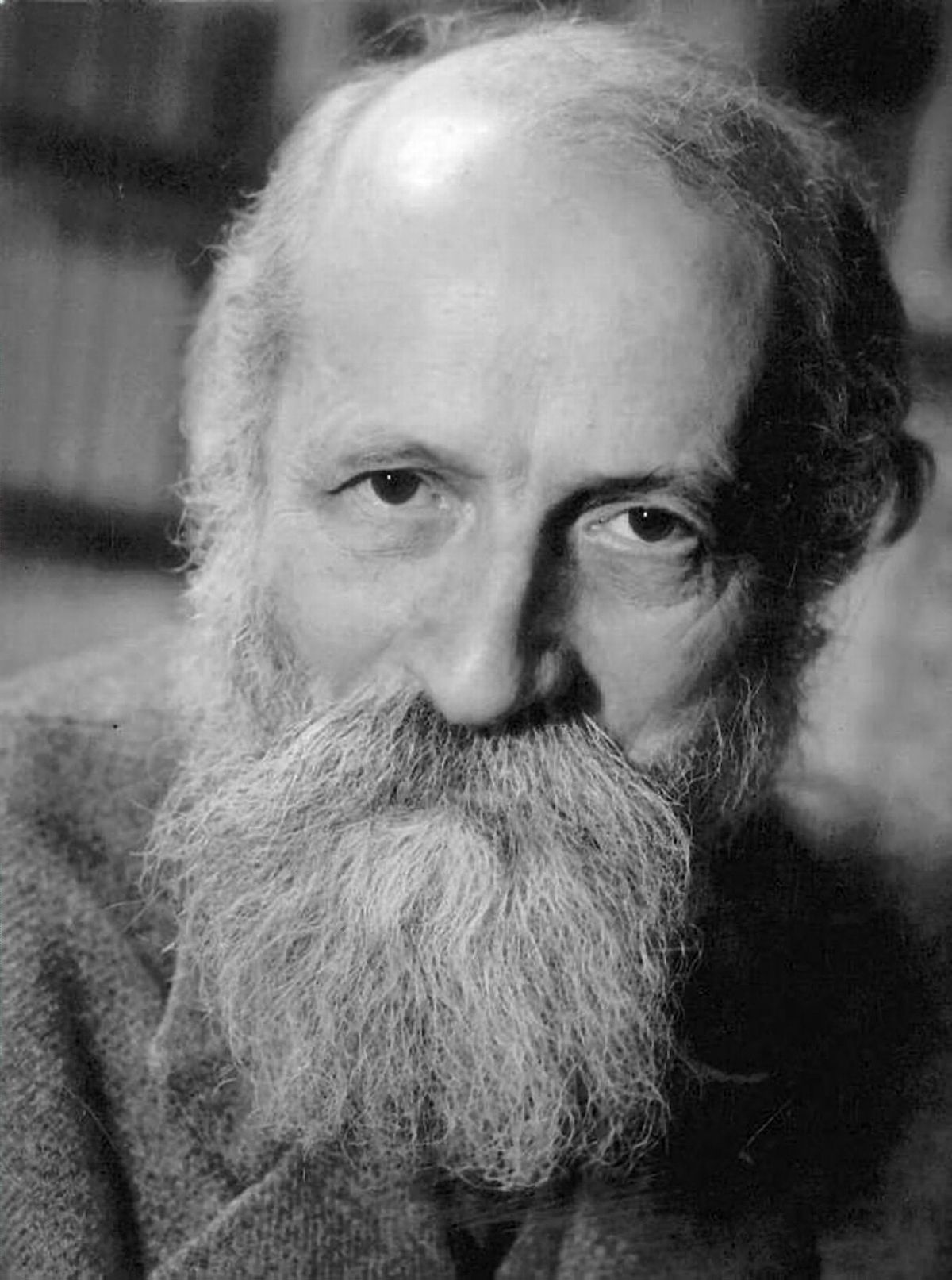
Martin Buber
Austrian-Israeli philosopherWikipedia
83
MENTIONS
65
EPISODES
62
PODCASTS
Search complete. 83 mentions across 65 episodes found for "Martin Buber".
Oct 30, 2026

Adam KligfeldHOST
Hello to those in my office, hello to those who are joining on Facebook Live and on Zoom, and hello to anyone who's listening to this in the Temple Beth Am podcast series.
Adam KligfeldHOST
Buber, Martin Buber, would say that the One of the theme words in the German word he used was Leitfort.
Adam KligfeldHOST
One of the Leitforts of Parshat Vayera is the root Tzadich Achet Kuf, Tzachak, to laugh.
Adam KligfeldHOST
Because it keeps

Noa KushnerGUEST
You mentioned my teachers, Dr. Borowitz of Blessed Memory and Arnold Jacob Wolff of Blessed Memory.
Noa KushnerGUEST
And of course, the greats, Heschel, Buber, Rosenzweig.
Noa KushnerGUEST
all of them, the feminist theologians.
Noa KushnerGUEST
I would like this book, first of all, this book is for anyone who is at all thinking about religion and is curious.

Julia HilderGUEST
And that's his uncle.
Julia HilderGUEST
And he was talking about a famous philosopher, Martin Buber, who had said, very tough times ahead.
Julia HilderGUEST
And he, that's his, his soundbite in the film.
Julia HilderGUEST
And, um, he did not leave.

BrianHOST
We're trying to send a complex, high-fidelity message through a channel that simply doesn't have enough bandwidth.
BrianHOST
The Jewish philosopher Martin Buber, in his classic work, I and Thou, taught that genuine, transformative relationships grow through wholehearted presence and making dedicated space for one another.
BrianHOST
In the Gospels, when Jesus shared deep, life-changing conversations...
BrianHOST
Like with Nicodemus in a quiet of the night or with the woman at the well in the midday heat, he made room for unhurried connection.

Mordecai FinleyHOST
But the main thing is people will meet others and make the possibility for deep connection.
Mordecai FinleyHOST
In fact, our first name for the synagogue was after Martin Buber and then after Franz Rosenzweig.
Mordecai FinleyHOST
Martin Buber Cultural Center.
Mordecai FinleyHOST
And we got rid of those names.
Mordecai FinleyHOST
And then one person said, Oratora.
Mordecai FinleyHOST
We got to come up with a name somehow.
Mordecai FinleyHOST
So that's what drove us.
Mordecai FinleyHOST
But the secret name of Oratora was Martin Buber, I and Thou, A Life of Dialogue, A Life of Being Present, So while we definitely wanted to teach Torah and we definitely wanted to preserve the tradition, at the core of it was people developing authentic relationships that can sustain them at this time in life and maybe throughout their lives.

Judith RoodGUEST
And I went to Israel as a 16 year old in 1974.
Judith RoodGUEST
And I went with a lot of ideas about Zionism, very idealistic ideas based on my readings of Buber.
Judith RoodGUEST
and what we would call cultural Zionism, but not political Zionism.
Judith RoodGUEST
When I was in Israel that first time, I just was struck by things that didn't seem right to me, mostly as an American, and also honestly as a woman.
Judith RoodGUEST
And neither option seemed feasible to me.
Judith RoodGUEST
So I came back to the United States and decided I was going to become a scholar.
Judith RoodGUEST
and carry on the tradition of Ahad Ha'am and Martin Buber.
Judith RoodGUEST
And I started to study a lot of intellectuals, among them Hannah Arendt.

AaronGUEST
But this article, I mean, what you just read kind of answered my question really well.
Pete QuiñonesHOST
Thus, when Martin Buber called for a state for the Jews, it was so they could serve humanity.
Pete QuiñonesHOST
For it is only by fulfilling his messianic dream of a national home, he said, that the Jewish religion can lead humanity towards the messianic age.
AaronGUEST
Psychopathy.

Stephanie KolinHOST
It is often mutually transactional.
Stephanie KolinHOST
But this question of how we relate to other people, how we use other people to fulfill our needs, and whether there is an alternative way of being is the heart of the philosopher Martin Buber's teachings.
Stephanie KolinHOST
You may be familiar with him.
Stephanie KolinHOST
He wrote the book I and Thou.

AaronGUEST
But this article, I mean, what you just read kind of answered my question really well.
Pete QuiñonesHOST
Thus, when Martin Buber called for a state for the Jews, it was so they could serve humanity.
Pete QuiñonesHOST
For it is only by fulfilling his messianic dream of a national home, he said, that the Jewish religion can lead humanity towards the messianic age.
AaronGUEST
Psychopathy.

Alfie KohnGUEST
You know, you end up with the Bay of Pigs crisis or the Ford Pinto, you know, because people didn't speak up and say, wait, I think this is wrong.
Alfie KohnGUEST
But in the same way that I think we have to challenge that, you know, when we were talking about listening before, I was thinking of the work of the philosopher Martin Buber, who focuses specifically on human life as not just me and you, but about the realm of the between, the inter-human.
Alfie KohnGUEST
And he talks about listening in a deep way of really imagining the real, as he put it, what's going on even before someone speaks and what underlies what they say.
Alfie KohnGUEST
But Bloomberg also had another interesting challenge to the idea of infusing a community with a mere collective.
55 more episodes mention Martin Buber.
Create an account to see the whole feed, search across every transcript, and follow the entities you care about.