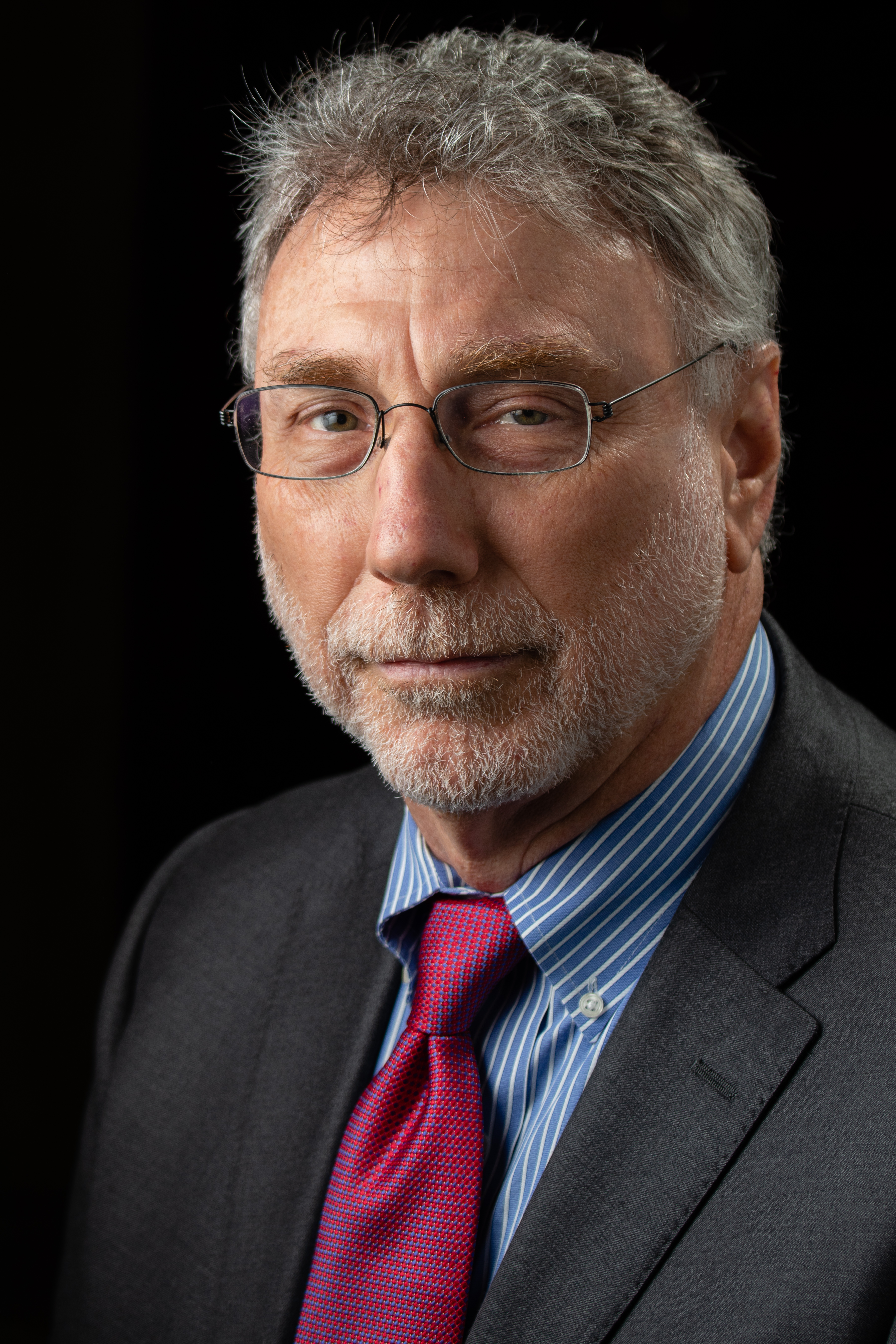
Martin Baron
American journalist and editorWikipedia
20
MENTIONS
12
EPISODES
11
PODCASTS
Search complete. 20 mentions across 12 episodes found for "Martin Baron".
Nov 2, 2026

Julie RoginskyHOST
I've been a source many times, not to Bob Woodward, but to others.
Julie RoginskyHOST
There is a moral dilemma, first of all, of what is your expectation? Is your expectation that once you're dead, who cares? Or is your expectation that you're going to keep my secret forever, even after I'm dead? what, because of the stories that he wrote for the Washington Post, as opposed to the books that he's written, does the Washington Post have a say in him revealing his sources when he was doing it on behalf of the Post? Apparently, Marty Baron, the former editor of the Post, prevented him from releasing Um, revealing during Brett Kavanaugh's hearings that Brett Kavanaugh was a source for him on some stuff, um, because it wasn't right from Marty Barron's point of view.
Julie RoginskyHOST
What do we think about that? I actually agree with Marty Barron as much as it pains me to say, although, you know, nothing would have made me happier than for Brett Kavanaugh to, to, to burn during those hearings.
Julie RoginskyHOST
But like, as a source, like you...

John DonnellyGUEST
The stories were heartbreaking and then uplifting.
John DonnellyGUEST
And so, and plus I was, I happened to be covering politics and the policy of global health and AIDS before PEPFAR and then because of my editor at the Boston Globe, Marty Baron, I and my family moved to South Africa for the first three years of PEPFAR's implementation.
John DonnellyGUEST
So it was a time, you could look at the whole history of PEPFAR, but I felt like the first five years of it laid the foundation and there were just amazing stories everywhere you looked.
John DonnellyGUEST
Your question about looking back and seeing trends and things that I didn't realize at the time is a very good one.

John DonnellyGUEST
The stories were heartbreaking and then uplifting.
John DonnellyGUEST
And so, and plus I was, I happened to be covering politics and the policy of global health and AIDS before PEPFAR and then because of my editor at the Boston Globe, Marty Baron, I and my family moved to South Africa for the first three years of PEPFAR's implementation.
John DonnellyGUEST
So it was a time, you could look at the whole history of PEPFAR, but I felt like the first five years of it laid the foundation and there were just amazing stories everywhere you looked.
John DonnellyGUEST
Your question about looking back and seeing trends and things that I didn't realize at the time is a very good one.

Jeff BezosGUEST
These are super complex.
Jeff BezosGUEST
Being the executive editor of the Post, we have Marty Baron, who in my opinion is the best executive editor in the world, and he's just He's killing he and his team they're doing an unbelievably good job and again back to you know I've been talking about the business model of the post we have to transition to this new way of having a small amount of money with lots of per reader with lots of readers The real reason this can work is because the post is creating riveting coverage and they're doing it they are you can't turn around a restaurant with business techniques if the food isn't delicious.
Jeff BezosGUEST
And we have delicious content.
Jeff BezosGUEST
The post is just riveting.
Jeff BezosGUEST
They are killing it.
Jeff BezosGUEST
I am so proud of that team.
Charlie RoseHOST
People in my profession are great admirers of what the Washington Post is today under Marty Baron's leadership.
Charlie RoseHOST
Totally.

Jacob WeisbergGUEST
And Jeff Bezos said no.
Jacob WeisbergGUEST
And Marty Baron, who was a heroic editor of the Washington Post, thought Bezos was fantastic.
Jacob WeisbergGUEST
And he said all the right things.
Jacob WeisbergGUEST
He did all the right things.

Josh TyrangielGUEST
But the president had made it clear, like, if you're against me, I'm going to be against you.
Josh TyrangielGUEST
You know, Marty Baron, the famous editor of the Washington Post, former editor, said, look, it seems pretty clear what happened.
Josh TyrangielGUEST
He came to the conclusion that all of his other businesses would be in jeopardy if the Washington Post continued to thrive as an independent, opinionated, thorn in the side of the president.
Josh TyrangielGUEST
And so what he said, you know, almost verbatim is that if the Washington Post was the thing he had to sacrifice to make sure those other businesses survived...

Jeffrey BrownCORRESPONDENT
She also regularly shared her views with us on the NewsHour.
Jeffrey BrownCORRESPONDENT
Marty Baron, then executive editor at The Post, characterized her work this way.
Marty BaronSOUNDBITE_SPEAKER
MARTY BARON, Executive Editor, The Post, She writes with great intellect.
Marty BaronSOUNDBITE_SPEAKER
She writes with great heart.
Jeffrey BrownCORRESPONDENT
JEFFREY BROWN, And she loves sharing her passion with young people.

John DonnellyGUEST
It was, from what I had been reading, um, also I had been to Africa a couple of times, I just, I couldn't believe that the world was, was standing by when scores, millions of people a year were, were dying from, from AIDS.
John DonnellyGUEST
And so I told him, "That's just what I wanna do." He and then the editor of the paper, Marty Baron, agreed with me.
John DonnellyGUEST
They said, "Go for it.
John DonnellyGUEST
Go travel there.
18 MINS LATER
John DonnellyGUEST
To get there was very painful, and it was very inspiring at the same time.
John DonnellyGUEST
I was in Africa at the time.
John DonnellyGUEST
After Bush announced it, I persuaded my editor, Marty Baron, to open the Globe's first bureau in Africa.
John DonnellyGUEST
And so I went, moved to South Africa, and started covering the rollout of PEPFAR, and very closely got to know a lot of embassy people throughout Africa and a lot of African government people on the other side working on it.
Sheryl Gay StolbergMODERATOR
And John did not just sit around after Bush's address.
Sheryl Gay StolbergMODERATOR
He persuaded Marty Baron, the editor of The Boston Globe, where he was working, to create a bureau in Africa, and he went and he reported on the ground what was happening there.
Sheryl Gay StolbergMODERATOR
Um, and he has written a beautiful book telling the story of one of the most important, if not the most important, programs of our time.
Sheryl Gay StolbergMODERATOR
Um, some people who were involved with this program are in the room.

Josh TyrangielGUEST
Bezos redirected The Post's opinion section to a much more libertarian bent.
Josh TyrangielGUEST
Everyone I spoke to, including Marty Baron, the f- the former editor of The Washington Post, came to the conclusion that a, a deal was struck.
Terry GrossHOST
Let's talk about the reasons that Bezos and Musk want to colonize space, and I know they both like love outer space.
Terry GrossHOST
It was like childhood fantasies for them.
2 more episodes mention Martin Baron.
Create an account to see the whole feed, search across every transcript, and follow the entities you care about.