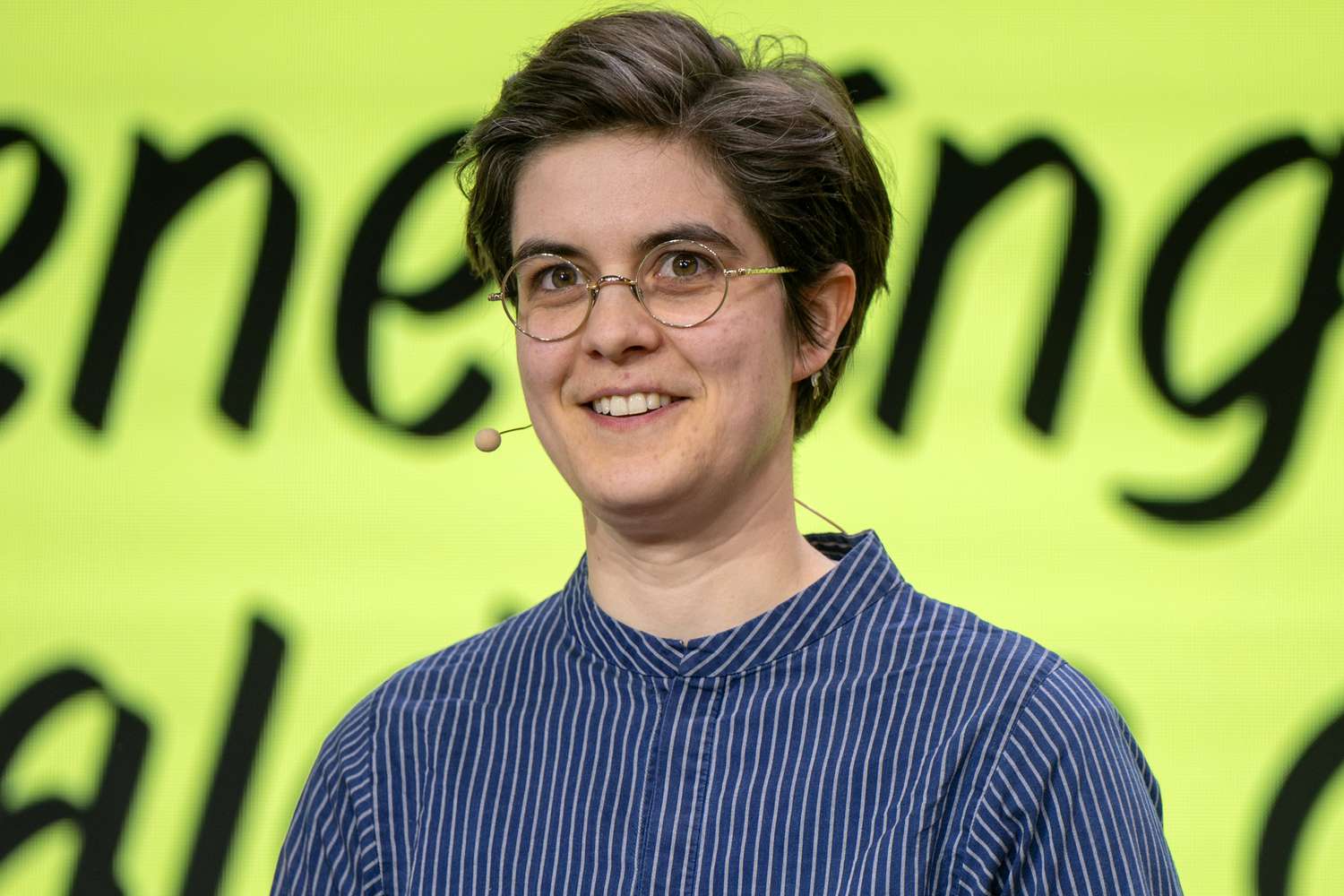
Marlene Engelhorn
Austrian-German activist and philanthropist
4
APPEARANCES
3
PODCASTS
Jun 10, 2026


Shalini RanderiaHOST
When you talk about socialization, the question that occurred to me was, how is one socialized when one is super rich? What is the story one tells oneself about this inherited wealth and privilege? Why is it that it's somehow something that one deserves or one doesn't even ask the question of what is deserved?

Marlene EngelhornGUEST
We don't ask ourselves whether or not we deserve it, but we have to immediately start creating a narrative.
Marlene EngelhornGUEST
That is a very weird way of thinking about it because first you have to say, especially of inherited wealth, "It's not your fault," which implies it's also not your merit.
Marlene EngelhornGUEST
So if it's not your fault or your merit that you inherited wealth because this is simply given to you because of your birth, which nobody can plan for, and also you have to abide by a certain set of usually very conservative rules within your family.
Marlene EngelhornGUEST
Some might be excluded from inheritance if they fail to abide by these rules.
5 MINS LATER
Shalini RanderiaHOST
So why did you decide to establish a participatory procedure using a citizens assembly which would decide on the fair distribution of your wealth? Could you say something about how you organized this process of choosing fifty Austrian citizens whom you entrusted with this responsibility while not participating yourself in their deliberations except for naming the total budget?

Glen GalaichHOST
And so for those who are not aware of your story, I was hoping maybe you could tell us a little bit about how you went about distributing your wealth and, and engaging in the philanthropy that you did and have.

Marlene EngelhornGUEST
So as an analogy, I'd like to bring up that there's a thing called rich fragility, which is very close to, you could, like, say, white fragility or male fragility.
Marlene EngelhornGUEST
Basically, you're in power and you can't deal with anybody challenging that power and making you understand that just because you're in power doesn't mean you should be in charge.
Marlene EngelhornGUEST
But to get back to the question, I just chose to be as transparent as possible and to grant a wider public to hold me accountable to what I say through what I do, and I think that's the main difference.


Marlene EngelhornGUEST
wanted.Well, I, um, must be honest because at the beginning I did choose where to put money.
Marlene EngelhornGUEST
I started redistributing immediately, and I made all of the mistakes that you do when you take power in your hands and you just use it.
Marlene EngelhornGUEST
But I realized that it was wrong that I decided who was worth my attention and my wealth.
Marlene EngelhornGUEST
And so having read about citizens' assemblies and being very intrigued by this democratic tool, I thought, "Well, maybe this is a process I can use." What I had to do was find a team, give them the task of creating a citizens' assemblies, basically get 10,000 addresses.
Marlene EngelhornGUEST
The people who are living at these addresses are at least 16 years old because that's the voting age, so that's why I chose that cutoff.
Marlene EngelhornGUEST
And then these 10,000 letters were sent out to these addresses, basically inviting these people to become part of a citizens' assembly.
9 MINS LATER
Marlene EngelhornGUEST
Well, I'm, must be honest, because at the beginning I did choose where to put money.
Marlene EngelhornGUEST
I started redistributing immediately, and I made all of the mistakes that you do when you take power in your hands and you just use it.
Marlene EngelhornGUEST
But I realized that it was wrong that I decided who was worth my attention and my wealth.
Marlene EngelhornGUEST
And so having read about citizens' assemblies and being very intrigued by this democratic tool, I thought, "Well, maybe this is a process I can use." And I asked around, and then basically at the end of the day, what I had to do was find a team and give them the task of creating a citizens' assemblies, basically get 10,000 addresses out of the...
Marlene EngelhornGUEST
I don't know if you have that in Australia, but, like, we have a registry in, in Austria, every person who lives here, and you get 10,000 addresses that are randomized addresses.
12 MINS LATER