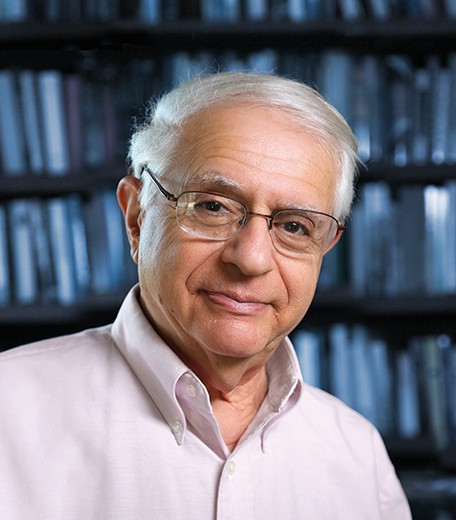
Mark Granovetter
American sociologist and professorWikipedia
13
MENTIONS
11
EPISODES
11
PODCASTS
Search complete. 13 mentions across 11 episodes found for "Mark Granovetter".
Sep 21, 2026

Sean WalshHOST
But before you go hack away at your list of connections, like you're a 23-year-old Doge employee at the Department of Health and Human Services, let us all recall the power of weak ties.
Sean WalshHOST
This is the sociological concept introduced by Mark Granovetter in 1973, the same year they gave us Cup of Noodles and the Kawasaki Jet Ski.
Sean WalshHOST
I will let you decide which of these was the most influential.
Sean WalshHOST
But please note, the theory has nothing to do with Christmas-themed neckties, although I would much rather talk about that.

Pete MockaitisHOST
And a favorite study or experiment or bit of research?
Ethel MickeyGUEST
So I want to talk about Mark Granovetter's The Strength of Weak Ties.
Ethel MickeyGUEST
And so folks in sociology, but also management, know about this research, which shows the value of our weak ties.
Ethel MickeyGUEST
These are those one-off connections that can often create new kinds of information.

Lorena RuizNARRATOR
The finding everyone quotes backward.
Lorena RuizNARRATOR
In 1973, Mark Granovetter surveyed 282 men in the Boston area about how they'd landed their job.
Lorena RuizNARRATOR
Among those who got it through a personal contact, only 16.7% saw that person often, 55.6% saw them occasionally, and 27.8% barely ever, once a year if that.
Lorena RuizNARRATOR
It's the study behind half the career posts on LinkedIn, and it almost always gets told backwards.

Mike FisherGUEST
It-- that is how this world works.
Mike FisherGUEST
So there was research by, um, a, a person named Granovetter who studied what they call strong ties and weak ties.
Mike FisherGUEST
And very briefly, strong ties are like your family, your closest, dearest friends.
Mike FisherGUEST
Weak ties is everybody else in your network.

Scott StirrettGUEST
That's where most people get business opportunities.
Scott StirrettGUEST
One of the most cited sociology papers of the last 70 years is called The Strength of Weak Ties by Mark Granovetter.
Scott StirrettGUEST
And in it, he found... that most people get hired through their weak ties.
Scott StirrettGUEST
And it makes sense because we have a lot more weak ties than we have strong ties.

IreneHOST
And this actually ties directly into a famous piece of sociology from 1973.
IreneHOST
It's a paper by Mark Granovetter about how people find jobs.
AaronHOST
Oh, the strength of weak ties concept.
IreneHOST
Yes.

Alice DraperHOST
It's time for me to go out, take myself out for a walk or a coffee or whatever it is.
Alice DraperHOST
Um, and then to your point, the power of network, I know that, um, I think it's sociologist Mark Granovetter did a study that found that weak ties are responsible for, I think, like five times more work opportunities than strong ties.
Alice DraperHOST
So that's like being able to connect, kind of cast that net wider and have people that maybe is a friend of a friend or an acquaintance, and that's where a lot of professional opportunities come from.
Alice DraperHOST
And a big theme of our whole conversation today, Tiffany, has been community.

Chris SchembraHOST
And that's it.
Chris SchembraHOST
There's a researcher named Mark Granovetter that we had on the podcast who did a study.
Chris SchembraHOST
I know him.
Chris SchembraHOST
Yeah.

Herman PoppleberryHOST
Let's put some structure on this.
Herman PoppleberryHOST
Mark Granovetter's 1973 paper, The Strength of Weak Ties, is one of the most cited papers in sociology, and the core finding is counterintuitive if you think close relationships are always more valuable.
Herman PoppleberryHOST
He studied how people found jobs, and roughly three-quarters of professional leads came through weak ties.
Herman PoppleberryHOST
Former colleagues, acquaintances, people you met once at a conference, not through close friends or family.
Herman PoppleberryHOST
Your close friends tend to move in the same circles you do.
Herman PoppleberryHOST
They know the same people, hear about the same opportunities.
Herman PoppleberryHOST
Weak ties bridge what Granovetter called structural holes, gaps between different social clusters.
Herman PoppleberryHOST
They're information bridges.

Julia ToothakerHOST
... is the interesting part.
Julia ToothakerHOST
So this was a study by somebody named, um, Granovetter, and he found that 56% of professionals found their jobs through personal contacts who were acquaintances, not close friends.
Julia ToothakerHOST
Okay, so this was back in the '70s.
Francis "Tank" RhodesGUEST
Mm-hmm.
1 more episode mentions Mark Granovetter.
Create an account to see the whole feed, search across every transcript, and follow the entities you care about.