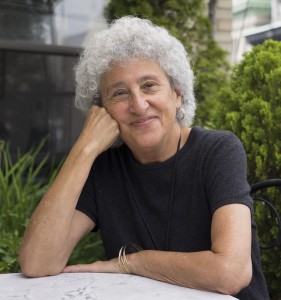
Marion Nestle
American nutritionistWikipedia
17
MENTIONS
10
EPISODES
9
PODCASTS
Search complete. 17 mentions across 10 episodes found for "Marion Nestle".
Sep 18, 2026

Sabrina JacobsHOST
coming up.
Sabrina JacobsHOST
Anna LePay is going to be there along with Marion Nestle.
Sabrina JacobsHOST
And it's entitled the Soda Tax Food Systems and Community Health Program.
Sabrina JacobsHOST
Here it's going to be at the Broward Center, David Brower Center, 6 p.m. to 7.30 on Wednesday, October 14th.

Joseph MercolaHOST
That preference for clarity over restriction is already showing up in federal policy.
Joseph MercolaHOST
Writing in the American Journal of Public Health, nutrition scientist Marion Nestle noted that the newest dietary guidelines advised people to limit highly processed foods, a first since the guidelines began in 1980.
Joseph MercolaHOST
The document avoided the word ultra-processed entirely.
Joseph MercolaHOST
Nestle calls highly processed a euphemism adopted because no consensus definition exists.

Michelle Pierce-HamiltonHOST
Of course.
Michelle Pierce-HamiltonHOST
And so I'm talking about who's shaping that message? Who is driving what we believe at a societal level about food? And I want to give a major homage to Michael Pollan and Marion Nestle, whose books I read when I was in school, because that was the first time my eyes were really opened to food politics.
Michelle Pierce-HamiltonHOST
And I was made aware of these influences as a very young person studying nutrition.
Michelle Pierce-HamiltonHOST
So Michael Pollan has great documentaries he's done about this, Food Inc., and more recently, Food Inc. 2.0. Like just last year was so good.
Michelle Pierce-HamiltonHOST
And Marion Nestle's a food scientist and very famous food scientist in New York who's written a lot of books about this.
Michelle Pierce-HamiltonHOST
So anyway, so I'm going to start with first with something that most people have never heard of.
Michelle Pierce-HamiltonHOST
In the United States, there's a system called a checkoff program.

Kate BittmanHOST
[upbeat music]
Mark BittmanHOST
We, Kate and I, had Marion Nestle on the podcast not long ago for her memoir, Slow Cooked.
Mark BittmanHOST
She's an incredibly prolific author.
Mark BittmanHOST
She's written more than 20 books, including the all important Food Politics, which was groundbreaking, but also Soda Politics, and What to Eat, and all kinds of really amazing stuff.
17 MINS LATER
Kate BittmanHOST
... probably not.
Kate BittmanHOST
[upbeat music]
Mark BittmanHOST
Stay tuned for more from me and Kate and Marion Nestle.
Mark BittmanHOST
[upbeat music]
Liz CarlisleGUEST
And so, you know, it's sort of a, a larger project of making more of the wealth in this country available to people to meet their basic needs in dignified ways rather than sort of just being held in the hands of these, like, couple hundred insanely wealthy people.
Lynley DixonHOST
people.I, I so agree with you that this vision of how the farm bill could really help us out in a much bigger way, and I love how Marion Nestle was like, "This isn't revolutionary.
Lynley DixonHOST
We are already putting billions of dollars into one system.
Lynley DixonHOST
Let's talk about putting it into the system that we really want." And two programs that were part of the Inflation Reduction Act were the local food school, Local Food for Schools, and the LF- Local Food Promotion Act, LFPA.

Julian BagginiGUEST
But the philosophical aspect is it's trying to draw out the general principles.
Julian BagginiGUEST
Marion Nestle is written about food politics.
Julian BagginiGUEST
She has exposed some of the worst excesses of food.
Julian BagginiGUEST
corporations around the world, you know, she's not blind to them.

Lynley DixonHOST
So what do you think about that? I, you know, people...
Lynley DixonHOST
I interviewed Marion Nestle, and she was one of the first people to be called a, you know, a handmaiden of the, of the nanny state.
Lynley DixonHOST
Like, how dare you tell me what to eat? A- and of course, I would say, "Well, these other professionals are telling you what to eat, and they're succeeding at it 'cause you're eating it."
Chellie PingreeGUEST
Mm-hmm.

Paul TrammellHOST
My name is Paul Trammell, and this is the podcast where I interview extraordinary people who make their own rules, who chase their own dreams, who live life by their own design, and who achieve extraordinary things.
Paul TrammellHOST
I've got a great interview for you today with Marion Nestle.
Paul TrammellHOST
Dr. Marion Nestle is Paulette Goddard Professor of Nutrition, Food Studies, and Public Health Emerita at New York University.
Paul TrammellHOST
She chaired that position from '88 to 2003 and retired in '17.
Paul TrammellHOST
She's also Visiting Professor of Nutritional Sciences at Cornell.
Paul TrammellHOST
All of that helps, and I appreciate it greatly.
Paul TrammellHOST
Now, let's get to it.
Paul TrammellHOST
This is my interview with Dr. Marion Nestle.

Aliza AbarbanelHOST
I'm your host, Eliza Barbanell.
Aliza AbarbanelHOST
Dr. Marion Nestle is a renowned nutritionist who has been shaping food policy for over half a century.
Aliza AbarbanelHOST
She co-founded NYU's groundbreaking food studies program in the '90s, and has published over 16 books, including her newest, Sugar Coated: Unboxing the Hidden Forces Shaping America's Favorite Breakfast Food.
Aliza AbarbanelHOST
Today on the show, she weighs in on the many buzzy topics in the food world today.
Aliza AbarbanelHOST
Think highly processed foods, fiber and protein maxing, dramatic evolution of food culture, and how her cereal box collection inspired this new book.
Aliza AbarbanelHOST
Marion Nestle, this is Taste.
Aliza AbarbanelHOST
Thank you for coming on the podcast.
Marion NestleGUEST
Glad to be here.

Deborah CohenGUEST
So they've built up this parasocial relationship, and then leads into authority bias.
Deborah CohenGUEST
And I was on a panel recently with Naomi Oreskes, who wrote Merchants of Doubt about the tobacco industry, and Marion Nestle, you know, with her work around the, the food industry.
Deborah CohenGUEST
And there, there were playbooks that they explored and ex- they exposed and they explored in those books.
Deborah CohenGUEST
There's also a social media playbook, and that's, that's different to what we know of, uh, with the tobacco industry.