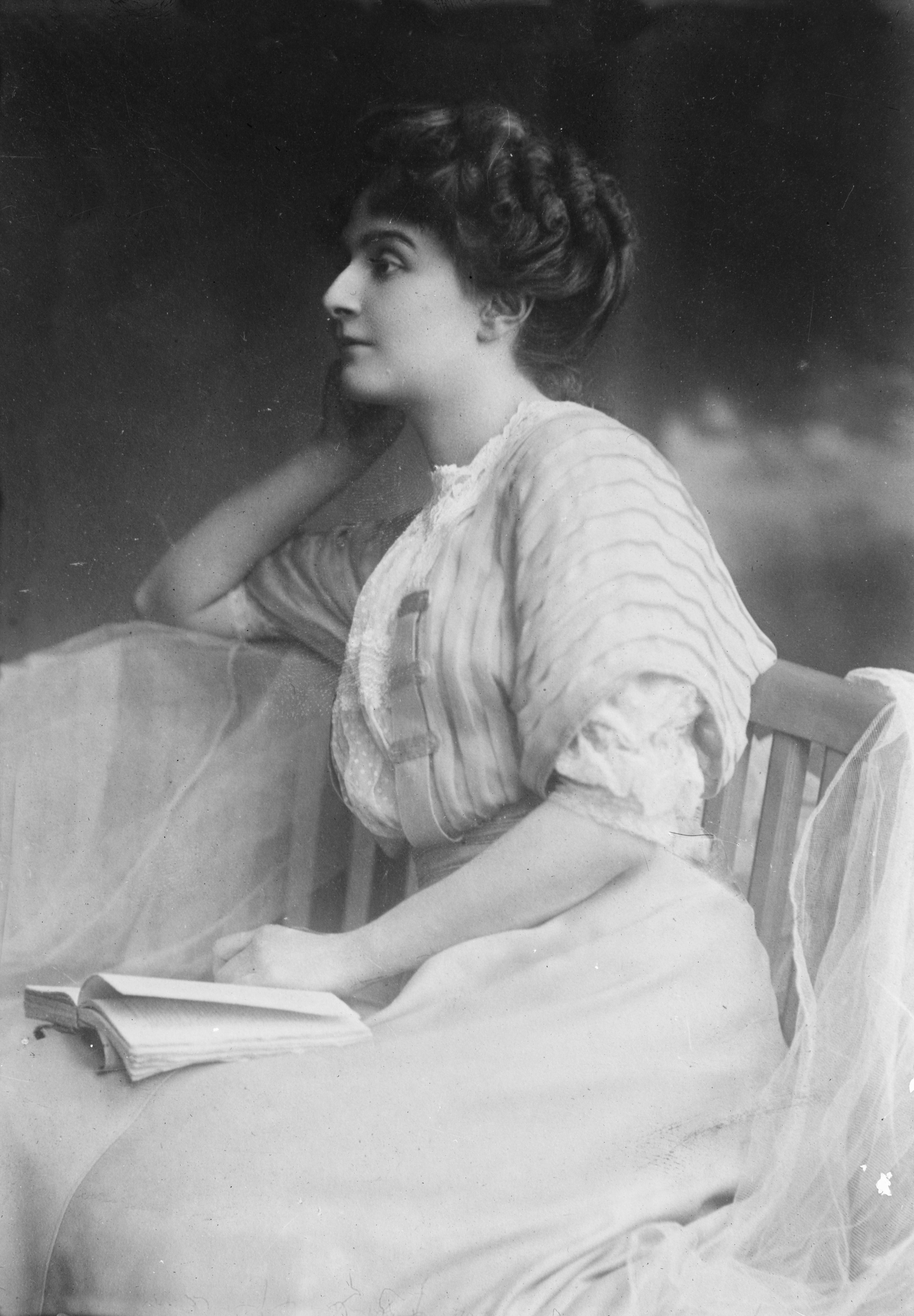
Marie Bonaparte
French authorWikipedia
33
MENTIONS
6
EPISODES
6
PODCASTS
Search complete. 33 mentions across 6 episodes found for "Marie Bonaparte".
Nov 1, 2026

Agnes Sobolewska AlsbergGUEST
And it may sound maybe obvious today, but it definitely was not obvious at the time, so in early 30s.
Agnes Sobolewska AlsbergGUEST
Because both of them, Severn and Ferenczi and Bonaparte and Freud, in both of these dyads, the problem was that how to offer the analysand a space to relive and also create a safe space that this can be, what can really help.
Agnes Sobolewska AlsbergGUEST
And Freud was not able to do that.
speaker_1NARRATOR
Welcome to the IPA podcast, Psychoanalysis On and Off the Couch.
Harvey SchwartzHOST
And he used an approach different than Freud's.
Harvey SchwartzHOST
And that is the focus of our second part of our conversation.
Harvey SchwartzHOST
It was a paper she's written comparing Freud's treatment of Marie Bonaparte and Sanda Firenze's treatment of Elizabeth Saverne.
Harvey SchwartzHOST
Both women are obviously different, but also brought to the treatment suffering from trauma and how each of the analysts dealt with it.

speaker_1NARRATOR
she interweaves stories from his mysterious and tragic life, from his strange disappearances and tortured romances to his nearly fatal use of opium.
speaker_1NARRATOR
With those of his most famous readers and translators, including poet Charles Baudelaire, writer Julio Corozar, and psychoanalyst Marie Bonaparte, a great-grandniece of Napoleon and a patient of Sigmund Freud.
speaker_1NARRATOR
Tracing their passionate attachments to Poe and Ogden's own unexpectedly sparked when she taught an introductory Poe course at the University of Virginia, where Poe himself was once a student, Darkness Becomes Bright makes a different case for literature from the one we most often hear.
speaker_1NARRATOR
Emily Ogden is the author of On Not Knowing, How to Love and Other Essays in Crudulity, A Cultural History of U.S. Mesmerism.

Frances WilsonGUEST
And she's fascinated by his influence on his two first European translators, on Baudelaire, who translated him into French for the first time, and on Cortésar, who translated him from Baudelaire's French into Spanish.
Frances WilsonGUEST
And she's also fascinated by the first psychoanalytic biography that was ever written, and it was obviously with Poe as a subject, because of course it had to, by Marie Bonaparte.
Frances WilsonGUEST
And the foreword was written by Freud.
Frances WilsonGUEST
And so she's thinking about Poe's influence on these three characters.

Jane IfradyGUEST
from the New York Times, Walt Whitman couldn't stomach him.
Jane IfradyGUEST
His writing gave Marie Bonaparte night terrors.
Jane IfradyGUEST
Reading his stories for the first time, the Mexican writer Amparo Davila found them so terrifying that she got diarrhea.
Jane IfradyGUEST
For Edgar Allan Poe, such responses were the very reason he wrote.

Brad ListiHOST
So forgive me if I'm muddling that, but I think it's Julio Cortázar.
Brad ListiHOST
and psychoanalyst Marie Bonaparte, who was a descendant of Napoleon and a patient of Sigmund Freud.
Brad ListiHOST
So Emily Ogden is writing about their passionate attachments to Poe, and she's also writing about her own.
Brad ListiHOST
And it all began when she taught a course on Poe at the University of Virginia, where Poe himself was once a student.
28 MINS LATER
Brad ListiHOST
And you mentioned Charles Baudelaire, who spent, I think, 17 years translating Poe into French, which radically changed the sort of future of literature there and elsewhere.
Brad ListiHOST
Your book also gets into Julio Cortázar, who translated Poe into Spanish.
Brad ListiHOST
the Argentine novelist, and then to kind of dovetail with my comment on psychotherapy, Marie Bonaparte, who was Napoleon's great-grandniece and who was an acolyte of Sigmund Freud and who ended up writing and publishing a 700-page psychoanalytic biography of Edgar Allan Poe in 1933.
Brad ListiHOST
So that's interesting because...

Scott RankHOST
Yeah, let's look at that later resurgence that happens among the Freudian psychoanalysis.
Scott RankHOST
This is thanks to Marie Bonaparte.
Scott RankHOST
She's Napoleon's great-grandniece.
Scott RankHOST
She's Sigmund Freud's patient and also his benefactor.
7 MINS LATER
Emily OgdenGUEST
Cortazar said of Poe that he thought that each Poe story was for the writer like an exorcism, that some creature would seem to be needing to be born within him, and he'd have to stop what he was doing and write until he got it out.
Emily OgdenGUEST
And Cortazar said that writing was like that for him, too.
Emily OgdenGUEST
And so I think that sort of like for Marie Bonaparte, there was a sense of deep kinship with him, not only as someone who one could read, but as someone with whom one could identify as an artist that drove Cortazar and that inspired him.
Scott RankHOST
This is the dream of any author, that your works are being read.