Maria Fitzherbert
12
MENTIONS
7
EPISODES
7
PODCASTS
Search complete. 12 mentions across 7 episodes found for "Maria Fitzherbert".
Sep 19, 2026

speaker_6NARRATOR
What again is the legal effect of the words which absolved the subject from his allegiance? Is it meant that a person arraigned for high treason may tender evidence to prove that the sovereign has married a papist? Would Whistlewood, for example, have been entitled to an acquittal if he could have proved that King George I had married Mrs.
speaker_6NARRATOR
Fitzherbert, and that Mrs. Fitzherbert was a papist? It is not easy to believe that any tribunal would have gone into such a question.
speaker_6NARRATOR
Yet to what purpose is it to enact that, in a certain case, the subject shall be absolved from his allegiance, if the tribunal before which he is tried for violation of his allegiance is not to go into the question whether that case has arisen.
speaker_6NARRATOR
The question of the dispensing power was treated in a very different manner, was fully considered, and was finally settled in the only way in which it could be settled.

EdenHOST
One story shows how seriously these laws were taken.
EdenHOST
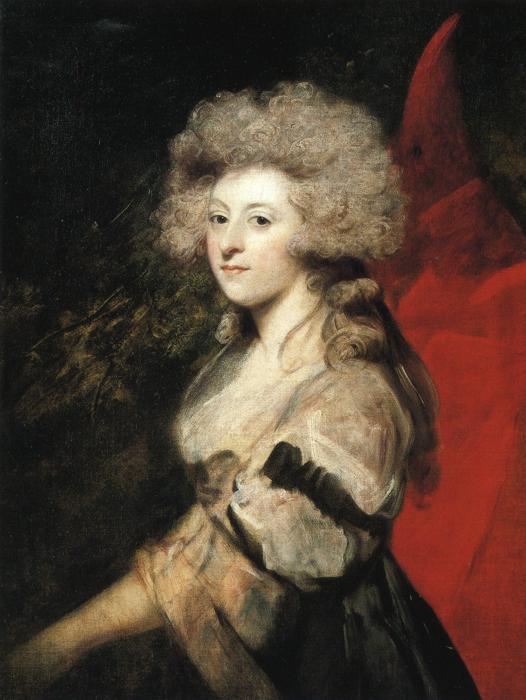
Um, if you look at George IV, 1820 to 1830, before becoming king, he secretly went through a marriage ceremony with Maria Fitzherbert, a devout Catholic widow.
EdenHOST
Because she was Catholic, and because he had not received the king's permission, the marriage could not be legally recognized.
EdenHOST
George publicly denied the marriage and later married someone else for political reasons.

John HagedornHOST
She bore him a son, in the person of that brilliant adventurer whom Charles afterward created, Duke of Monmouth.
John HagedornHOST
Many persons believe that Charles had married Lucy Walters, just as George IV may have married Mrs. Fitzherbert, yet there is not the slightest proof of it, and it must be classed with popular legends.
John HagedornHOST
There is also one Catherine Pegg, or Kep, whose son was afterward made Earl of Plymouth.
John HagedornHOST
It must be confessed that in his attachments to English women, Charles showed little care for rank or station.

Juan NaulaNARRATOR
Even after the death of the incapacitated George III, The problems for the British monarchy were far from over.
Juan NaulaNARRATOR
George IV married the Catholic widow Maria Anne Fitzherbert in 1785 in a secret and illegal ceremony.
Juan NaulaNARRATOR
Any children they produced would not be viewed as legitimate, and so George was finally persuaded to marry Princess Caroline of Brunswick in 1795.
Juan NaulaNARRATOR
This second marriage, though legal and approved by the elites and public alike, did not have a happy ending.
Juan NaulaNARRATOR
After Frederick's death, William was next in line to the throne and any legitimate children he had would become his heirs, ahead of his younger brother Edward, the fourth son, but William had no legitimate children.
Juan NaulaNARRATOR
Victoria's father, Edward, Duke of Kent, was the fourth son of George III, and he quickly married Victoria's mother, Princess Victoria, in 1818 in order to continue the line of succession.
Juan NaulaNARRATOR
The widowed Victoria already had two children from a previous marriage.
Juan NaulaNARRATOR
Her daughter, Princess Theodore, would become Victoria's beloved half-sister and companion.

Ruth GoldingNARRATOR
His unfortunate marriage with a Princess of Brunswick originated in his debts,—as he married that unhappy lady for one million sterling William Pitt being the contractor.
Ruth GoldingNARRATOR
The Princess of Wales married nothing but an association with the crown of England If the Prince ever seriously loved any woman It was Mrs Fitzherbert With whom he had Appeared At the altar Public opinion In England Under the inspiration Of the whigs Raised a cry Of indignation Against the prince It was imagined I presume That royal personage Should be born Without heart Or feeling That he should Have been able To live Only for the Good of the State And for the convenience Of his creditors The princess Of wales Was one of the Most unattractive And almost Repulsive Women For an elegant Minded man That Could Well have Been found Amongst German Royalty It is not My intention To recall The events Of the regency It is well Known That the prince Became eventually So unpopular As to exclude Himself as Much as possible From public Gaze His intimate Companions After the trial Of queen Caroline Were lords Cunningham And fife Sir Benjamin Bloomfield Sir william McMahon Admiral Nagle Sir a Barnard Lords Glen Lyon Hartford And Lowther These gentlemen Generally Dined with Him The dinner Being the Artistic Product Of that famous Gastronomic Savant Wattier The prince Was very fond Of listening after Dinner To the gossip Of Society When he became George IV No change Took place In these Personnels At the banquet Excepting That with the Fruits and Flowers Of the table Was introduced The beautiful Marchioness Of Conyngham Whose brilliant Wit according To the estimation Of his majesty Surpassed that Of any other Of his friends Male or female PRINCESS CHARLOTTE OF WALES AT A FETE IN THE YEAR 1813 AT CARLTON HOUSE Carlton House at the period to which I refer was a centre for all the great politicians and wits who were the favourites of the regent The principal entrance of this palace in Pall Mall, with its screen of columns will be remembered by many.
Ruth GoldingNARRATOR
In the rear of the mansion was an extensive garden that reached from Warwick Street to Marlborough House: green sward, stately trees probably 200 years old and beds of the choicest flowers gave to the grounds a picturesque attraction perhaps unequaled.
Ruth GoldingNARRATOR
It was here that the heir to the throne of England gave in 1813 an open air fete in honor of the Battle of Vitoria.
9 MINS LATER
Ruth GoldingNARRATOR
His house in Chapel street corresponded with his personal get-up the furniture was in excellent taste and the library contained the best works of the best authors of every period and of every country.
Ruth GoldingNARRATOR
His canes his snuff boxes his Sèvres china were exquisite his horses and carriage were conspicuous for their excellence and in fact the superior taste of a bromel was discoverable in everything that belonged to him but the reign of the king of fashion like all other reigns was not destined to continue forever.
Ruth GoldingNARRATOR
Bromel warmly espoused the cause of Mrs Fitzherbert and this of course offended the Prince of Wales I refer to the period when his Royal Highness had abandoned that beautiful woman for another favourite a coldness sprang up between the Prince and his protégé and finally the mirror of fashion was excluded from the royal presence.
Ruth GoldingNARRATOR
A curious accident brought Bromel again to the dinner table of his royal patron he was asked one night at Whites to take a hand at whist when he won from George Harley Drummond twenty thousand pounds this circumstance having been related by the Duke of York to the Prince of Wales the beau was again invited to Carlton House.

John LederNARRATOR
What again is the legal effect of the words which absolved the subject from his allegiance? Is it meant that a person arraigned for high treason may tender evidence to prove that the sovereign has married a papist? Would Whistlewood, for example, have been entitled to an acquittal if he could have proved that King George I had married Mrs.
John LederNARRATOR
Fitzherbert, and that Mrs. Fitzherbert was a papist? It is not easy to believe that any tribunal would have gone into such a question.
John LederNARRATOR
Yet to what purpose is it to enact that, In a certain case the subject shall be absolved from his allegiance, if the tribunal before which he is tried for violation of his allegiance is not to go into the question whether that case has arisen.
John LederNARRATOR
The question of the dispensing power was treated in a very different manner, was fully considered, and was finally settled in the only way in which it could be settled.

speaker_2NARRATOR
What again is the legal effect of the words which absolved the subject from his allegiance? Is it meant that a person arraigned for high treason may tender evidence to prove that the sovereign has married a papist? Would Whistlewood, for example, have been entitled to an acquittal if he could have proved that King George I had married Mrs.
speaker_2NARRATOR
Fitzherbert, and that Mrs. Fitzherbert was a papist? It is not easy to believe that any tribunal would have gone into such a question.
speaker_2NARRATOR
Yet to what purpose is it to enact that, In a certain case the subject shall be absolved from his allegiance, if the tribunal before which he is tried for violation of his allegiance is not to go into the question whether that case has arisen.
speaker_2NARRATOR
The question of the dispensing power was treated in a very different manner, was fully considered, and was finally settled in the only way in which it could be settled.