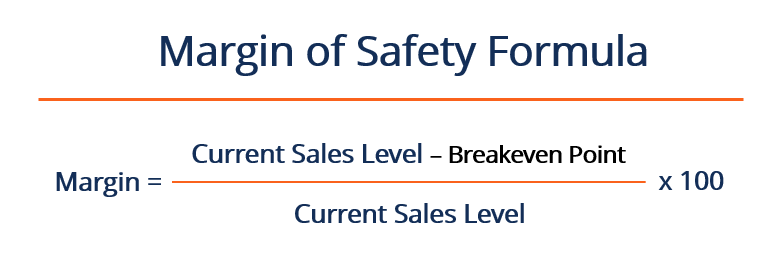
Margin of safety
24
MENTIONS
5
EPISODES
5
PODCASTS
Search complete. 24 mentions across 5 episodes found for "Margin of safety".
Oct 13, 2026

speaker_2HOST
And that gap, the space between the intrinsic value of the business and the depressed, panic-induced price Mr.
speaker_2HOST
Market is offering, is what value investors call the margin of safety.
speaker_2HOST
Honestly, this is probably the most important three-word phrase in all of finance: margin of safety.
speaker_2HOST
If you do the math and figure out a business is worth a hundred dollars a share and you buy it for ninety-five, well, you have a very thin margin of safety.
speaker_2HOST
If your math is even slightly off, you're gonna lose money.
speaker_2HOST
But if you buy that exact same hundred-dollar business for fifty dollars, you have a massive margin of safety.
speaker_2HOST
It protects your capital from your own mistakes, from unpredictable economic disasters, and honestly, just from plain bad luck.
speaker_2HOST
You buy at a bargain price so that your eventual gain is not only large, but much more importantly, it's secure.

James AshworthHOST
Uh, we look at, um, really any...
James AshworthHOST
We triangulate the valuation any way we can to try and understand whether we're really getting the business with a margin of safety, whether the, the value is compelling.
Julian BishopHOST
Yeah.
James AshworthHOST
Now, as you said, you know, some of the best, best businesses in the world, um, have really high quality, like really high competitive moats, really big barriers to entry, really strong growth prospects, and re- and the ability to deploy capital at really high rates of return for a long period of time.

speaker_1HOST
Most of the time you just ignore him entirely.
speaker_0HOST
Which leads perfectly into Graham's most important foundational concept, the margin of safety.
speaker_1HOST
The margin of safety is the ultimate defense against the diagnostic muddy waters.
speaker_1HOST
It simply dictates that you only ever buy a stock when Mr.
speaker_1HOST
Market, in a fit of depression, is offering it at a price significantly below your calculated intrinsic value.
speaker_1HOST
You wait until Mr.
speaker_1HOST
Market offers it at $6.
speaker_0HOST
Because that discount, that $4 gap, is your margin of safety.

David CoombsHOST
Instead, they need to protect themselves against the fact that they do not know.
David CoombsHOST
That is the purpose of the margin of safety.
David CoombsHOST
You may be wrong about the future.
David CoombsHOST
Interest rates may rise.
David CoombsHOST
A government may change the rules.
David CoombsHOST
or something entirely unexpected may happen.
David CoombsHOST
The margin of safety exists because the future is full of surprises.
David CoombsHOST
It is an investment philosophy built around the humble admission, I don't know.

speaker_1HOST
How so?
speaker_3HOST
Well, the value investor operates on the principle of the margin of safety, a concept pioneered by Benjamin Graham.
speaker_3HOST
They are not trying to predict the future dominance of an unproven business model.
speaker_1HOST
They're looking at what's in front of them right now.
speaker_3HOST
You can't use an adjusted EBITDA metric that ignores capital expenditures either.
speaker_3HOST
You have to use tangible unencumbered cash.
speaker_1HOST
So free cash flow is the only metric that provides the value investor with their required margin of safety.
speaker_3HOST
Yes, because if a business is already generating massive amounts of free cash, it doesn't matter if the market suddenly crashes.