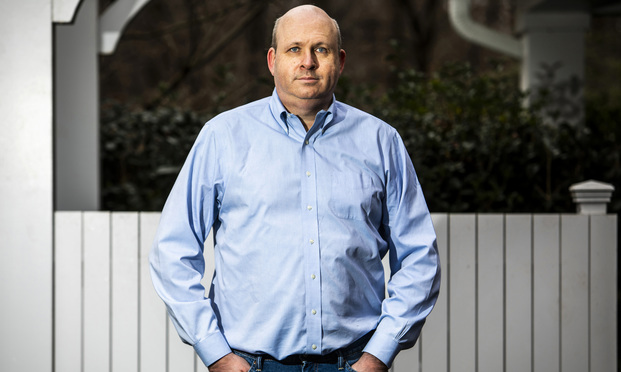
Marc Elias
American attorney
236
APPEARANCES
41
PODCASTS
Oct 13, 2026


Marc EliasGUEST
all, I'm sure he's not happy about having been sanctioned along with his lawyers.
Marc EliasGUEST
But beyond that, we are in the season in which Donald Trump and his enablers are trying to rewrite history.
Marc EliasGUEST
It's no surprise from my standpoint that all this is taking place against that back Trump.

Marc EliasGUEST
Alicia, I think i- it's your last point that everyone needs to hear loud and clear.
Marc EliasGUEST
Anyone who is waking up today or turn- turning on TV and finding out that Donald Trump is now gonna create some kangaroo process, you know, to go after Lisa Cook, and they are surprised, they just, like, have not been paying attention.
Marc EliasGUEST
Donald Trump wants to, as, uh, was suggested there, have his Department of Justice check boxes to indict people to create a narrative that, that pleases Donald Trump.
5 MINS LATER

Alicia MenendezHOST
I mean, it's also possible that both things are true, right, Marc Elias? That this is both, that both the process is the punishment, this is time, this is money for Lisa Cook, for Cassidy Hutchinson, and that there is an administration that believes this benefits them politically.
5:49
Because now with the some runway to have established this voter rule, how can the Supreme Court then turn around if a bunch of people have been disenfranchised and say, no, no, you can't disenfranchise them when they've just given them the green light to do exactly that?
Marc EliasGUEST
So remember, you know, there have been several cases that have gone to the Supreme Court and we have won the majority of them.
Marc EliasGUEST
prevent Donald Trump from turning the Postal Service into a disenfranchisement machine for 2026.

Marc EliasGUEST
Uh, the fact is that in this one document that was dated Janu- June 1st, 2026, so we don't know what they've done since then, but in that one document, we learn the following things.
Marc EliasGUEST
Number one, that they had, uh, targeted a number of progressive, uh, organizations that do voter registration, and over and over and over again, found nothing.
Marc EliasGUEST
Okay? They made clear that they looked at these organizations, and they found no derogatory information.
Marc EliasGUEST
They found, uh, no evidence of financial crimes, but they, but these organizations were targeted, and they were targeted by investigators who are supposed to, among other things, be tracking down transnational, you know, crimes like money laundering.
Marc EliasGUEST
The second thing we learn, Nicole, in these records are, is that notwithstanding having found nothing, they actually contemplated deploying undercover agents to infiltrate these same organizations, organizations that are registering people to vote, which is their constitutional right, and I would say their obligation, their civic obligation to do.

Nicolle WallaceHOST
I mean, Mark, it feels like they are, they have pushed through that sacred boundary, and they are now traipsing through people's personal data.


Jon LovettHOST
What are they, like, in your f- sort of worst imaginings, what do you think they would try on Election Day?
Marc EliasGUEST
The plan that Donald Trump has is to make it harder for people to vote and easier for him to cheat because, as you point out regularly, like, Donald Trump is historically unpopular.
Marc EliasGUEST
So what we have been seeing in the run-up to the midterms are a series of efforts by Donald Trump to try to use the power of the federal government to skew who is able to vote, right? Proof of citizenship, SAVE Act, all of that, the US po- the attacks on the US Postal Service.
Marc EliasGUEST
But as we head towards Election Day, and we talk about, you know, like, what are the threats then, what they're trying to do is to both shape the electorate by, by, you know, deterring certain people from voting, but then, if they can, trying to take over the vote counting and the certification process.
Marc EliasGUEST
I mean, in 2020, in the aftermath, when I was representing President Biden in beating Donald Trump in court, there was a meeting in the White House, which we now know about, and an executive order presented to him in which he would have the military seize ballots and voting equipment in Georgia, and that only didn't happen because the Department of Justice and the White House Counsel's Office said, "You can't do it," and will resign.
18 MINS LATER
Jon LovettHOST
If there was a deal on the table for a national voter ID law, what would you demand to get to yes, where you think it would be good for democracy and something Democrats should support? Like, if there was gonna be a national voter ID law, is there a way that you would think about it, right? 'Cause a lot of these-- like, that would help in some of these state issues and local issues around disenfranchising and all the rest.
Marc EliasGUEST
Yeah, yeah, Nicole, I, I think that you captured it perfectly right in that it is leading to a crescendo.
Marc EliasGUEST
We had a big victory, as you mentioned, in the Supreme Court, uh, preventing, uh, an illegal gerrymander from going into effect in Missouri.
Marc EliasGUEST
Uh, there was a setback, uh, involving the ability of the SAVE database to be rolled out, uh, also from the Supreme Court.
Marc EliasGUEST
There was a victory you mentioned, uh, uh, in, uh, um, uh, in an effort, uh, uh, uh, in the, in the trial court.
Marc EliasGUEST
You know, there have been other cases that have been filed, right? There's just a lot going on, but what it's doing is it's building and building and building towards election day, and there is no sign that Donald Trump is deescalating.
8 MINS LATER


Jen PsakiHOST
We are, we're reading this and thinking, "What does this mean?" So let me start with the question I think everybody watching wants to know, which is what does this mean for the midterm elections, to the degree you can parse that out for us?
Marc EliasGUEST
Yeah, look, uh, the justices made very clear they were rushing this case forward to have an impact in the 2026 midterm elections.
Marc EliasGUEST
And what it means is that the Trump, you know, database, this, this effort to build a voter suppression, um, uh, tool, will be available to states.
Marc EliasGUEST
Blue states will be resistant and likely be threatened by the Department of Justice with criminal investigations and harassment.
Marc EliasGUEST
And then there will be individual county election officials who in some places will be caught between.
Marc EliasGUEST
So I, I don't think Donald Trump did this because he is hoping that it will not lead to the disenfranchisement of a significant number of voters, right? He didn't do this for onesies and twosies.
Jen PsakiHOST
What, what should people who are kind of f- freaked out out there, um, who are just average people, they just want to participate in the process, what should they know and understand about this?
Nicolle WallaceHOST
Uh, but just put this into context in terms of what it means for voters right now.
Marc EliasGUEST
So the one that is very obvious is that states will now be permitted to access this faulty database, this database that was created in the Bush administration to deal with government benefits, that was never intended to deal with anything involving who's eligible to vote.
Marc EliasGUEST
They will now be able to access this data, uh, and use it in ways that will almost certainly disenfranchise lawful American citizens, okay? That is, that's the, that's the best case, uh, of what will happen, because they will do that one by one.
Marc EliasGUEST
I think the thing that is yet to be seen, and which we need to be vigilant for, is that, you know, I don't think Donald Trump went through all this trouble so that, you know, a state could kick off a person here and kick off a person there.
Marc EliasGUEST
I think Donald Trump went through this trouble, and the administration litigated this to the Supreme Court because they are hoping that states will violate federal law.
Nicolle WallaceHOST
If it is a practice that isn't a practice, if it's a, if it's a problem that doesn't exist, what is the reason to force states to push voter information through their database?
2:00
So how does the federal government have any standing here to be able to say that we're going to keep voter rolls that will determine whether or not certain individuals in this country have to be purged?
Marc EliasGUEST
yeah so look what the federal government is saying is look we're just making this available to the states so we're not we're not dictating anything but you're exactly right brian for two reasons first of all this originated in donald trump's executive order right so like it it has its providence in donald trump issuing an executive order about elections that he does not have the authority to govern or be involved in.
Marc EliasGUEST
Number two, he can say all he wants, that this is not going to dictate anything to the states.
Marc EliasGUEST
But we all know that at the same time he is doing this, these same Republican states are turning over their voter rolls.
Marc EliasGUEST
And so this is not like the federal government saying, oh, geez, we're just trying to provide a helpful resource to everybody.
Marc EliasGUEST
I mean, look, the Supreme Court's already granted cert in a case that we won below on behalf of Mi Familia Vota, which is precisely a case about whether or not they can conduct mass purges.
Marc EliasGUEST
And the Supreme Court here says, oh, you know, this question was not presented and it will be presented in that later case.
Alicia MenendezHOST
This dissent from Kagan, from Sotomayor, from the three liberal justices, it makes it abundantly clear what is at stake here.

Marc EliasGUEST
We have, you know, out of California, there is a ruling from the state Supreme Court that a Republican sheriff who sees 650,000 ballots was wrong to do that.
Marc EliasGUEST
I don't think it is any surprise that you have the, you know, Republican sheriffs doing that at the same time that, you know, we of course know what the FBI did in Fulton County.
Marc EliasGUEST
And yes, Simone, as you point out, we have fires burning in a number of different fronts, right? We have lawsuits, including the one that we filed late last night on behalf of the Democratic Party to prevent the deployment of federal armed officers at the polls.
Marc EliasGUEST
But the question I have there that we all should be asking, which is sort of the same question about access to the White House, which is, If there's a federal criminal law that prohibits armed federal agents from being at the polls, why is the FBI director? Why is the director of Homeland Security? Why is the White House? Why is the attorney general always suggesting that maybe they will or there's nothing wrong with deploying federal armed agents at the polls? Why is it if the First Amendment, a federal judge says that MSNOW and CNN have a right to be present in the White House to report on the president? You know, why is it that there are these snafus intentionally otherwise preventing them from being at the White House? And the answer is the same, which is that Donald Trump.

Luke RussertHOST
The first thought that went into my mind, Mark, when I read that is why? Are these upcoming midterms at risk from some rogue sheriff, some rogue right wing conservative sheriff somewhere in some state that says, I'm going to go seize these and just try to run out the clock through January 4th? Are we at risk of that?
Marc EliasGUEST
Look, this is the big challenge of this generation is, you know, I think there is a desire and a natural impulse to think that what we have is a few bad apples.
Marc EliasGUEST
There is an entire party that has a complete convention center full of bad apples, right? I mean, Donald Trump stood up and told people to pledge to him, among other things, that they would vote whether or not they were registered or not and that they would cheat like hell.
Marc EliasGUEST
And that is just like – because that is the platform now of the Republican Party, that they will cheat like hell.
Marc EliasGUEST
And that means that they run candidates who are – who want to determine the outcome of elections based on whether Donald Trump is happy or unhappy rather than what the voters say.
7 MINS LATER
Alicia MenendezHOST
I'm sure you saw some of that speech, but also at the The GOP convention, Trumpapalooza, just last week, I mean, it is so far beyond what is normal or what we are accustomed to, and yet they are flagrantly out there not just violating the Hatch Act, but thumbing their nose at this idea that DOJ is not supposed to be a political institution.


Katie CouricHOST
If the evidence of voter fraud in this country is so rare, why are Republicans so obsessed with these laws, both at the state and federal level?
Marc EliasGUEST
They want to make it harder for you to vote and easier for them to cheat, okay? And that is the basic truth behind most of this.
24 MINS LATER
Marc EliasGUEST
Um, but to your, to your point, you know, I think the most revealing thing that Donald Trump said in that post was that this is a loss for Republicans.
Marc EliasGUEST
Like, you know, not that it's a loss for the Postal Service, not that it's a loss for the Department of Justice, not that it's a loss even for, like, the rule of law, all of which I would disagree with, but he comes out and says what you and I know to be true.
Marc EliasGUEST
This whole thing, this entire gambit that we have gone through over the course of the last several months involving this rule and this lawsuit and the related litigation, has all been Donald Trump's effort to use an executive order to have the US Postal Service do his bidding to try to make it harder for Democrats to win elections, and that is why he described this as a loss for Republicans.
Marc EliasGUEST
They are partisan efforts to use the, the federal government to achieve a partisan result, and he has lost over and over again in court, most recently in the US Supreme Court.


Rachel MaddowHOST
So what is your reaction to this ruling tonight? What should we understand about what just happened?
Marc EliasGUEST
Yeah, so first of all, this was a great ruling, right? I mean, the Supreme Court slammed the door on these claims.
Marc EliasGUEST
Even if you take Justice Kavanaugh's sort of more tepid concurrence aside, it's still 6-3.
1:51
This is from our conversation yesterday, where we were discussing the likelihood of Trump losing this case.
Marc EliasGUEST
So Brian, when you ask me, does the delay that we are seeing from the Supreme Court ruling, does that favor our position? The answer is I damn well hope, I pray, with every fiber in my being, I want to believe that this Supreme Court, even this Supreme Court, it would be too far.
Marc EliasGUEST
for them to go to rule and run the risk of a failed election, not in one community in one place, but frankly, throughout the United States.
Marc EliasGUEST
I mean, one of the things that drives me a little bit crazy with the way the legacy media covers these stories is that they say, you know, one of the effects of this ruling would be, one of the impacts of this rule going into effect would be And then they talk about chaos.
1:51
This is from our conversation yesterday, where we were discussing the likelihood of Trump losing this case.
Marc EliasGUEST
So Brian, when you ask me, does the delay that we are seeing from the Supreme Court ruling, does that favor our position? The answer is I damn well hope, I pray, with every fiber in my being, I want to believe that this Supreme Court, even this Supreme Court, it would be too far.
Marc EliasGUEST
for them to go to rule and run the risk of a failed election, not in one community in one place, but frankly, throughout the United States.
Marc EliasGUEST
I mean, one of the things that drives me a little bit crazy with the way the legacy media covers these stories is that they say, you know, one of the effects of this ruling would be, one of the impacts of this rule going into effect would be And then they talk about chaos.
Marc EliasGUEST
I mean, one of the big lies of this era is obviously lies Donald Trump tells about voting.
Marc EliasGUEST
But one of the other lies is that somehow Donald Trump and the Republicans care about voter fraud.
Marc EliasGUEST
Like, oftentimes our response is vani- voter fraud is vanishingly rare, which is true.
Marc EliasGUEST
There's no evidence that elections are affected by voter fraud, that voter suppression is much more serious, true.
Marc EliasGUEST
But one of the things we have to also be clear about is what you just saw, which is that Donald Trump's plan for elections is to make it harder for you to vote and easier for him to cheat.


Marc EliasGUEST
We've filed briefs of one kind or another in all 13 of those proceedings on the mail-in voting, explaining that this nutty executive order by Donald Trump and the USPS rule cannot be implemented in what is now less than two months to Election Day, the Supreme Court should.
Marc EliasGUEST
And I think there's a greater than 50 percent chance that they will refuse to touch the injunction that has stopped this bizarre Trump

Marc EliasGUEST
I mean, in a given state, you'll have hundreds or thousands of different iterative versions of ballots depending on local elections and congressional elections.

Chris HayesHOST
Let's just end this on taking a step back here, which is, if all this seems insane and no way to run an election, the constant litigation, the redrawing of boundaries, we're living in the world the Roberts Court created when they destroyed the Voting Rights Act for no reason whatsoever, when they ripped out Section 2 and Section 4 that had, you know, A whole process that had been provided by the law, a law that was signed by super voted for super bipartisan majorities in both houses and re-up multiple times and signed by different presidents that basically created a system that wasn't this absolutely ludicrous arms race that we now live in, which this is apparently like this is what they've brought.
6:28
And they'll try to implement similar policies where they can just eliminate polling places in places that are more predisposed to voting for Democrats as kind of a last ditch effort to help themselves in the lead up to an election where the national environment is so unfavorable to Republicans.
Marc EliasGUEST
You know, every so often I get asked by people in real life or online, you know, why is it that Republicans seem to care about certain things and Democrats don't care as much? Like, so for example, I mean, you've probably been asked a thousand times, you know, why is it Republicans prioritize the Supreme Court and the courts and why were Democrats not prioritizing it in the same way, right? One of the things is Republicans really prioritize the making it more inconvenient for Democrats to vote.
Marc EliasGUEST
Like in a way that Democrats don't try to make it more, like they don't exert as much energy to make it more convenient.
Marc EliasGUEST
So in other words, Democrats, I'm not suggesting Democrats should make it inconvenient for Republicans to vote, but you would think that when Democrats controlled the process, they would like just absolutely hammer home making sure that, that there are poll locations that are convenient for for all voters and you know republicans just focus on this a lot more so am i worried yes i am worried because it is not just like i said in this one county in texas or even just in texas this is something that republicans in red counties in blue states where they control the process in red states where you know it's controlled at the statewide level like we run up against this as a I run up against this all the time.
9:46
But I think until Democrats start to adopt this mentality and understand the broader national environment that we're operating in, we're going to continue to to just fight back, push back against these offensive efforts by Republicans and never take offensive steps ourselves.
Nicolle WallaceHOST
Like the whole trope about tinfoil hats on the right that sort of animated the negative and derisive stereotype about conspiracy-minded conservatives was about this, scooping up personal data, and now this is Trump's policy.
Marc EliasGUEST
Yeah, I want everyone to remember, you know, people are familiar with REAL IDs today.
Marc EliasGUEST
The REAL ID program was actually launched by George Bush [laughs] after 9/11, and the reason why it didn't get implemented quicker is because it was conservative Republicans who said, "We don't believe the federal government should have the right to, you know, put together a no-fly list.
Marc EliasGUEST
We don't think that they should have a right to dictate to us what our driver's license, uh, driver's licenses look like." I mean, this was George Bush in, in, in 2001 trying to, you know, react to the, the attacks on 9/11, and it was the conservative movement that, uh, you know, here we are 25 years later and it finally is getting implemented.
Marc EliasGUEST
And but yet here is Donald Trump saying we need to create national databases on individuals that include not just their name and address and Social Security number, not just whether they've moved, not even just whether they've registered to vote, but whether they are Democrats or Republicans, whether they have voted in particular primaries, right? I mean, if you're watching this and you're thinking Donald Trump wants to know whether I'm a Democrat or Republican, but I don't care because I'm a proud Democrat.
Marc EliasGUEST
Well, if you're a Republican listening to this, he wants to know did you vote in the primary or did you sit that one out? Because the people who sat that out maybe don't stand in as good stead as the people who voted for him in the primary.
Marc EliasGUEST
Now, I mean, that may sound fanciful to you, but, but I ask you, why did the Department of Justice send letters to 50 states to try to get access to this information? When they failed, they sued.
6 MINS LATER
Nicolle WallaceHOST
They're now asking the Supreme Court to overturn what is clearly unconstitutional, right? To give the federal government control over elections.
Marc EliasGUEST
It's not constitutional, it's not legal, it's not normal, and it's extremely dangerous.
Marc EliasGUEST
I mean, the, the level of alarm that people should have has increased dramatically in the last few weeks, where you have the US Postal Service, which has always been neutral with respect to what mail it carries or doesn't carry.
Marc EliasGUEST
You know, if Tim sends out one of his newsletters, the US Postal Service carries it even if it's critical of Donald Trump.
Marc EliasGUEST
If MSNBC now wants to send a, a, a, a, a letter to the White House protesting treatment of one of its reporters, the US Postal Service delivers it.
Marc EliasGUEST
If Democracy Docket wants to publish its own content by mail, it gets delivered.
Marc EliasGUEST
Well, all of a sudden now when it comes to ballots, when it comes to ballots, the US Postal Service is imposing restrictions that will require states to turn over sensitive voter information to the federal government.
Nicolle WallaceHOST
So where is the data coming from? What are, what are they gonna, what's gonna populate their page if they put it back up?
2:25
Can you speak on the fact that it's Democrats who disproportionately use mail-in ballots in the first place? And so when you have a faulty system, faulty by design, I think both of us would argue that this is actually, you know, a feature, not a bug of this whole process.
Marc EliasGUEST
That is an engineering choice they made, which means that if any one data field doesn't match, then everything's rejected, right? They didn't have to adopt that.
Marc EliasGUEST
They could have said if one name doesn't match, just that one person doesn't get a ballot.
7:05
What is the recourse as this is happening? Because folks are going to be watching this and they're going to rightfully, I think, feel a sense of despair or hopelessness or fear that this stuff is happening and want to know what we have as far as our defense is concerned.

6:07
Mark, what would happen if we'd never heard from this whistleblower, if they'd never come forward?
Marc EliasGUEST
Right now, there are a number of lawsuits pending in federal courts around the country to block this system from going forward, to block the implementation of this and to not have it be in place.
Marc EliasGUEST
And part of why this blockbuster report is so significant is because it also interfaces with those court orders and suggests that the Postal Service may have been disregarding court orders which again is not something that is unheard of in this administration uh and so you know what would have happened if this whistleblower didn't come forward well we hope that the courts would have still held we hope that that would have been enough to dissuade the rollout but but no guarantees and so you know i i think that this is just a further evidence of why these whistleblower protections are so important and also why we have seen this white house try to cut back on whistleblower protections.
Scroll for more appearances