Mamluk Sultanate
DynastyWikipedia
47
MENTIONS
9
EPISODES
9
PODCASTS
Search complete. 47 mentions across 9 episodes found for "Mamluk Sultanate".
Oct 26, 2026

Mikey MuhannaHOST
What does it look like to conquer another empire in 1500? Selim is the sultan who
Alan MikhailGUEST
conquers what we conventionally think of as the Arab world.
Alan MikhailGUEST
Complete changes the fortunes of the Ottoman Empire.
Alan MikhailGUEST
And as I argue in the book of world history, I want to think about that as a kind of world historical event.
Alan MikhailGUEST
event.
Alan MikhailGUEST
And, um, you know, that's a, that's a particular history that has its own shape.
Alan MikhailGUEST
Um, know as i developed as a scholar um and really in graduate school and then my own kind of research in the region came to see that you couldn't understand the modern period um the 19th and the 20th centuries without really understanding the 300 years that came before it that's a very historian move of course to say oh these things have a much longer history to them Um, but that, that became something that I was increasingly interested in.
Alan MikhailGUEST
Um, I'm not saying you can't study the 20th century Middle East without, um, any knowledge of the Ottoman Empire.

speaker_0NARRATOR
Then Selim turned south.
speaker_0NARRATOR
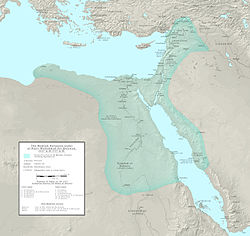
The Mamluk Sultanate controlled Egypt, Syria, and the holy cities of Mecca and Medina, and by 1516 it was struggling.
speaker_0NARRATOR
Two campaigns in 1516 and 1517 dismantled Mamluk power entirely.
speaker_0NARRATOR
Egypt, the wealthiest province in the Arab world, and the breadbasket of the eastern Mediterranean, became Ottoman.

Type 3 AudioNARRATOR
The norms that decide who controls violence are self-sustaining, so they can vary widely.
Type 3 AudioNARRATOR
In Mamluk Egypt, the soldiers themselves ruled.
Type 3 AudioNARRATOR
In Iran today, the armed forces answer to a cleric, and in China, to the Communist Party.
Type 3 AudioNARRATOR
Money provides a helpful analogy.

Lydia TownsGUEST
It's an important part of the story that I think if we're really to understand the mindset of the people who open up the Atlantic world and begin this commerce that eventually becomes so heavily based on slavery, we have to understand this background that forms their worldview where they have no problem selling women into the Atlantic world and selling young boys to slaves.
Lydia TownsGUEST
the Mamluk Empire, knowing that they're probably going to be trained up as soldiers who will potentially fight against the Christian Europeans.
Lydia TownsGUEST
But it's all about maximizing your profits, and this is where they can do that.
Bill SmeadHOST
In October 1483, John Cabot sold an enslaved woman in Crete whom he had bought in Egypt.
Lydia TownsGUEST
So they put a little bit more emphasis in expanding the networks that are already in the Atlantic.
Lydia TownsGUEST
The other thing that happens is slowly over the course of the next 60 years, the Mediterranean begins to fall into an increasingly turbulent state of warfare as the Ottomans are expanding.
Lydia TownsGUEST
There's going to be off and on war between the Ottomans and the Venetians and the Ottomans and the Mamluks until the Mamluk empire finally collapses.
Lydia TownsGUEST
So good entrepreneurial merchants looking at this are going to know it's At some point, trade is not going to be viable, maybe for five years, maybe 10 years.

Simon Sebag MontefioreGUEST
And that's true in the Ottoman Empire, for example.
Simon Sebag MontefioreGUEST
It's true in the Mamluk Empire and so on and so forth.
Simon Sebag MontefioreGUEST
It's true with Saladin, for example.
Simon Sebag MontefioreGUEST
And it's true of the kingdom's the empire, the Arab empires, the Umayyads and so on, the caliphates, you know, of those great Arab dynasties.
2 more episodes mention Mamluk Sultanate.
Create an account to see the whole feed, search across every transcript, and follow the entities you care about.