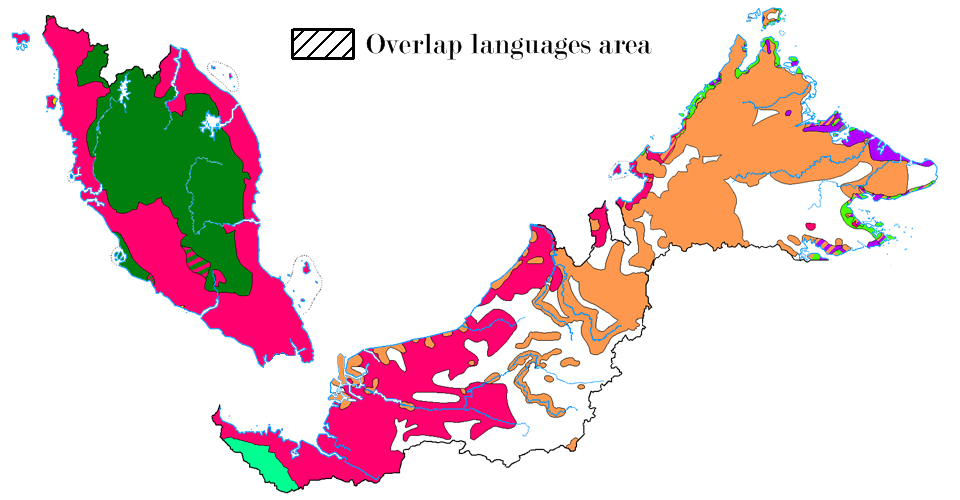
Malay
Spoken languageWikipedia
584
MENTIONS
139
EPISODES
115
PODCASTS
Search complete. 584 mentions across 139 episodes found for "Malay".
Sep 16, 2026

Noam LupuGUEST
Do you think that
Justin KempfHOST
it could also be related to the perpetual financial crises that they have, that right now there seems to be an effort to try to roll back some of the state and stabilize the financing within the country? That seems to be Malay's strongest appeal, to be honest, is the fact that he can bring together people who are on the cultural right that we see throughout the world, but also just people who...
Justin KempfHOST
are frustrated with the fact that the country hasn't stabilized its economic position.
Justin KempfHOST
And if we think about it that way, a lot of the countries, they might be thinking of unrestrained majorities as putting in place policies that they've seen as disastrous to Argentina financially, and maybe want to be able to constrain majorities for that reason, even though
Noam LupuGUEST
I think
Justin KempfHOST
Malay's always flirting with the idea of, hey, how can we act a little bit more unconstrained to be able to roll back stuff? The same way the Kirchners were flirting with ways to be more unconstrained to be able to put in new programs, particularly during the commodities boom.
Justin KempfHOST
I mean, I think it goes both ways in terms of the left and the right, but maybe the citizens are feeling that having more constraints is actually good, whereas a lot of people in the region think that they should be removing constraints.
Noam LupuGUEST
I think that's right.

speaker_2HOST
He has clean clothes, he smokes real cigarettes, and most importantly, he eats.
speaker_1HOST
And King hears Marlowe speaking Malay and decides he can use him.
speaker_1HOST
He makes Marlowe an ally, a translator for his illicit trades.
speaker_2HOST
And what Clavell is exploring here is the utter breakdown of societal norms.

Jeremy TiangGUEST
So both ends of the bridge were in the same place, but also there was no foreignizing.
Jeremy TiangGUEST
I was just translating into the English that I'd grown up with, that I was surrounded with, that had many features of Chinese and Malay and all the languages of Singapore in it.
Jeremy TiangGUEST
And so it was a bit of a shock to the system to encounter the US-UK paradigm, where there is a presumed standard English, which is the one that I have had to train myself to speak and to write in, to have any kind of legibility here.
Jeremy TiangGUEST
But that is not the English that I grew up with.

William RamseyGUEST
No, it's incredible.
Sam CheneyHOST
At least Malay, uh, big-
William RamseyGUEST
I think Roy Cohn is-
Sam CheneyHOST
They're literally-

Natalie PearsonHOST
I focus on the premodern and early modern periods of history, so most of my work concerns events before seven- 1700 CE.
Natalie PearsonHOST
And in focusing on these relatively early periods, I'm primarily interested in using source materials that come from the region itself and written in the vernacular or the local languages of the region, so many of the sources I work with, including those that I use for the book, are texts written in old Javanese, Malay, Balinese, Sundanese, and those kinds of languages are the primary focus of my study.
Natalie PearsonHOST
Tell me, how do you wrap your head around all these different languages? How many of these different languages can you, uh, read, speak, understand? It takes some time to learn the languages.
Natalie PearsonHOST
I m- primarily work with old Javanese, Malay, and Balinese.
Natalie PearsonHOST
They're the ones that I use most frequently.
Natalie PearsonHOST
I occasionally make use of Sanskrit materials as well, uh, Sundanese materials.

Wayan Jarrah SastrawanGUEST
And in focusing on these relatively early periods, I'm primarily interested in using source materials that come from the region itself and written in the vernacular or the local languages of the region.
Wayan Jarrah SastrawanGUEST
So many of the sources I work with, including those that I use for the book, are texts written in Old Japanese, Malay, Balinese, Sundanese, and those kinds of languages are the primary focus of my study.
Natalie PearsonHOST
Tell me, how do you wrap your head around all these different languages? How many of these different languages can you read, speak, understand?
Wayan Jarrah SastrawanGUEST
It takes some time to learn the languages.
Wayan Jarrah SastrawanGUEST
I primarily work with Old Javanese, Malay and Balinese.
Wayan Jarrah SastrawanGUEST
They're the ones that I use most frequently.
Wayan Jarrah SastrawanGUEST
I occasionally make use of Sanskrit materials as well, Sundanese materials.

Wayan Jarrah SastrawanGUEST
And in focusing on these relatively early periods, I'm primarily interested in using source materials that come from the region itself and written in the vernacular or the local languages of the region.
Wayan Jarrah SastrawanGUEST
So many of the sources I work with, including those that I use for the book, are texts written in old Javanese, Malay, Balinese, Sundanese, and those kinds of languages are the primary focus of my study.
Natalie PearsonHOST
Tell me, how do you wrap your head around all these different languages? How many of these different languages can you, uh, read, speak, understand?
Wayan Jarrah SastrawanGUEST
It takes some time to learn the languages.
Wayan Jarrah SastrawanGUEST
I m- primarily work with old Javanese, Malay, and Balinese.
Wayan Jarrah SastrawanGUEST
They're the ones that I use most frequently.
Wayan Jarrah SastrawanGUEST
I occasionally make use of Sanskrit materials as well, uh, Sundanese materials.

Wayan Jarrah SastrawanGUEST
And in focusing on these relatively early periods, I'm primarily interested in using source materials that come from the region itself and written in the vernacular or the local languages of the region.
Wayan Jarrah SastrawanGUEST
So many of the sources I work with, including those that I use for the book, are texts written in Old Japanese, Malay, Balinese, Sundanese, and those kinds of languages are the primary focus of my study.
Natalie PearsonHOST
Tell me, how do you wrap your head around all these different languages? How many of these different languages can you read, speak, understand?
Wayan Jarrah SastrawanGUEST
It takes some time to learn the languages.
Wayan Jarrah SastrawanGUEST
I primarily work with Old Javanese, Malay and Balinese.
Wayan Jarrah SastrawanGUEST
They're the ones that I use most frequently.
Wayan Jarrah SastrawanGUEST
I occasionally make use of Sanskrit materials as well, Sundanese materials.

Graeme BodenGUEST
And she was also a perfectionist and she tried having a cook armour, but she didn't meet mum's standards.
Graeme BodenGUEST
And so mum was down in the market, haggling in Malay to buy things.
Graeme BodenGUEST
So she sort of started to, she came out of a shell in, well, probably earlier than that when we moved to Melbourne and she realised that, There were restaurants you could go to, which were a bit of a rarity in London in those days.
Graeme BodenGUEST
And there was a life that you could have outside the home.

Tim OhHOST
And finally, O.
Tim OhHOST
In Malay, the word buka means to what? [timer ticking] Open.
Tim OhHOST
[bell dings] Open.
Tim OhHOST
Yay.
129 more episodes mention Malay.
Create an account to see the whole feed, search across every transcript, and follow the entities you care about.