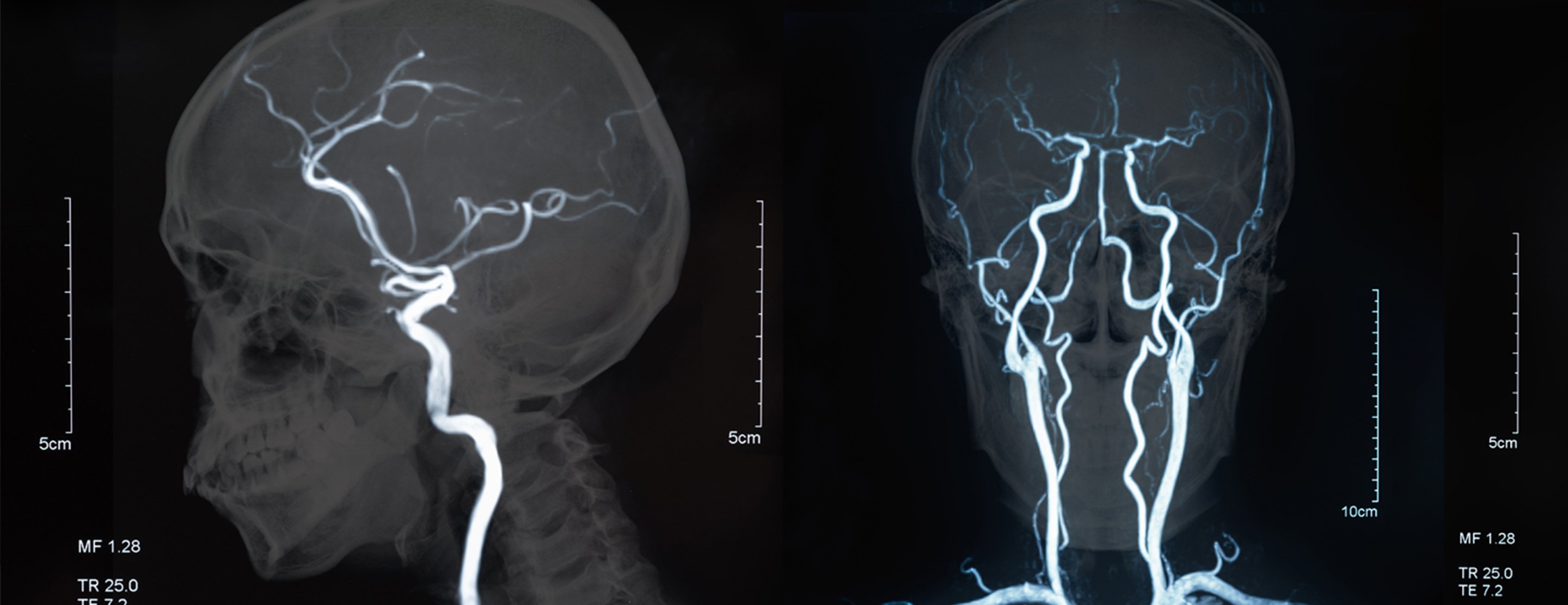
Magnetic resonance angiography
Diagnostic evaluationWikipedia
17
MENTIONS
7
EPISODES
7
PODCASTS
Search complete. 17 mentions across 7 episodes found for "Magnetic resonance angiography".
Oct 28, 2026

William BanGUEST
Yeah, so on our site, himedi.com, for checkups, they all kind of work in packages, right? So the starting point, right, is you're choosing between a baseline versus a full-body MRI, right? And so a baseline would be more of the, what all the blood work, right? Like the ultrasounds, x-rays.
William BanGUEST
And then from there, you can then choose to add on, let's say like a heart focus area, right? So within the heart focus area, it's a grouping of four different tests that are all trying to, you know, basically screening for very common, you know, cardiovascular diseases, right? So it would be echocardiogram, calcium scoring tests, just to make sure that if your main arteries are starting to get any sort of, you know, kind of getting blockages, right? There's a brain focused area, right? So the main ones for brains are tests that are screening against, you know, risk for stroke, aneurysms, a brain tumor, right? And so it's the specific tests are like an MRI, an MRA, carotid artery kind of CT, right? And so these are all tests that are kind of bundled.
William BanGUEST
And then the third focus area is cancer because, you know, almost everybody is worried about cancer because that's one of the diseases that severely impacts your, call it, health span.
William BanGUEST
And so things for cancers are, you know, For stomach cancer, it's an endoscopy.

Dmitriy FeldmanGUEST
whether they're truly uncontrolled, whether they've been on maximally tolerated at least two, three, or more medications, including a diuretic, and what their blood pressures are, including blood pressures in the office, home blood pressure, whether they've had 24-hour ambulatory blood pressure monitor, those kind of things.
Dmitriy FeldmanGUEST
How extensive has their evaluation been outside in terms of secondary hypertension? So has some sort of imaging been done to look at the renal arteries with a duplex ultrasound, CTA, or MRA? Has some of the imaging been done to look at the adrenal pathology? Are there any adrenal masses that may be creating adrenals? Have there been basic workup in terms of TFTs, a thyroid function, sleep ap factors like renin levels, aldo levels have been checked to make sure that this is not a hyper aldo state, those kind of things.
Dmitriy FeldmanGUEST
So those are all a kind of initial workup, including basic labs, GFR measurements, making sure renal function is normal or at least not below GFR of 45, which is considered to be a relative contraindication to the renal denervation procedure.
Vladimir LakhterHOST
And in terms of anatomic inclusions or exclusions that you're assessing either on renal duplex or on your CT or MR angiogram, what are some of the things that you find that you will determine is not going to allow you to do RDN anatomically?
Dmitriy FeldmanGUEST
And also you get secondary data from the adrenal imaging, making sure that there are no adrenal masses.
Dmitriy FeldmanGUEST
et cetera.
Dmitriy FeldmanGUEST
So my personal preference is CT, but other imaging MRAs we've used on some patients, especially when renal function is low and you prefer not to give a contrast MRA, you can get a non-contrast MRA where you can focus on the lumen without actually giving gadolinium.
Dmitriy FeldmanGUEST
So there are other ways to get the same information, but CT is sort of my go-to.

Krista MichenerHOST
It helps us see better.
Krista MichenerHOST
There's also MRA, which is an MRI but with an angiogram, or MRIV, an MRI with a venogram.
Krista MichenerHOST
So also MRIs but looking at specific blood vessels.
Krista MichenerHOST
You can do a CTA, which is a CT angiogram.

Giles RoditiGUEST
And I'm a cardiovascular radiologist, and we use contrast-enhanced MR angiography to look at the structure of blood vessels and any alterations through pathology.
Giles RoditiGUEST
But also with dynamic time-resolved MRA, we're looking at how contrast and the blood moves through our structures, through our organs, and in fact with perfusion.
Giles RoditiGUEST
That's what perfusion imaging is essentially, angiography at a microvascular scale.
Giles RoditiGUEST
So contrast-enhanced MRA is crucial for that.
Laura EisenmengerHOST
So we've relied on gadolinium because of the diagnostic information that it gives us.
Laura EisenmengerHOST
But over the years, we've also learned more about what happens after we administer it.
18 MINS LATER
Giles RoditiGUEST
So Gadaquatrain was administered at a 0.04 millimole gadolinium per kilogram reduced dose, which is 60% less gadolinium.
Giles RoditiGUEST
And the primary endpoints, just as for QuantiCNS, were the efficacy on lesion visualization parameters and, of course, a full safety evaluation and pharmacokinetics.

Giles RoditiHOST
And I'm a cardiovascular radiologist, and we use contrast-enhanced MR angiography to look at the structure of blood vessels and any alterations through pathology.
Giles RoditiHOST
But also with dynamic time-resolved MRA, we're looking at how contrast and the blood moves through our structures, through our organs, and in fact with perfusion.
Giles RoditiHOST
That's what perfusion imaging is essentially, angiography at a microvascular scale.
Giles RoditiHOST
So contrast-enhanced MRA is crucial for that.
Laura EisenmengerHOST
So we've relied on gadolinium because of the diagnostic information that it gives us.
Laura EisenmengerHOST
But over the years, we've also learned more about what happens after we administer it.
18 MINS LATER
Giles RoditiHOST
And the primary endpoints, just as for QuantiCNS, were the efficacy on lesion visualization parameters and, of course, a full safety evaluation and pharmacokinetics.
Laura EisenmengerHOST
This is a

Peter JohnsGUEST
The last pitfall is the one that drives me crazy the most is getting imaging in people who have a classic history for BPPV, the classic nystagmus during the Dix-Hallpike test, and yet the clinician says, well, we'll do a CT scan just to be sure.
Peter JohnsGUEST
Because you can't see the otoconia rolling around the semicircular canal on a CT or an MRI.
Peter JohnsGUEST
And it might be reassuring for your listeners to know that there's never been a well-documented case of a classic presentation of poster canal BPPV with a classic positive Dix-Hallpike test turning out to be anything other than poster canal BPPV.
Peter JohnsGUEST
Now, in North America, there's an estimated 2 million people every year who get BPPV, yet there's not one case of a classic presentation of With the classic nystagmus seen in the Dix-Hallpike test, it turned out to be a stroke or a brain tumor.
25 MINS LATER
Peter JohnsGUEST
If they don't fit into BPPV or vestibular migraine diagnosis and have isolated vertigo that lasts like a TIA kind of length of time, like 15 minutes, two hours, and they have significant factors for stroke, well, I'd treat them like a TIA.
Peter JohnsGUEST
And if they had spontaneous isolated vertigo, no other diagnosis fits, no central features, and no risk factors for stroke, well, you're going to have to consider your local standard of care.
Peter JohnsGUEST
If that patient shows up at Johns Hopkins, they're probably having an MRI, MRA.
Peter JohnsGUEST
If you're at a small community hospital, they're probably going to go sent home and told to come back if they get worse.

Dana HuntGUEST
I did, like, 11 MRIs.
Dana HuntGUEST
I did an MRA.
Dana HuntGUEST
I did every blood test you can think of.
Dana HuntGUEST
Like, even ones where I would have had to have gone to Africa to get whatever they were testing for, and I hadn't.