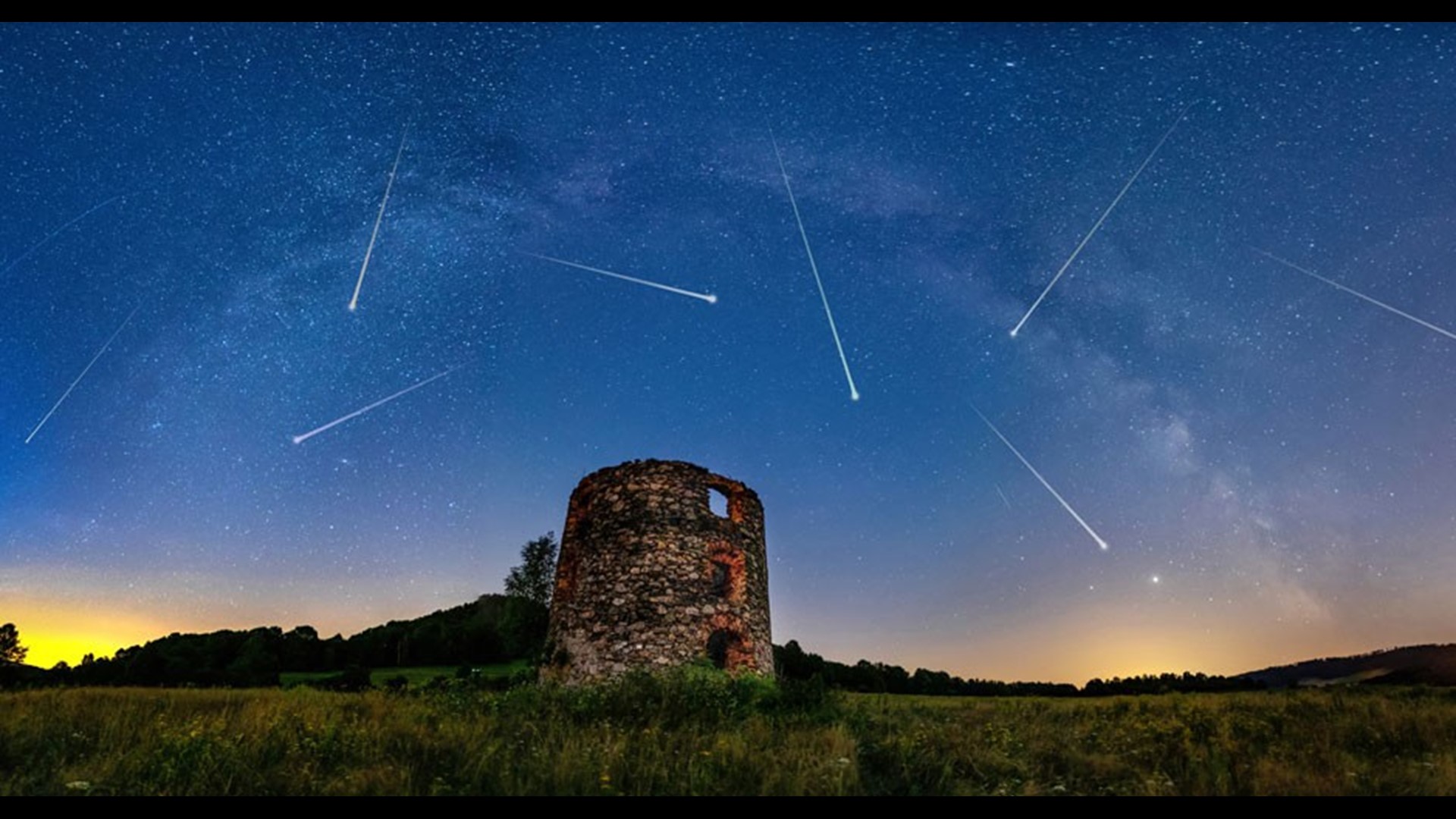
Lyrids
Meteor showerWikipedia
4
MENTIONS
4
EPISODES
4
PODCASTS
Search complete. 4 mentions across 4 episodes found for "Lyrids".
Oct 15, 2026

speaker_0NARRATOR
Las Cuadrántidas llegan a principios de enero y ofrecen un periodo de observación breve pero intenso cuando la Tierra atraviesa escombros que se cree que proceden de un asteroide que posiblemente fue un cometa en el pasado.
speaker_0NARRATOR
Las Líridas aparecen cada abril, creando una lluvia moderada que ha sido observada durante más de dos mil años.
speaker_0NARRATOR
Las Eta Acuáridas llegan en mayo, creadas por escombros del cometa Halley.
speaker_0NARRATOR
Las Gemínidas ocurren en diciembre y se encuentran entre las lluvias de meteoros más abundantes del año, produciendo hasta setenta y cinco meteoros por hora durante su máxima actividad.

speaker_2NARRATOR
The Quadrantids arrive in early January, offering brief but intense viewing when Earth passes through debris believed to come from an asteroid that may have once been a comet.
speaker_2NARRATOR
The Lyrids appear each April, creating a moderate shower that has been observed for over 2,000 years.
speaker_2NARRATOR
The Eta Aquarids arrive in May, created by debris from Halley's Comet.
speaker_2NARRATOR
The Geminides occur in December and are among the most abundant meteors of the year, producing up to 75 meteors per hour at peak activity.

TonyHOST
Yet the headline circulated widely on social media, prompting speculation that some sort of intentional interference had occurred.
TonyHOST
Astronauts aboard the ISS regularly observe meteor showers like the Lyrids or Perseids through their cameras and panoramic windows.
TonyHOST
When a fireball crosses the station's orbital path, its trajectory can be measured by timing its appearance in successive images, allowing scientists to calculate velocity and angle of entry.
TonyHOST
Data that can confirm whether the object was an Earth-bound meteorite or an orbital debris fragment.

speaker_12NARRATOR
Schiaparelli having independently attained both of these results.
speaker_12NARRATOR
Subsequently, Weiss of Vienna identified the meteor shower of April 20th, Lyrids, with the Comet 1861.
speaker_12NARRATOR
Finally, that indefatigable worker on meteors, A.S. Herschel, added to the number and in 1878 gave a list of 76 coincidences between cometary and meteoric orbits.
speaker_12NARRATOR
Cometary astronomy is now largely indebted to photography, not merely for accurate delineations of shape, but actually for the discovery of most of them.