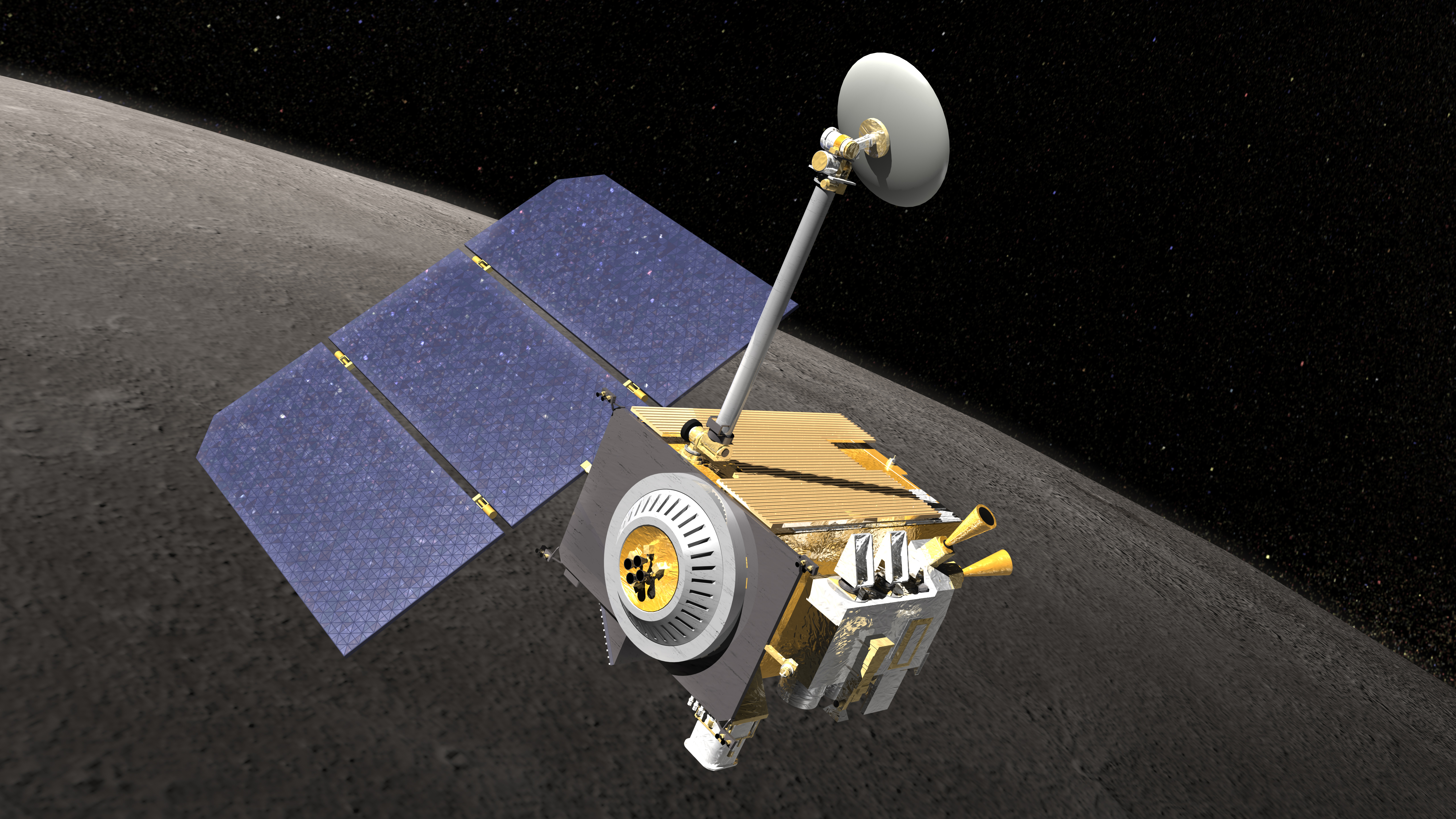
Lunar Reconnaissance Orbiter
SpacecraftWikipedia
46
MENTIONS
40
EPISODES
35
PODCASTS
Search complete. 46 mentions across 40 episodes found for "Lunar Reconnaissance Orbiter".
Sep 30, 2026

Tyler PowellGUEST
So this is a 222-meter impact crater that we know formed in spring 2024.
Tyler PowellGUEST
Um, and it was discovered in these repeat images from the Lunar Reconnaissance Orbiter Camera, um, and basically change detection between, uh, images before and after have revealed, uh, many craters like this that are much smaller, but this one is by far the largest.
Tyler PowellGUEST
The next largest that we've observed is, um, less than a third the size at about 70 meters.
Tyler PowellGUEST
Something of this size is expected to form once every maybe 130 years, so, uh, it's extremely rare.
Tyler PowellGUEST
I think one of the things that's most interesting about one of these pristine craters is that we're able to tease out these super faint, um, changes to the surface that the crater has caused.
Tyler PowellGUEST
So we've looked at this with a diviner, uh, instrument.
Tyler PowellGUEST
This is a thermal instrument on the Lunar Reconnaissance Orbiter, the same, uh, orbiter as the camera.
Tyler PowellGUEST
Uh, it measures the surface temperatures during the day but also at night.

LilyHOST
An impact this big is expected only about once every century.
LilyHOST
NASA's Lunar Reconnaissance Orbiter photographed the area, but scientists didn't notice the crater until they compared newer pictures with older ones.
LilyHOST
The crater has now been named McGetchin Crater, after lunar scientist Thomas McGetchin, and scientists say studying this fresh crater could help them better understand what happens when giant space rocks smash into the Moon.
LilyHOST
Now, it's time for the first-ever Word of the Day.

Iru LanducciGUEST
Acá vo-- a-a-acá vos estás viendo, literalmente, estás viendo toda la superficie directo con un nivel de, de, de zoom impresionante y vos sos la NASA o el propia-- o la propia SpaceX y no me podés mostrar en tiempo real absolutamente nada.
Iru LanducciGUEST
Me decís que impactó en el lado oscuro y después sí, cuando ya pasó todo eso, entonces ahí ellos vienen y te dicen: "No, mirá, en realidad, eh, ¿no? La nave de la Luna, la LRO, SpaceX, SpaceX crash", ¿no? Entonces te dicen: "No, sí, sí.
Iru LanducciGUEST
Mirá, acá está, acá está.
Iru LanducciGUEST
Mirá, mirá.

Jennifer PulleyHOST
A recent NASA study tested which Earth microbes are most likely to survive on the Moon.
Jennifer PulleyHOST
Using maps from NASA's Lunar Reconnaissance Orbiter, combined with models of how radiation strikes the lunar surface, the team also identified zones where the microbes could stay alive.
Jennifer PulleyHOST
The study points to the importance of baseline measurements of human contaminants and documentation of lunar chemistry in these areas before humans arrive.
Jennifer PulleyHOST
The moon could then be used as a natural lab.

DrewHOST
And while we're talking about the moon, astronomers just found evidence that our nearest neighbor changed rather dramatically while no one was looking.
DrewHOST
NASA's Lunar Reconnaissance Orbiter has discovered a new impact crater that formed sometime between April 11th and May 22nd of 2024.
DrewHOST
It's been officially named McGetchin Crater, and it's not a little divot.
DrewHOST
The crater measures about 728 feet across, and it's about 141 feet deep.

David LivingstonHOST
the guy from Intuit machines is on the NRO committee that helped find it.
Bob ZimmermanGUEST
The story there is that Lunar Reconnaissance Orbiter does, you know, covers the circles, sun-synchronous orbit around the moon regularly, and it takes pictures.
Bob ZimmermanGUEST
And what the science team found is that sometime, I don't remember the last year, or maybe it was this year in the spring, uh a crater appeared on the moon uh that was actually one of the largest new impact craters we've seen it was about uh was it 223 feet across about uh what is it a football field sizes approximately That's cool.
Bob ZimmermanGUEST
I mean, it's a new crater that's somewhat large.

Ian CanfieldHOST
But apparently on the far side, Earth-based telescopes and real-time monitoring systems I can't observe what goes on.
Ian CanfieldHOST
But they've got this thing called a Lunar Reconnaissance Orbiter, and they were able to look at footage after the event.
Ian CanfieldHOST
I guess the Lunar Reconnaissance Orbiter is NASA's version of a DVR.
Ian CanfieldHOST
But, again, shouldn't we be more concerned that, A, this happened, and, B, they didn't know it was occurring? I mean, could it have hit us? If we get close to Armageddon, remember, Bruce Willis is no longer available to save us.
Ian CanfieldHOST
We don't even have Aerosmith anymore because Steven Tyler lost his voice.

Coy WireHOST
Actually, more like a violent collision.
Coy WireHOST
NASA's Lunar Reconnaissance Orbiter spotted this enormous new crater created by an asteroid or comet fragment that slammed into the lunar surface.
Coy WireHOST
They estimate it was about the size of a five-story building, leaving a crater 43 meters deep, 222 meters wide.
Coy WireHOST
That's more than two football fields across.

Daniel CunnamaGUEST
It's, it's also a good sort of validation of all of the work that's happening on the Moon and things.
Daniel CunnamaGUEST
You know, the Lunar Reconnaissance Orbiter went up, uh, probably a decade ago now, uh, and has been mapping the, the surface of the Moon and, and now doing it repeatedly, uh, to see what, what changes.
Daniel CunnamaGUEST
Uh, and you know, there was the SpaceX thing that crashed into it not so long ago, so we saw that.
Daniel CunnamaGUEST
So it's, it's quite a nice tool.

AlexHOST
It was trained on over 30 layers of data, pulling from nine different scientific instruments across four major lunar missions.
AlexHOST
And it largely utilizes data from the Lunar Reconnaissance Orbiter.
JessicaHOST
And historically, think about how that work was done.
JessicaHOST
A planetary scientist would have to spend months manually cross-referencing thermal imaging maps with laser altimetry data just to, like, guess where a crater might be.
30 more episodes mention Lunar Reconnaissance Orbiter.
Create an account to see the whole feed, search across every transcript, and follow the entities you care about.