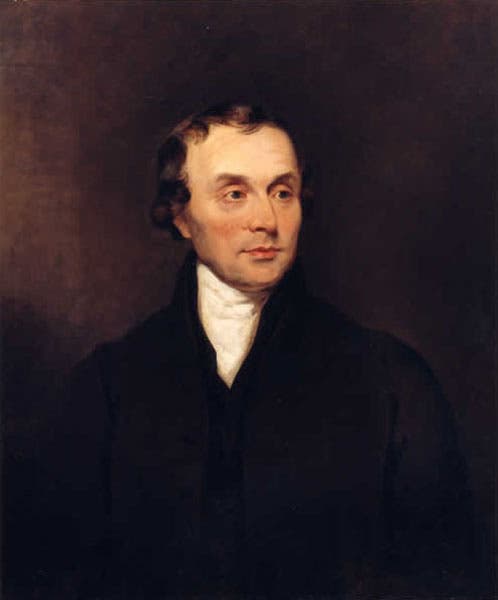
Luke Howard
British chemistWikipedia
10
MENTIONS
4
EPISODES
4
PODCASTS
Search complete. 10 mentions across 4 episodes found for "Luke Howard".
Sep 19, 2026

speaker_6NARRATOR
Having at an early period shown a predilection for chemical and other pursuits connected with medicine, William was placed in the establishment of Mr. Joseph Gurney Bevan in Plough Court, Lombard Street, where he acquired a practical knowledge of chemistry.
speaker_6NARRATOR
He eventually succeeded to the business, which he carried on in connection with Mr. Luke Howard and obtained great reputation as a pharmaceutical chemist.
speaker_6NARRATOR
About the year 1804, Mr. Allen was appointed lecturer on chemistry and experimental philosophy at Guy's Hospital, at which institution he continued to be engaged more or less until the year 1827.
speaker_6NARRATOR
He was also connected with the Royal Institution of Great Britain and was concerned in some of the most exact experiments of the day, together with Davy, Babington, Marcet, Luke Howard, and Dalton.
speaker_6NARRATOR
In conjunction with his friend, Mr. Pepys, Allen entered upon his well-known chemical investigations, which established the proportion of carbon in carbonic acid and proved the identity of the diamond with charcoal.
speaker_6NARRATOR
These discoveries are recorded in the Philosophical Transactions of the Royal Society, of which he became a member in 1807.

speaker_3NARRATOR
The classification of clouds is one of those areas of science that is both straightforward and oddly fascinating.
speaker_3NARRATOR
A man named Luke Howard, a British chemist and amateur meteorologist, proposed the first widely accepted system for naming clouds in 1802.
speaker_3NARRATOR
He used Latin words to describe what he saw in the sky, and his system, with modifications, is still in use today.
speaker_3NARRATOR
Cumulus clouds are the heaped, puffy ones, the ones that look like cauliflower or cotton balls, rising up in rounded towers.

Jennifer DallmanNARRATOR
So pronounced is this lack of terms that anyone who tries to describe a sky without using any of the modern scientific names finds himself obliged to rely on long detailed descriptions backed with references to well-known objects whose outlines or structures resemble the clouds more or less vaguely, and even then he has to be a word painter of singular skill if his description calls up in the mind of the reader a picture much like the original.
Jennifer DallmanNARRATOR
It was to meet this want of a common tongue that Luke Howard in 1803 proposed his scheme of cloud names.
Jennifer DallmanNARRATOR
He recognized three main types of cloud architecture, which he named cirrus, stratus, and cumulus.
Jennifer DallmanNARRATOR
Cirrus included all forms which are built up of delicate threads, like the fibers in a fragment of wool.
Jennifer DallmanNARRATOR
But although observation of clouds in a general way is far from complete, attention is now being given to much smaller details and much more minute differences of form, and our vocabulary must be amplified.
Jennifer DallmanNARRATOR
Precision of description is the first essential of a satisfactory system.
Jennifer DallmanNARRATOR
And the question is: what sort of edifice can we build on Luke Howard's foundation? The great difficulty is the infinite variety of clouds.
Jennifer DallmanNARRATOR
Certain forms may be arbitrarily selected as types, and names may be given to them, but however well they are chosen, a very short period of observation will show that there are all manner of intermediate forms which make a perfect gradation from one type to another.

speaker_4NARRATOR
Having at an early period shown a predilection for chemical and other pursuits connected with medicine, William was placed in the establishment of Mr. Joseph Gurney Bevan in Plough Court, Lombard Street, where he acquired a practical knowledge of chemistry.
speaker_4NARRATOR
He eventually succeeded to the business which he carried on in connection with Mr. Luke Howard and obtained great reputation as a pharmaceutical chemist.
speaker_4NARRATOR
About the year 1804, Mr. Allen was appointed lecturer on chemistry and experimental philosophy at Guy's Hospital, at which institution he continued to be engaged more or less until the year 1827.
speaker_4NARRATOR
He was also connected with the Royal Institution of Great Britain and was concerned in some of the most exact experiments of the day, together with Davy, Babington, Marsitt, Luke Howard, and Dalton.
speaker_4NARRATOR
In conjunction with his friend Mr. Pepys, Allen entered upon his well-known chemical investigations which established the proportion of carbon in carbonic acid and proved the identity of the diamond with charcoal.
speaker_4NARRATOR
These discoveries are recorded in the Philosophical Transactions of the Royal Society, of which he became a member in 1807.