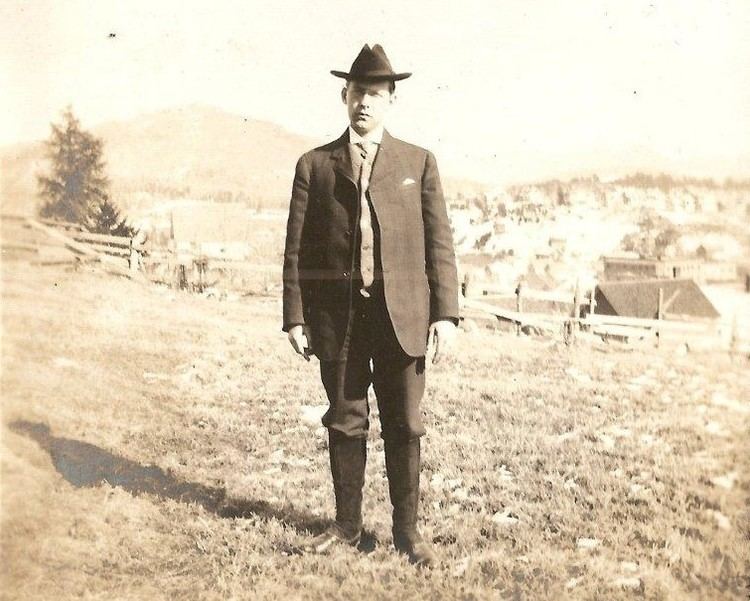
Ludwig Ott
TheologianWikipedia
10
MENTIONS
7
EPISODES
7
PODCASTS
Search complete. 10 mentions across 7 episodes found for "Ludwig Ott".
Oct 15, 2026

Adam MinihanHOST
...
Adam MinihanHOST
so Ludwig Ott, Ott, which is, he, he wrote the book on Catholic dogma.
Adam MinihanHOST
So there, there's speculation, theological spec- speculation of when a guardian angel, like, is, uh, m- like ordained to, or that's not the right word, but, like, ministered to the, the, their person.
Adam MinihanHOST
And church teaching is both, or, uh, speculation has said either at baptism or at birth.

Thomas MirusHOST
By the way, when it comes to theology and apologetics and such, there's a bajillion books that have been written throughout history that do just this.
Thomas MirusHOST
I mean, you can get Ludwig Ott or whatever and read that if you want like a summary of Catholic doctrine on various points.
Thomas MirusHOST
There's so many books that Catholic Answers or whoever else has published that's like 100 answers to questions that you never thought to ask.
Thomas MirusHOST
You know what I mean? That kind of thing.

David AndersHOST
That's true.
David AndersHOST
Um, now, there's a, there's a, there's an older manual of Catholic dogma, Ludwig Ott's Fundamentals of Catholic Dogma.
Tom PriceHOST
Mm-hmm.
David AndersHOST
And you can find it online, uh, public domain.
GilbertAUDIENCE
Would you say the name of the book again, please?
David AndersHOST
Yeah.
David AndersHOST
Ludwig Ott, O-T-T, Fundamentals of Catholic Dogma.
Tom PriceHOST
Appreciate that call-

Son of AthanasiusHOST
And this is defined by the Church, Council of Trent.
Son of AthanasiusHOST
In fact, what we're going to do today is we're going to go through Ludwig Ott's Catholic Dogma, and this gets into how marriage is seen by the Church and thereby how the Catholic laity should see marriage.
Son of AthanasiusHOST
Now, just before we begin that, I want to kind of look at a couple of things about this whole episode, and that is this question.
Son of AthanasiusHOST
Where is Jesus when this takes place? In this locale, what is the political and Jewish leadership structure? And who are the people in this region? Why does Jesus go beyond the Jordan? And why this question of marriage at this time? Well, we got to go back to John the Baptist.
7 MINS LATER
Son of AthanasiusHOST
The essential end of marriage is the procreation and education of offspring.
Son of AthanasiusHOST
The secondary end is mutual help and the morally regulated satisfaction of the sexual instinct.
Son of AthanasiusHOST
Now, in this Ludwig Ott commentary, The Dogmas of the Church, there's this note, and it's quite striking.
Son of AthanasiusHOST
In their efforts to appreciate marriage more as a personal communion, some recent theologians have proposed against the traditional teaching of the purpose of marriage, whose principal exponent is St. Thomas.

RyanHOST
See, yeah.
James WhiteGUEST
And he, he gave a response that sort of wandered around a bit, and I had the opportunity of redirecting, and when I did, he was honest enough to simply say, "I don't know." And, you know, that's, that's the sad element of historic orthodox Roman Catholic teaching, is that even if you understand it, as Ludwig Ott said, uh, "The reason for the uncertainty of the state of grace lies in just this, that without a supernatural revelation from God, you cannot...
James WhiteGUEST
um, a person cannot know whether they have fulfilled all the conditions which are necessary for achieving justification."
RyanHOST
Yeah, it's crazy.

Karlo BroussardGUEST
And so I don't think there's a way you, you know, you necessarily have to, like, go systematically.
Karlo BroussardGUEST
If you want, you could get a book like Fundamentals of Catholic Dogma by Ludwig Ott, O-T-T.
Karlo BroussardGUEST
You could do it that way.
Karlo BroussardGUEST
That's like what theolo- theology students do.

Ed MazzaGUEST
Hugh, I think you just started a new, I've heard of 1958 Sede Vicantis, but never 1951 Sede Vicantis.
Ed MazzaGUEST
Again, Ludwig Ott in Fundamentals of Catholic Dogma says, public heretics, even those who err in good faith, do not belong to the body of the church.
Ed MazzaGUEST
That is the legal commonwealth of the church.
Ed MazzaGUEST
So if Hugh is right that the Fathers of the Church are unanimous that the six-day creation and the less than 10,000 years of history is a matter of faith, anyone who would deny this is at least a material heretic and not a Catholic and does not belong to the visible church.
1 HR 12 MINS LATER
Ed MazzaGUEST
Basil the Great.
Ed MazzaGUEST
Again, these are scientific matters, and the Church has said that we may disagree on these scientific matters.
Ed MazzaGUEST
Again, I quote, for example, Ludwig Ott, He says, in these scientific matters, there is no value in a consensus of the fathers, since they are not here acting as witnesses of the faith, but merely as private scientists.
Ed MazzaGUEST
And again, if you talk to any theologian before Vatican II, if you picked up any book of theology or dogma before Vatican II, they would tell you that the consensus of the fathers on a matter of faith is infallible.