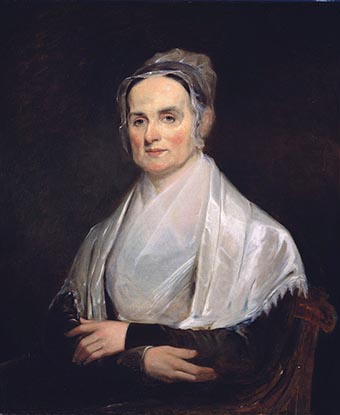
Lucretia Mott
American abolitionistWikipedia
57
MENTIONS
11
EPISODES
11
PODCASTS
Search complete. 57 mentions across 11 episodes found for "Lucretia Mott".
Nov 18, 2026

Maria CasperNARRATOR
Some Eminent Women of Our Times by Millicent Garrett Fawcett.
Maria CasperNARRATOR
Chapter Twenty-Three: The American Abolitionists, Prudence Crandall and Lucretia Mott.
Maria CasperNARRATOR
Everybody is an abolitionist now.
Maria CasperNARRATOR
There is not probably in any part of Europe or the United States a single human being who would now defend slavery as an institution or who thinks that for man to own property in his fellow man, to be able to buy and sell him and dispose of his whole life, is not a sin and an outrage against all feelings of humanity.
11 MINS LATER
Maria CasperNARRATOR
The revenge which the whirligig of time has brought to her is the triumph of her cause.
Maria CasperNARRATOR
She now enjoys a small pension granted to her by the government of the United States in recognition of her services to the anti-slavery cause.
Maria CasperNARRATOR
Another of the famous anti-slavery women of the United States was Lucretia Mott.
Maria CasperNARRATOR
She too was a Quakeress, as were a very considerable proportion of the women who first took up the abolitionist movement.

YuqingNARRATOR
Is women's suffrage democratic? The writers of the history of women's suffrage give the following account of the founding of their association.
YuqingNARRATOR
In July 1848, Elizabeth Cady Stanton, Lucretia Mott, Martha O. Wright, and Anna McClintock issued an unsigned call for a convention which was asked to consider the social, civil, and religious condition and rights of women, and in preparation for the meeting they wrote a declaration of sentiment which was adopted by the assembly.
YuqingNARRATOR
They say, in describing the writing of this declaration, the reports of peace, temperance, and anti-slavery conventions were examined, but all alike seemed too tame and pacific for the inauguration of a rebellion such as the world had never before seen.
YuqingNARRATOR
We knew women had wrongs, but how to state them was the difficulty, and this was increased from the fact that we ourselves were fortunately organized and conditioned.
20 MINS LATER
YuqingNARRATOR
The second count in the list of political grievances runs, He has compelled her to submit to laws in the formation of which she had no voice.
YuqingNARRATOR
This was not true, for the women who wrote that sentence were free to use their voices in regard to every law they desired to affect, and circumstances have proved that they were sure of being heard, and if the law were just and for the general good, of assisting materially to establish it.
YuqingNARRATOR
At the very time when Elizabeth Cady Stanton and Lucretia Mott were writing that indictment against the United States government, Dorothea Dix was presenting a memorial to the National Congress asking for an appropriation of 500,000 acres of the public land to endow hospitals for the indigent insane.
YuqingNARRATOR
That bill failed to pass, but in 1850 another bill, which she presented, asking for 10 million acres, passed the House and failed in the Senate merely for want of time to consider it.

YuqingNARRATOR
Is women's suffrage democratic? The writers of the History of Women's Suffrage give the following account of the founding of their association.
YuqingNARRATOR
In July 1848, Elizabeth Cady Stanton, Lucretia Mott, Martha O. Wright, and Anne McClintock issued an unsigned call for a convention which was asked to consider the social, civil, and religious condition and rights of women.
YuqingNARRATOR
And in preparation for the meeting, they wrote a Declaration of Sentiments which was adopted by the assembly.
YuqingNARRATOR
They say, in describing the writing of this declaration, the reports of peace, temperance, and anti-slavery conventions were examined, but all alike seemed too tame and pacific for the inauguration of a rebellion such as the world had never before seen.
22 MINS LATER
YuxinNARRATOR
The second count in the list of political grievances runs, He has compelled her to submit to laws in the formation of which she had no voice.
YuxinNARRATOR
This was not true, for the women who wrote that sentence were free to use their voices in regard to every law they desired to affect, and circumstances have proved that they were sure of being heard, and if the law were just and for the general good, of assisting materially to establish it.
YuxinNARRATOR
At the very time when Elizabeth Cady Stanton and Lucretia Mott were writing that indictment against the United States government, Dorothea Dix was presenting a memorial to the National Congress asking for an appropriation of 500,000 acres of the public lands to endow hospitals for the indigent insane.
YuxinNARRATOR
That bill failed to pass, but in 1850 another bill, which she presented, asking for 10 millions of acres, passed the House and failed in the Senate merely for want of time to consider it.

Hannah SpierHOST
But you have some of these early feminists that were Christians.
Hannah SpierHOST
You have Lucretia Mott, she was Quaker, Frances Willard.
Hannah SpierHOST
How does that fit into this origin picture? Hold on, Rachel.
speaker_3ADVERTISER
You're not live.

Hannah SpierHOST
But you have some of these early feminists that were Christians.
Hannah SpierHOST
You have Lucretia Mott, she was Quaker, Frances Willard.
Hannah SpierHOST
How does that fit into this origin picture? Hold on, Rachel.
Alex MatisseADVERTISER
You're not live.

Brittany LindHOST
Okay.
Kayla MoriaHOST
Abolitionists like Lucretia Mott and Horace Mann were on the same page that those who believed black people were timid and tameable.
Kayla MoriaHOST
However, instead of enslaving them, abolitionists advocated that They should be helping the, I'm air quoting here, weaker race of black people.
Kayla MoriaHOST
They thought that slaves were too timid by nature and that society should save them from themselves.

RosannaHOST
You can watch the pocket's social standing collapse in the fiction of the period.
RosannaHOST
In 1831, the novelist Catherine Gore published a book called Pin Money, and in it, a character called Mrs Lucretia is mocked for the sheer labour of getting at her own snuffbox.
RosannaHOST
Gore's phrase is that she conveys it through a labyrinth of quilted petticoats into a bottomless pit of a pocket.
RosannaHOST
The modern young woman in the same novel carries a reticule instead.
11 MINS LATER
RosannaHOST
That is what twenty pockets feel like from the outside.
RosannaHOST
Chapter seven, the women who asked for pockets out loud.
RosannaHOST
Elizabeth Cady Stanton was the American campaigner who helped organize the Seneca Falls Convention in 1848 with Lucretia Mott and others, and then spent the next 50 years arguing for women's rights.
RosannaHOST
Near the end of her life, she wrote about pockets.

SarahHOST
The question became, if government required the people's consent, why did women's consent not count? In July of 1848, approximately 300 people gathered in Seneca Falls, New York, for a convention on women's rights.
SarahHOST
The meeting was organized by women's rights activists such as Elizabeth Cady Stanton and Lucretia Mott.
SarahHOST
Some of the participants had experience in the movement to abolish slavery.
SarahHOST
At Seneca Falls, the convention adopted a document called the Declaration of Sentiments.
7 MINS LATER
SarahHOST
The movement passed from one generation to the next.
SarahHOST
Some of its best-known early leaders did not live to see the amendment ratified.
SarahHOST
Lucretia Mott died in 1880, Elizabeth Cady Stanton died in 1902, and Susan B. Anthony died in 1906.
SarahHOST
Constitutional change can happen in a single vote, but building that movement that makes the vote possible can take generations.

William TomkoNARRATOR
Undaunted by difficulties, Dr. Judson continued his work, completing his translation of the Bible, traveling over India, compiling a Burmese grammar and dictionary, but his labors at last undermined even his constitution, and he died at sea in 1850 while on his way to the Isle of France.
William TomkoNARRATOR
Turn we now to Lucretia Mott, one of the most extraordinary women who ever lived in America.
William TomkoNARRATOR
Born in Nantucket in 1793, the daughter of a sea captain named Thomas Coffin, she was raised in the strict Quaker faith to which her parents belonged.
William TomkoNARRATOR
She began teaching while still a girl, and at the age of eighteen married a fellow teacher, James Mott.
William TomkoNARRATOR
It was not long after that that she developed the gift of speaking at the Quaker meetings, simply, earnestly, and eloquently.
William TomkoNARRATOR
The Quakers had always opposed slavery, and Lucretia Mott was soon working hard and soul against it.
William TomkoNARRATOR
When the American Anti-Slavery Society was organized in 1833, she was one of four women who joined it, and she proceeded immediately to organize a female anti-slavery society, the first organization of women in America working for a political purpose.
William TomkoNARRATOR
Years of abuse followed, for in those days anti-slavery lecturers were tarred and feathered, their homes burned, and many other indignities heaped upon them.

Sean CaseyHOST
He organized boycotts of products made by slave labor and was responsible for convincing many Quaker communities to publicly denounce slavery.
Sean CaseyHOST
Another of many important abolitionist Quakers was Lucretia Mott, who worked on the Underground Railroad in the 19th century, helping lead fugitive slaves to freedom in the northern states and Canada.
Sean CaseyHOST
In later years, Mott was a leader in the movement for women's rights as well.
Sean CaseyHOST
And that's what happened on this date in America 250, brought to you by the Smile Design Center.
1 more episode mentions Lucretia Mott.
Create an account to see the whole feed, search across every transcript, and follow the entities you care about.