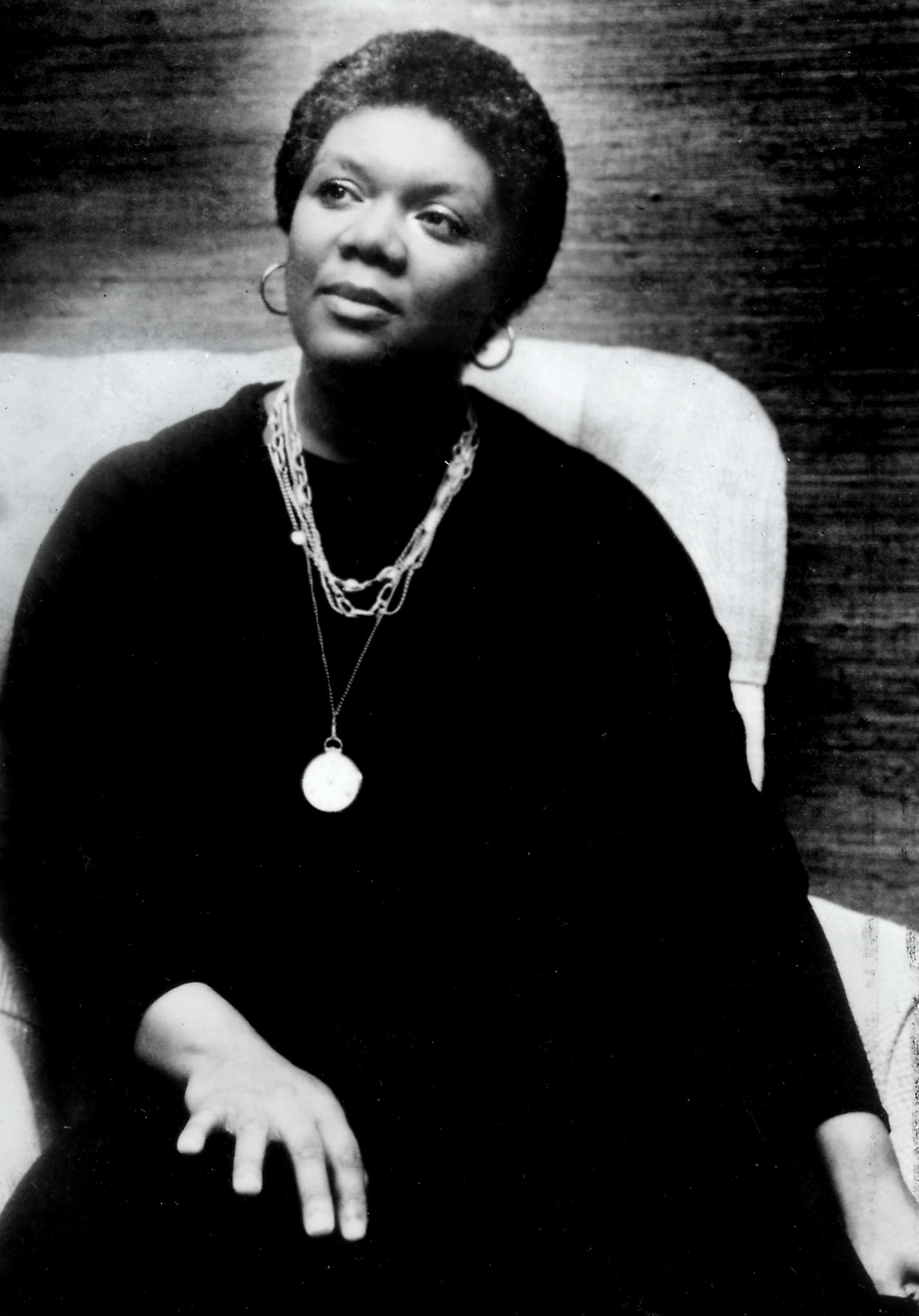
Lucille Clifton
American poet and writerWikipedia
15
MENTIONS
9
EPISODES
9
PODCASTS
Search complete. 15 mentions across 9 episodes found for "Lucille Clifton".
Sep 23, 2026

Edna BonhommeGUEST
How do I also... see myself in solidarity with, see myself connected to, while also thinking in this collective Marxist, like, very active tradition, it's a struggle.
Edna BonhommeGUEST
But one thing I would say as, and I'm not good at advice, is that for people to, you know, you don't, one does not have to be a And Lucille Clifton, who was an African-American poet and had many children, the reason her poems are so short is because she would just write them in between feeding them.
Edna BonhommeGUEST
And they're beautiful.
Edna BonhommeGUEST
Or June Jordan was a mother and so forth.

Gretchen PremackGUEST
And it starts with quotes from another poet.
Gretchen PremackGUEST
Her name is Lucille Clifton.
Gretchen PremackGUEST
And she says in one of her poems, human is neither wiser nor more blessed.
Gretchen PremackGUEST
And she also says, the patience of the universe is not without an end.

Jeff ShapiroNARRATOR
And for the next hour, I'll be reading from the Sunday, September 13th, 2026 issue of the Viewpoint section of the Buffalo News and the Niagara Frontier Radio Reading Service.
Jeff ShapiroNARRATOR
Remembering the Buffalo Days of Poet Lucille Clifton.
Jeff ShapiroNARRATOR
This is by Ishmael Reed.
Jeff ShapiroNARRATOR
I'm 88 years old.
Jeff ShapiroNARRATOR
I was joined by Ray Smith, who was called the Harry Belafonte of Buffalo, as a tribute to his excellence as a folk singer.
Jeff ShapiroNARRATOR
He and I shared an apartment on Verblank and later on Northampton.
Jeff ShapiroNARRATOR
I first saw Lucille Clifton, then Lucille Sales, walking with Ray across Jefferson Avenue and Ferry Street.
Jeff ShapiroNARRATOR
She'd dropped out of Howard University.

Kevin QuashieGUEST
I'd like to think that mostly it's really simple, which is not to say that the simple isn't complicated.
Kevin QuashieGUEST
Do you have the Lucille Clifton poem? Could we, this is part of me deflecting.
Kevin QuashieGUEST
Great American poet, Lucille Clifton, her 1991 collection, Quilting.
Kevin QuashieGUEST
So the poem from that collection It's untitled, but it's often called Reply.
Kevin QuashieGUEST
You'll see why.
Kevin QuashieGUEST
When I teach the poem, I split the two because I'm more interested in what comes after and what comes before in the paratext has a little bit of intensity in it.
Kevin QuashieGUEST
I'm not trying to undermine the intensity as much as I wanna talk about the thing that's on the other screen.
Kevin QuashieGUEST
So this is a poem by Lucille Clifton.

Jericho BrownGUEST
And I and I think, yeah.
Jericho BrownGUEST
And I really, I'm working on a, this is very recent, but I'm working on a critical reader of Lucille Clifton.
Jericho BrownGUEST
I want to collect all the scholarship done on her and make a book out of that.
Jericho BrownGUEST
And hopefully have a companion book of the poems discussed in that book, you know? That's wonderful.

Nikisha Elise WilliamsHOST
Who is your favorite poet?
LeConté DillGUEST
Lucille Clifton.
Nikisha Elise WilliamsHOST
Name a poet you think people don't know enough.
Nikisha Elise WilliamsHOST
Janice Miller.

Alexis Pauline GumbsHOST
And so it really resonates for us to think about this idea of a ship, even though we don't live in a houseboat.
Alexis Pauline GumbsHOST
But our sacred text for today comes from Lucille Clifton, who has a beautiful poem called Blessing the Boats, which says, May the tide that is entering even now the lip of our understanding carry you out beyond the face of fear.
Alexis Pauline GumbsHOST
May you kiss the wind, then turn from it, certain that it will love your back.
Alexis Pauline GumbsHOST
May you open your eyes to water, water, waving forever.

Mallika KapoorHOST
question.
Nikita GillGUEST
I think because poetry is an oral art form, one of the people who I admire most is Lucille Clifton.
Nikita GillGUEST
And Lucille Clifton was a fantastic poet.
Nikita GillGUEST
And she basically said that a poem isn't finished until you've read it out aloud to yourself at least three or four times.
Nikita GillGUEST
And then the cadence sounds right in your voice.

Nikita GillGUEST
... that came before us, poets that came before us.
Nikita GillGUEST
And recently, I was looking into how Toni Morrison was such an archivist of amazing poets like June Jordan and Lucille Clifton-
V.E. SchwabHOST
Mm
Nikita GillGUEST
... and how she preserved their work.
Nikita GillGUEST
And because of her, and because of them, I am the writer that I am because I read June Jordan and Lucille Clifton as a teenage girl.
V.E. SchwabHOST
I wanna also ask a little bit about self-definition.
V.E. SchwabHOST
It's this kind of concept that I've started asking the, the novelists that come onto the podcast because I have this real resistance towards the segmentation of the bookstore, right? This idea of like, um, where publishing puts us versus where we would put ourselves, how we are-