Low Earth orbit
Orbit typeWikipedia
164
MENTIONS
59
EPISODES
54
PODCASTS
Search complete. 164 mentions across 59 episodes found for "Low Earth orbit".
Oct 27, 2026

Flora OkineHOST
This isn't science fiction, it's happening now.
Flora OkineHOST
Today we'll be talking about low earth orbit satellites or LEO for short and why all of a sudden everyone in tech, policy and the industry is paying so much attention to them.
Flora OkineHOST
Joining us today is a member of the ITU Secretary General's Youth Advisory Board, Hamza Hameed, who works across space policy and global connectivity.
Flora OkineHOST
Welcome, Hamza.
Hamza HameedGUEST
So airplanes, for example, fly at about 32,000 feet.
Hamza HameedGUEST
Above that are high altitude platforms that are moving around.
Hamza HameedGUEST
Above that is what's called the very low Earth orbit environment, where certain companies have experimented with different types of objects that provide different services.
Hamza HameedGUEST
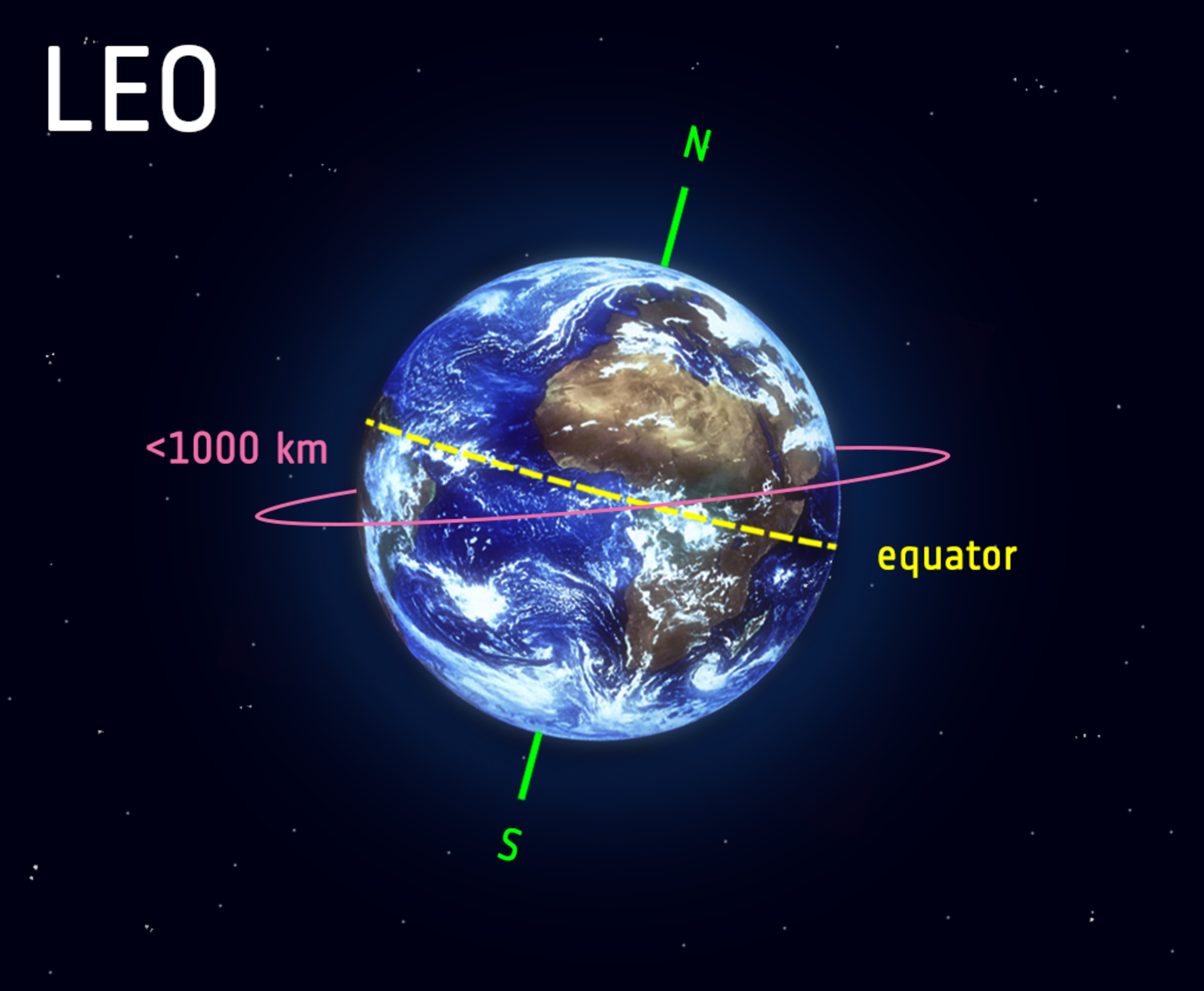
Beyond that, LEO, lower Earth orbit, between 200 to 2,000 kilometers.

Kevin O'DonovanGUEST
So I don't care if you're designing a glass bottle or you're designing the next, I don't know, satellite for...
Kevin O'DonovanGUEST
Low Earth Orbit communications.
Kevin O'DonovanGUEST
Everything is designed digitally.
Kevin O'DonovanGUEST
Now, I suppose the thing that...

Steve KatesHOST
These particular satellites, so many of them that are tracked in orbit, some space junk and other rocket bodies.
Steve KatesHOST
More precisely, 95% of active satellites orbit in low Earth orbit, that is orbital parameters that are, let's say, lower than 1,200 miles straight up into space.
Steve KatesHOST
And to continue to add to that number, SpaceX Starlink now has some 11,000 active satellites and many more to come, and so does Jeff Bezos and other nations around the world.
Steve KatesHOST
Simply, satellite technology has changed our lives in many ways, but the threat of space warfare sadly lies in the distance, according to many.
20 MINS LATER
Steve KatesHOST
I mean, this is fascinating.
Steve KatesHOST
And for people out there that really don't see this in their everyday lives, this is amazing because from the side of astronomy, when you look in the nighttime sky, if you could see in the so-called 3D vision that you don't have, obviously we don't have it, but the Earth is really surrounded by a big belt if you could see it in the sky, and you know so much more about that.
Steve KatesHOST
But what's happening right now, Robert, as you know best, the proliferation of low Earth orbit is becoming so crowded that...
Steve KatesHOST
There's not a traffic cop up there to monitor this right now.
Steve KatesHOST
And for people out there that really don't see this in their everyday lives, this is amazing because from the side of astronomy, when you look in the nighttime sky, if you could see in the so-called 3D vision that you don't have, obviously we don't have it, but the Earth is really surrounded by a big belt if you could see it in the sky, and you know so much more about that.
Steve KatesHOST
But what's happening right now, Robert, as you know best, the proliferation of low Earth orbit is becoming so crowded that There's not a traffic cop up there to monitor this right now.
Steve KatesHOST
And the illusion, if not the potential for space warfare, we'll get into it because there's stories that you and I can share with the audience about some Russian satellites that are moving in on some other satellites and maybe one ejects something out.
Steve KatesHOST
Who knows? But we want to be positive.
Robert M. PattersonGUEST
You did, and satellites is with an F.
Steve KatesHOST
Ah, yes, there you go.
Steve KatesHOST
And also, as we mentioned before, if you'd like to learn a little bit more about what's going on in low Earth orbit, we're going to give a shout out to Orbital.
Steve KatesHOST
Radar.com.

Jason CalacanisHOST
That sounds right.
Jason CalacanisHOST
Low Earth orbit.
Jason CalacanisHOST
Did they name it Leo? I think that's pretty on the nose.
Jason CalacanisHOST
Amazon Leo.

Leland MillerGUEST
They're coming up fast, fast, fast behind us.
Kyle ChanHOST
Speaking of fast catch up, I want to ask about low Earth orbit satellite constellations.
Kyle ChanHOST
I think a lot of people already know about Starlink from SpaceX, which offers satellite internet service to folks on commercial airlines.
Kyle ChanHOST
I've taken flights where you get really fast streaming video on flights that you didn't have before, but also for military use, like for Ukraine and its war with Russia.
Michael KuikenGUEST
A lot of the communications either go undersea or over the orbit.
Michael KuikenGUEST
How does your cell phone tell you where you are? It tells you where you are because of GPS and GPS is up there.
Michael KuikenGUEST
And so that ecosystem, just going back to the first question, is something that people don't appreciate how often in daily lives you use space and the low Earth orbit constellations are what are making the accuracy of so many of these things and the reliability of so many of these things better.
Michael KuikenGUEST
The Chinese are obviously not deploying them at the same scale that Starlink is, but they're going to get there.

JoeHOST
Redundancy is key.
SunnyHOST
And perhaps more importantly, we are heavily investing in low Earth orbit satellite backups.
SunnyHOST
Things like Starlink and Taiwan is currently building out its own proprietary B5G satellite network.
JoeHOST
Which is a massive undertaking.

Réan van NiekerkGUEST
We honestly do, and there's a lot happening behind the scenes, I know that, but we're not there yet.
Réan van NiekerkGUEST
LEO, or Low Earth Orbit Satellite Communication, will in fact be a huge advantage to us.
Réan van NiekerkGUEST
So the reason why they're not a competitor at all is because we do not provide any last mile communication ourselves.
Réan van NiekerkGUEST
We take, as mentioned, we take the last mile connectivity that's available or the underlay that's available at the best price and the optimal speed at a particular site.

John BatchelorHOST
Henry Sikorsky, the executive director of the Nonproliferation Policy Education Center.
John BatchelorHOST
We're headed low Earth orbit in the Golden Dome.
John BatchelorHOST
I'm John Match.
BretzkyADVERTISER
What's up, everybody? It's Bretzky.
speaker_6ADVERTISER
Ready for everything.
John BatchelorHOST
I'm John Batchelor with my colleague Henry Sokolski.
John BatchelorHOST
Low Earth Orbit, Golden Dome.
John BatchelorHOST
There is an opinion in several influential magazines, War on the Rocks and Aviation Week, that the Golden Dome has to be prepared to defend itself from rendezvous satellites.

Réan van NiekerkGUEST
We honestly do, and there's a lot happening behind the scenes, I know that, but we're not there yet.
Réan van NiekerkGUEST
LEO, or Low Earth Orbit Satellite Communication, will in fact be a huge advantage to us.
Réan van NiekerkGUEST
So the reason why they're not a competitor at all is because we do not provide any last mile communication ourselves.
Réan van NiekerkGUEST
We take, as mentioned, we take the last mile connectivity that's available or the underlay that's available at the best price and the optimal speed at a particular site.
49 more episodes mention Low Earth orbit.
Create an account to see the whole feed, search across every transcript, and follow the entities you care about.