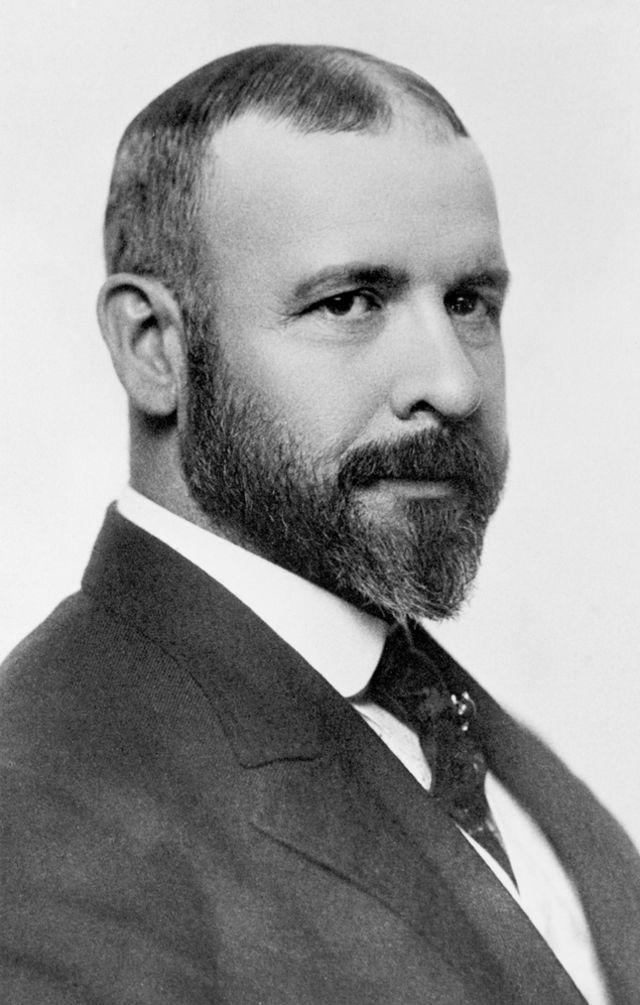
Louis Sullivan
American architectWikipedia
21
MENTIONS
12
EPISODES
12
PODCASTS
Search complete. 21 mentions across 12 episodes found for "Louis Sullivan".
Sep 15, 2026

Mark SmithNARRATOR
Architecture.
Mark SmithNARRATOR
Skyscraper developed by Louis Henry Sullivan, Irish-French, German.
Mark SmithNARRATOR
Fenoya Hall, Boston, designed by John Smilbert, Scott.
Mark SmithNARRATOR
Vieux Carre, New Orleans, laid out by Adrien de Poget, French.

LernerHOST
Exactly.
LernerHOST
I think we've all internalized that old architectural adage coined by Louis Sullivan.
LernerHOST
You know, form follows function.
speaker_1HOST
Oh, yeah.

William McLeanHOST
At the same time that or just before the Bauhaus was revolutionizing thought about design, It's not as if they were the only source of innovation in the world.
William McLeanHOST
Frank Lloyd Wright was stepping away from Louis Sullivan's studio and branching out on his own.
William McLeanHOST
He produced a series of buildings which you can't identify as being Bauhaus buildings.
William McLeanHOST
They're not at all conditioned on what came out of the Bauhaus.
Luis de MiguelHOST
not to mention falling water and all kinds of other buildings that he did.
Luis de MiguelHOST
Wright
William McLeanHOST
famously came from the studio of Louis Sullivan, and we talked at the beginning of this conversation about the phrase which is most identified with the Bauhaus, which came from Mies van der Rohe, and that phrase being, less is more.
William McLeanHOST
But There are two other aphorisms about architecture, which we learned in architecture school and are repeated to this day.

Emily Kay ShraderHOST
Second, it had to exist inside one of the Emerald City's three towers, each with a distinct architectural style.
Emily Kay ShraderHOST
The city itself is a mashup of influences, Louis Sullivan's ornate facades, Frank Lloyd Wright's intricate details, and the vertical nature-inspired geometry that makes the towers twist and turn as they climb.
Emily Kay ShraderHOST
Glinda's style, think pink silk, soft curves, theatrical elegance, doesn't naturally align with that.
Emily Kay ShraderHOST
Which I never really thought about.

Drew McIntyreADVERTISER
architecture,
Rob ClarkHOST
right? Some guy named Louis Sullivan.
Rob ClarkHOST
He's known for bold geometric brick facades, large arched showroom windows and structured vertical columns, early elements of prairie school design, things like that.
Rob ClarkHOST
Very wild.

Ashley PageHOST
It seemed huge at that time.
Ashley PageHOST
The other one is Louis H. Sullivan.
Ashley PageHOST
He invented the steel frame.
Ashley PageHOST
That obviously took skyscrapers to a whole other level.

Jeremy CordoHOST
And one more.
Jeremy CordoHOST
Louis Sullivan, American architect and father of the skyscraper, born in Boston, Massachusetts in 1856.
Jeremy CordoHOST
It is amazing what they sort of could put up, build.
PetePANELIST
Louis Sullivan, first coin, third form for us, actually.
Jeremy CordoHOST
Form follows function.
Jeremy CordoHOST
Who said that?
PetePANELIST
Louis Sullivan.
Jeremy CordoHOST
Okay.

Jeremy CordeauxHOST
And one more.
Jeremy CordeauxHOST
Louis Sullivan, American architect and father of the skyscraper, born in Boston, Massachusetts in 1856.
Jeremy CordeauxHOST
It is amazing what they sort of could put up, build.
GaryPANELIST
Louis Sullivan, first coin, third form for us, actually.
Jeremy CordeauxHOST
Form follows function.
Jeremy CordeauxHOST
Who said that?
GaryPANELIST
Louis Sullivan.
Jeremy CordeauxHOST
Okay.

Thomas Wiborg-ThuneHOST
Charles Atwood took over as designer-in-chief.
Thomas Wiborg-ThuneHOST
Richard Morris Hunt, Charles McKim, and the singular difficult genius of Louis Sullivan all contributed buildings.
Thomas Wiborg-ThuneHOST
Frederick Law Olmsted, already famous for having designed Central Park in New York, was given command of the grounds themselves, the lagoons and wooded islands and formal courts that would knit Burnham's buildings into a single coherent vision.
Thomas Wiborg-ThuneHOST
Burnham was known to tell the men working under him that timid planning had no power to move anyone, that a city built from small ambitions would never be remembered.

Emily JashinskyHOST
And by the way, I remember reading somewhere, I can't cite this particularly, Tom, maybe I'll Google it quickly, but I believe there's actually more brutalist architecture in the United States than there is in the old Soviet Union.
Emily JashinskyHOST
Tom goes on to say, however, the modernism in the United States, stemming from Louis Sullivan through Frank Lloyd Wright, was less about conforming to industrial production and very much more to be a poetic expression of the organic spirit of America as a nation.
Emily JashinskyHOST
The ideals of this come directly from Emerson and Whitman.
Emily JashinskyHOST
In my older age, I picked up Emerson and Whitman for the first time.
2 more episodes mention Louis Sullivan.
Create an account to see the whole feed, search across every transcript, and follow the entities you care about.