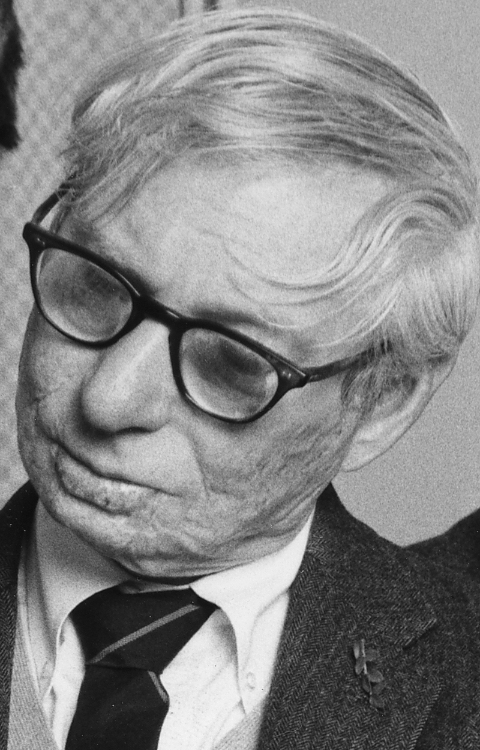
Louis Kahn
American architectWikipedia
35
MENTIONS
14
EPISODES
14
PODCASTS
Search complete. 35 mentions across 14 episodes found for "Louis Kahn".
Oct 20, 2026

Witold RybczynskiGUEST
Whereas buildings are one at a time, and one might not quite work right.
Witold RybczynskiGUEST
But I've been writing about Louis Kahn for s- for other reasons, and he-- You know, the, the first great building he did was a laboratory building that really didn't work functionally for part-- not, not completely his reason.
Witold RybczynskiGUEST
His fault.
Witold RybczynskiGUEST
It was partly the client's fault.
29 MINS LATER
Witold RybczynskiGUEST
Uh, he has to be a extremely good salesman, basically.
Witold RybczynskiGUEST
And most-- It's very difficult to find an architect Successful architect, and particularly a, a, a good successful architect who doesn't have, in some ways, that skill.
Witold RybczynskiGUEST
It's not, it's not always the same, but, uh, Louis Kahn could mesmerize people.
Witold RybczynskiGUEST
He-- There was something about him when he started talking about what this building was gonna be and how he saw it, and he w- he had very poetic imagery.

Helen RedmondGUEST
guess I've started looking at other architects that I thought were light-minded.
Helen RedmondGUEST
Louis Barragan, Louis Kahn, who wrote that the sun didn't know how beautiful it was until it fell on the wall of the building.
Helen RedmondGUEST
And just things like little quotes about light and space and realizing that once you take everything out of the space, even windows and certainly objects, and you're just left with a volume.
Helen RedmondGUEST
Your mind is free to wander around a space.

Steven BaczekGUEST
Well, you're the architect.
Steven BaczekGUEST
You can't figure that out Like this is your monster, which is one of my favorite lines when I was in when I was in college I think was my junior year really great Instructor he went to school and was taught by Louis Kahn and But we were sitting there, and I asked him, like, how would you do that? How would we fix that? And he goes, I don't know.
Steven BaczekGUEST
This is your monster.
Steven BaczekGUEST
Like, you created it.

Tyler GreenHOST
Mm.
Edward TownGUEST
Um, and the, our remarkable building, designed by Louis I. Kahn, has a modularity which allows for the creation of a series of sort of small rooms about 20 by 20 foot, uh, wide, and these, this is done specifically with a mind towards the, the nature of the Mellon collection, which is so strong in this area.
Tyler GreenHOST
I wanted to start by addressing the show and the book by asking each of you how and why you started your project.
Tyler GreenHOST
So Tim, the book, which was published, um, last year, starts with a David Lucas print, which as something of an historical Americanist, I absolutely loved.

Carl AbbottGUEST
Rudolph was, Rudolph was probably the most recognized and ack- acknowledged modernist architect in the world around '58, '59.
Carl AbbottGUEST
And then Louis Kahn came on the, barreling on the m- scene about '60.
Carl AbbottGUEST
And so Louis Kahn was the-- he and Rudolph were the two best-known architects in the world when I went to graduate school.
Carl AbbottGUEST
There was no question to my mind about that.
Carl AbbottGUEST
S- so after finishing UF, what was the- Oh, uh, sorry.
Carl AbbottGUEST
So we would, uh, we, we, [laughs] we would have two sets of conversation.
Carl AbbottGUEST
It would be-- And so, which was, they were just wonderful to me.
Carl AbbottGUEST
And, and, and, and, and, but my work, my work was being influenced by Rudolph, not Louis Kahn then, 'cause I didn't really know Louis Kahn.

Mark ScrivnerHOST
Where did that come from? How did you come up with that?
Wes WebbGUEST
Well, that quote is actually from the architect Louis Kahn.
Mark ScrivnerHOST
So when he
Wes WebbGUEST
was working on, I forget which building it was, but he was doing a brick facade and somebody asked him or he got to speaking about it and he said, when working with brick, you must first ask the brick what it wants to be.

Rune LykkebergHOST
It must also be different.
Rune LykkebergHOST
There are several examples of, of, of buildings in the books, and they're very different examples from squares, streets, but also capital buildings and legislative palaces, as the, the, the legislative assemblies are, are called by Louis Kahn.
Rune LykkebergHOST
So there are different examples i- in the book.
Rune LykkebergHOST
What was it like for you to think with the buildings, to meet...

Michele Grace HottelHOST
Okay.
Maha BazariGUEST
Um, which is the most recent, and I would say probably the Salk Institute by Louis Kahn.
Michele Grace HottelHOST
Okay.
Maha BazariGUEST
Um, just that simplicity, the symmetry, the awareness of, uh, the geographical placement, um, where the sun goes throughout the year, um, how it lands, the water features, materiality, um, the peacefulness of some elements to it-

PeterHOST
Anyhow, like my story about New York City and DBA a few weeks back, there's not much in the way of theory or lesson this week, just a story about place and the passage of time, but also the passing of people.
PeterHOST
Everyone should be able to relate to it, and I suspect my Philadelphia friends and colleagues in particular will hear some familiar notes in this episode, which I'm calling Back When Lou and I Were Designing the Sock Together, or Playing the Name Game With an Old Architect and Realizing That I'm Getting Older Too.
PeterHOST
So here's the story.
PeterHOST
In May of 2026, I was at a graduation party for one of my son's high school classmates when the classmate's father introduced me to his father, a retired architect in his late 80s.
PeterHOST
We were on the back porch of their house in Minneapolis when this old architect mentioned leaving the Midwest to attend the University of Pennsylvania to study architecture.
PeterHOST
I told him that I was an architect too, and that I had lived and worked in Philadelphia for 17 years, and that I had also attended Penn's College of Design to study city planning.
PeterHOST
His eyes lit up as he started to tell me all about how he had gone to Penn to study under the famous modernist architect Louis Kahn, and then got a job working in Kahn's office.
PeterHOST
This was clearly no distant memory, but rather the formative and central part of this man's career and life story.

Dan GelernterHOST
After-
Josh GelernterHOST
Was he related to Louis Kahn, the architect?
Dan GelernterHOST
No, that's the interesting thing is there are three great Kahn architects, and none of them, uh, is related to any of the others.
Dan GelernterHOST
Uh, they're all Jewish is the only thing they have in common.
Dan GelernterHOST
Kahn is, you know, like Cohen, a very common Jewish last name.
Dan GelernterHOST
Uh, Louis Kahn, who designed a lot of art galleries especially, rather brutalist.
Dan GelernterHOST
I can't say that I admire him tremendously.
Dan GelernterHOST
Uh, both his first and his last buildings are in New Haven, interestingly enough, the, uh, the Yale Art Gallery and the British Art Center, which is across the street from it.
4 more episodes mention Louis Kahn.
Create an account to see the whole feed, search across every transcript, and follow the entities you care about.