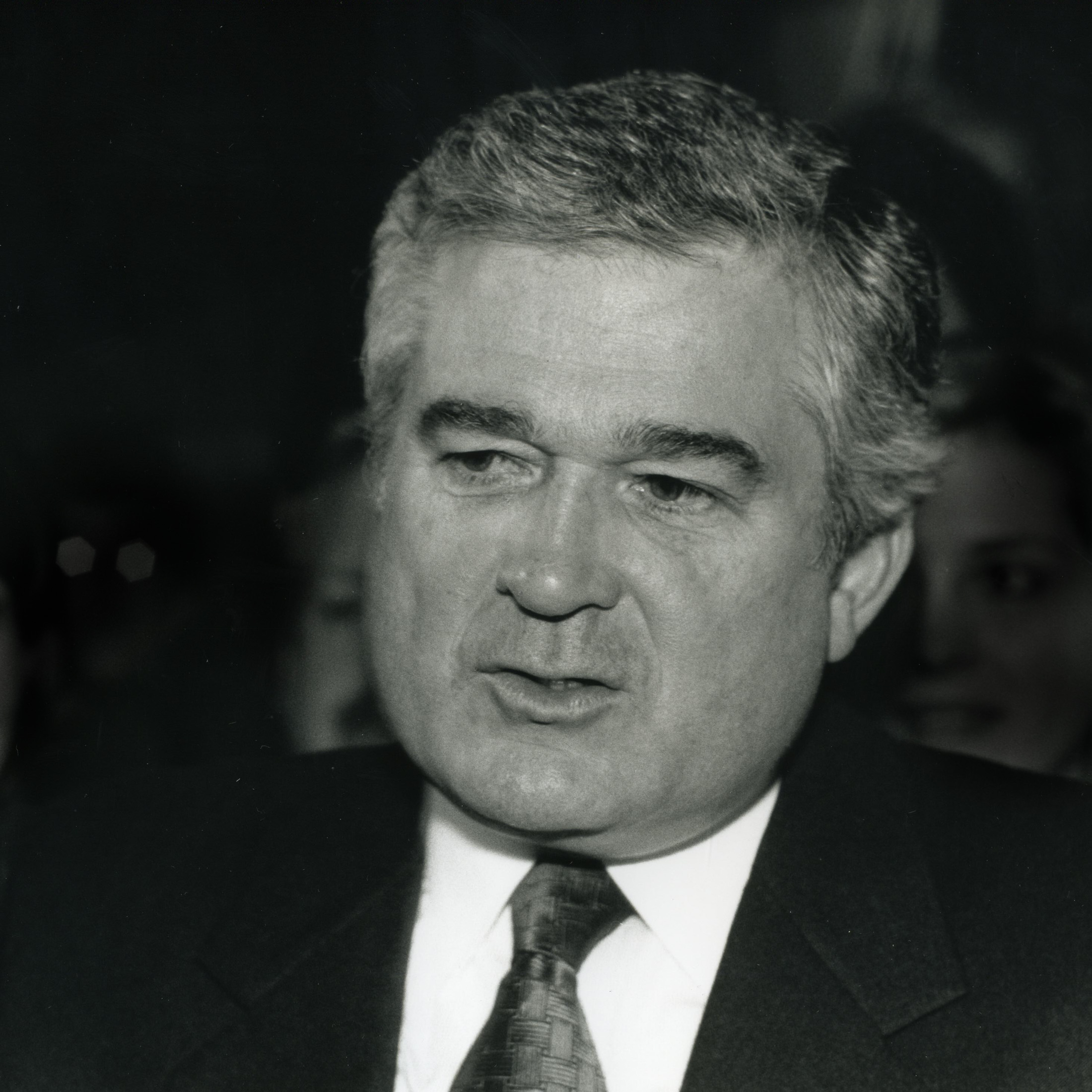
Lou Gerstner
American businessman and former CEO of IBMWikipedia
11
MENTIONS
9
EPISODES
9
PODCASTS
Search complete. 11 mentions across 9 episodes found for "Lou Gerstner".
Sep 25, 2026

Jacob MorganHOST
They were famous for decades for its strict dress code, dark suits, white shirts.
Jacob MorganHOST
They only dropped this in 1995 when Lou Gerstner took over, when the company was fighting to survive, when they were fighting to look less like a corporate establishment and more like a tech startup.
Jacob MorganHOST
It was losing talent to customers everywhere.
Jacob MorganHOST
So the rules typically change when the power changes.

Michael ThesenHOST
Well, let's dig into one case in detail.
Michael ThesenHOST
So you open your collection with Lou Gerstner at IBM.
Michael ThesenHOST
Why did you start there?
Rolf ClaessenGUEST
I started becoming a lecturer at the university maybe like 15 years ago or so.
Rolf ClaessenGUEST
And that was about transformation.
Rolf ClaessenGUEST
It was like a study of about like for business administration students talking about transformation of companies and it was just a guest lecture first and i talked about one hour about how patents can be used in transformation and that was the case that i chose because it was really a big case at that time i mean lukasna took over ibm when they were selling mainframe computers you know computers the size of a room and all these thin clients with the people who are working on on this one computer basically and then they came macintosh and the personal computer and they lost their complete business from one day to another basically and they filed for chapter 11 and had really difficulties and then lou gerstner took over and saw the value of the patents, saw the research that was done on all these basic technologies that all the new computers were also using.
Rolf ClaessenGUEST
So he basically asked the new competitors whether they wanted to use the technology that they actually already used.
Rolf ClaessenGUEST
And whether they wanted to pay license fees or he also had to litigate some patents.

Bert VriesGUEST
Yes, they can turn around.
Bert VriesGUEST
Lou Gerstner also said elephants can dance.
Bert VriesGUEST
That was also a famous quote.
Bert VriesGUEST
But it takes a while for a big company to move.

speaker_3HOST
And in 1988, they were already offering three years of unpaid maternity leave.
speaker_4HOST
But the crucial turning point highlighted in the text is when Louis Gerstner became CEO in the 1990s.
speaker_4HOST
Okay.
speaker_4HOST
He looked at the data and realized that despite all these pioneering policies, the senior executive ranks were still almost entirely homogenous.

Tina TarquinioGUEST
I think that's the magic and creating a space for your leader's who then create a space for their leaders, really important.
Tina TarquinioGUEST
And then with the recent passing of Lou Gerstner, who is a former CEO, I reread Elephants Can't Dance.
Tina TarquinioGUEST
And when I read it the first time, I was a newer IBMer, and I'm not sure it hit me the same way now as I'm a true leader of an IBM business.
Tina TarquinioGUEST
So yeah.

Nick GoniosGUEST
I love reading autobiographies, and business autobiographies to be exact.
Nick GoniosGUEST
And I was reading Lou Gerstner's Why Elephants Can't Dance at the time, which is an amazing book for anybody.
Nick GoniosGUEST
Still, it's still valuable, I would say, if not more now with what's going on.
Nick GoniosGUEST
And Lou Gerstner had the, had the re- had the massive, herculean, you know, herculean, Homer-esque, uh, task to try and get IBM to survive within an 18-month period or go bankrupt, right? And, and what he did was, you know, in a global multi-matrix environment, which I'm sure you would understand and appreciate sort of where you've come from and who you've sort of worked with and so forth.
Nick GoniosGUEST
In multi-matrix environments, you get lost in the noise of KPIs and objectives.
Nick GoniosGUEST
And what he realized was, wow, within 12 months he worked out, after doing many, many trips around the world and vetting subsidiaries, and all the usual multi-matrix environments, was that people respect what's inspected of them.

Dave SnowdenGUEST
I argued this.
Dave SnowdenGUEST
I got Lou Gerstner to agree to it as a principle.
Dave SnowdenGUEST
He said IBM needs to break away from the utilization model because utilization and the bench problem, you always get the bad people because it's who the partner wants to sell to.
Dave SnowdenGUEST
So I came up with an idea.

Chris UllmanGUEST
I observed them in these immensely successful people and said, well, if they can do it, why can't I? So every day, I'm 63 years old, I am employing the things that I learned from Glenn Youngkin and David Rubenstein and Adina Friedman, who's the CEO and chair of NASDAQ.
Chris UllmanGUEST
Lou Gerstner, who recently passed away, but was one of the top CEOs in American history.
Chris UllmanGUEST
and John Kasich and Arthur Levitt, who was one of the great leaders in American history.
Chris UllmanGUEST
And I worked for them personally and learned an immense amount from them.

Greg SatellGUEST
And that's really the key.
Greg SatellGUEST
So one of the things we do when we work with an organization, one of the first things we do, we say, what's your genome of values, right? What do you value? And then we ask, what do those values cost you? My favorite example is Lou Gerstner and the legendary transformation at IBM.
Greg SatellGUEST
He said, we're going to value the customer and I'm willing to forego revenue on every sale to do it.
Greg SatellGUEST
I've interviewed dozens of executives from IBM at that period, including the one who led the e-business initiative.