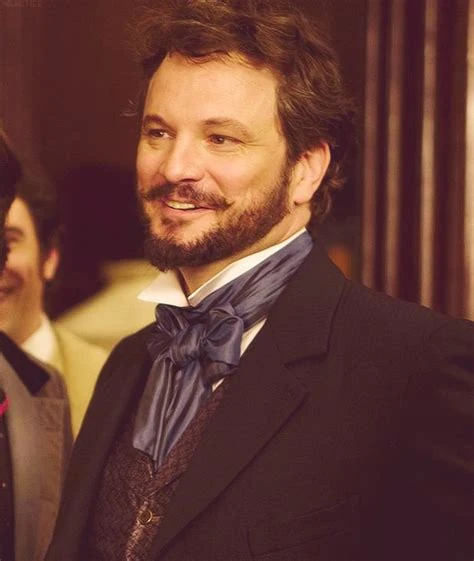
Lord Henry Wotton
Film character
17
MENTIONS
6
EPISODES
5
PODCASTS
Search complete. 17 mentions across 6 episodes found for "Lord Henry Wotton".
Oct 1, 2026
speaker_2HOST
It's just hidden.
speaker_1HOST
The article also points out the brilliant role of Lord Henry Wotton in the novel.
speaker_1HOST
He is this incredibly seductive philosophical character who whispers in Dorian's ear.
speaker_2HOST
He's the instigator.

speaker_1HOST
No, they usually punish them for it.
speaker_2HOST
it.But what makes the novel even more compelling is the widely held belief, both then and now, that Dorian, along with the other main characters, Lord Henry and Basil Hallward, were fragmented reflections of Wilde himself.
speaker_2HOST
He was putting his own desires, his own philosophy, and his own hidden life right there on the page.
speaker_1HOST
It was a warning shot, practically a confession disguised as fiction.

Rob MarlandNARRATOR
Writing to us under yesterday's date, he says...
Rob MarlandNARRATOR
in your issue of to-day you state that my brief letter published in your columns is the best reply i can make to your article upon dorian gray this is not so i do not propose to discuss fully the matter here but i feel bound to say that your article contains the most unjustifiable attack that has been made upon any man of letters for many years the writer of it who is quite incapable of concealing his personal malice and so in some measure destroys the effect he wishes to produce seems not to have the slightest idea of the temper in which a work of art should be approached to say that such a book as mine should be chucked into the fire is silly that is what one does with newspapers of the value of pseudo ethical criticism in dealing with artistic work i have spoken already but as your writer has ventured into the perilous grounds of literary criticism i ask you to allow me in fairness not merely to myself but to all men to whom literature is a fine art to say a few words about his critical method he begins by assailing me with much ridiculous virulence because the chief personages in my story are puppies they are puppies does he think that literature went to the dogs when thackeray wrote about puppydom i think that puppies are extremely interesting from an artistic as well as from a psychological point of view they seem to me to be certainly far more interesting than priggs and i am of the opinion that lord henry wotton is an excellent corrective of the tedious ideal shadowed forth in the semi-theological novels of our age he then makes vague and fearful insinuations about my grammar and my erudition now as regards grammar i hold that in prose at any rate correctness should always be subordinate to artistic effect and musical cadence and any peculiarities of syntax that may occur in dorian gray are deliberately intended and are introduced to show the value of the artistic theory in question your writer gives no instance of any such peculiarity this i regret because i do not think that any such instances occur as regards erudition it is always difficult even for the most modest of us to remember that other people do not know quite as much as one does oneself myself frankly admit i cannot imagine how a casual reference to suetonius and petronius arbiter can be construed into evidence of a desire to impress an unoffending and ill-educated public by an assumption of superior knowledge i should fancy that the most ordinary of scholars is perfectly well acquainted with the lives of the caesars and with the satyricon the lives of the caesars at any rate forms part of the curriculum at oxford for those who take the honour school of literae humaniores and as for the satyricon it is popular even among passmen though i suppose they are obliged to read it in translations the writer of the article then suggests that i in common with that great and noble artist count tolstoy take pleasure in a subject because it is dangerous about such a suggestion there is this to be said romantic art deals with the exception and with the individual good people belonging as they do to the normal and so commonplace type are artistically uninteresting bad people are from the point of view of art fascinating studies they represent colour variety and strangeness good people exasperate one's reason bad people stir one's imagination your critic if i must give him so honourable a title states that the people in any story have no counterpart in life that they are to use his vigorous if somewhat vulgar phrase
Matt Rogers and Bowen YangADVERTISER
This is Matt Rogers from Las Culturistas with Matt Rogers and Bowen Yang.
Matt Rogers and Bowen YangADVERTISER
This is Bowen Yang from Las Culturistas with Matt Rogers and Bowen Yang.
Rob MarlandNARRATOR
mere catchpenny revelations of the non-existent quite so if they existed they would not be worth writing about the function of the artist is to invent not to chronicle there are no such people if there were i would not write about them life by its realism is always spoiling the subject matter of art the superior pleasure in literature is to realise the non-existent and finally let me say this you have reproduced in a journalistic form the comedy of much ado about nothing and have of course spoilt it in your reproduction the poor public hearing from an authority so high as your own that this is a wicked book that should be coerced and suppressed by a tory government will no doubt rush to it and read it but alas they will find that it is a story with a moral and the moral is this all excess as well as all renunciation brings its own punishment The painter, Basil Hallward, worshipping physical beauty far too much, as most painters do, dies by the hand of one in whose soul he has created a monstrous and absurd vanity.
Rob MarlandNARRATOR
Dorian Gray, having led a life of mere sensation and pleasure, tries to kill conscience, and at that moment kills himself.
Rob MarlandNARRATOR
lord henry wotton seeks to be merely the spectator of life he finds that those who reject the battle are more deeply wounded than those who take part in it yes there is a terrible moral in dorian gray a moral which the prodigant will not be able to find in it but it will be revealed to all whose minds are healthy is this an artistic error i fear it is it is the only error in the book the editor added to this letter mr oscar wilde may perhaps be excused for being angry at the remarks which we allowed ourselves to make concerning the moral tale of the three puppies and the magic picture but he should not misrepresent us he says we suggested that his novel was a wicked book which should be coerced and suppressed by a tory government we did nothing of the kind the authors of books of much less questionable character have been proceeded against by the treasury or the vigilance society but we expressly said that we hoped mr wilde's masterpiece would be left alone then mr wilde like any young lady who has published her first novel at the request of numerous friends falls back on the theory of the critic's personal malice this is unworthy of so experienced a literary gentleman we can assure mr wilde that the writer of that article had and has no personal malice or personal feeling towards him we can surely censure a work which we believe to be silly and know to be offensive without the imputation of malice especially when that book is written by one who is so clearly capable of better things As for the critical question, Mr. Wilde is beating the air when he defends idealism and romantic art in literature.
Rob MarlandNARRATOR
In the words of Mrs. Harris to Mrs. Gamp, "'Who's denying of it? Heaven forbid that we should refuse to an author the supreme pleasure of realising the non-existent, or that we should judge the aesthetic from the purely ethical standpoint.' no our criticism starts from lower ground mr wilde says that his story is a moral tale because the wicked persons in it come to a bad end we will not be so rude as to quote a certain remark about morality which one mr charles surface made to mr joseph surface we simply say that every critic has the right to point out that a work of art or literature is dull and incompetent in its treatment as the picture of dorian gray is and that its dullness and incompetence are not redeemed because it constantly hints not obscurely at disgusting sins and abominable crimes as the picture of dorian gray does mr oscar wilde's defence to the editor of the st james's gazette sir as you still keep up though in a somewhat milder form than before your attacks on me and my book you not only confer upon me the right but you impose on me the duty of reply you state in your issue of to-day that i misrepresented you when i said that you suggested that a book so wicked as mine should be suppressed and coerced by a tawdy government now you did not propose this but you did suggest it when you declare that you do not know whether or not the government will take action about my book and remark that the authors of books much less wicked have been proceeded against in law the suggestion is quite obvious in your complaint of misrepresentation you seem to me sir to have not been quite candid however as far as i am concerned this suggestion is of no importance what is of importance is that the editor of a paper like yours should appear to countenance the monstrous theory that the government of a country should exercise a censorship over imaginative literature this is a theory against which i and all men of letters of my acquaintance protest most strongly and any critic who admits the reasonableness of such a theory shows at once that he is quite incapable of understanding what literature is and what are the rights that literature possesses a government might just as well try to teach painters how to paint or sculptors how to model as attempt to interfere with the style treatment and subject matter of the literary artist and no writer however eminent or obscure should ever give his sanction to a theory that would degrade literature far more than any didactic or so-called immodal book could possibly do you then express your surprise that so experienced a literary gentleman as myself should imagine that your critic was animated by any feeling of personal malice towards him the phrase literary gentleman is a vile phrase but let that pass i accept quite readily your assurance that your critic was simply criticising a work of art in the best way that he could but i feel that i was fully justified in forming the opinion of him that i did he opened his article by a gross personal attack on myself this i need hardly say was an absolutely unpardonable error of critical taste there is no excuse for it except personal malice and you sir should not have sanctioned it a critic should be taught to criticise a work of art without making any reference to the personality of the author this in fact is the beginning of criticism however it was not merely his personal attack on me that made me imagine that he was actuated by malice what really confirmed me in my first impression was his reiterated assertion that my book was tedious and dull now if i were criticising my book which i have some thoughts of doing i think i would consider it my duty to point out that it is far too crowded with sensational incident and far too paradoxical in style as far at any rate as the dialogue goes i feel that from a standpoint of art there are true defects in the book but tedious and dull the book is not Your critic has cleared himself of the charge of personal malice, his denial and yours being quite sufficient in the matter.

Martin GiesenNARRATOR
Dorian Gray suffocated in its infancy the only germ of spiritual soul he possessed.
Martin GiesenNARRATOR
End of section 12 CHAPTER XIV the note of doom that like a purple thread runs through the texture of dorian gray a revulsion from realism by ann h wharton footnote lippincott's monthly magazine september in all ages and climes mankind has found delight in romances based upon the mystic the improbable and the impossible from the days when the norse poets sang their sagas through long northern nights and the fair scheherazade under southern moon charm'd her bloodthirsty lord by her tales of wonder to our own day when stephenson and crawford and haggard hold fancy spell-bound by their entirely improbable stories scott and buller played with master hands upon the love of the mysterious and supernatural inherent in mankind dickens and others have essayed to gratify its demands but with less daring and having an eye always on the moorings of the actual their success has been less marked with the elder hawthorne such romance-writing seemed the natural growth of an exquisitely sensitive and spiritual nature while among later french writers theophile gautier and edmond abou have entered into the domain of the impossible as into the natural heritage of their genius sporting in its impalpable ether with the tuneful abandon of a fish in the sea or a bird in the air hampered by no bond of the actual weighted by no encumbrance of the material it is not strange that the great influx of realistic novels that has flowed in upon the last decade should be followed by a revulsion to the impossible in fiction men and women wearied with meeting the same characters and events in so-called romance that they encounter in everyday life or saddened by the depressing if dramatic pictures of tolstoi and the cool vivisection of humanity presented by ibsen turn with a sense of rest and refreshment to the guidance of those who like robert louis stevenson and rider haggard lead them suddenly into the mystic land of wonder or marian crawford and mrs oliphant delight to draw them by gentle and easy stages from the midst of a well-appointed setting of everyday life into the shadowy border-land that lies between the real and the unreal much of the success of such romance writing rests upon the rebound natural to humanity from intense realism to extreme ideality more perhaps upon the fact that this age which is grossly material is also deeply spiritual with these two facts well in view mr oscar wilde has fallen into line and entered the lists with some of the most successful masters of fiction in his novel the picture of dorian gray written for the july lippincotts mr wilde like balzac and the authors of faust and john inglesant presents to us the drama of a human soul while like gautier and abou he surrounds his utterly impossible story with a richness and depth of colouring and a grace and airiness of expression that make the perusal of its pages an artistic delight if mr wilde's romance resembles the productions of some of the writers of the french school in its reality and tone it still more strongly resembles mr stephenson's most powerfully wrought fairy-tale dr jekyll and mr hyde although the moral of the story is brought out even more plainly as plainly indeed as in the drama of faust in both mr stephenson's and mr wilde's stories there is a transformation or substitution in one the soul of dr jekyll appears under different exteriors in the other some fine influence passes from the soul of dorian gray into his portrait and there works a gradual and subtle change upon the pictured lineaments although mr wilde's extravaganza is far less dramatic than that of mr stephenson it has the advantage of richer colouring and a more human setting if we may so express it the characters in the picture of dorian gray enjoy life more than mr stephenson's creations who seem to have had so dull a time of it at the best that they might have been expected to welcome a tragedy as a relief to the tedium of their daily lives mr utterson we are told was good but he was evidently not particularly happy which was the case with the other personages of the drama with the exception of those who were signally wretched on the other hand mr wilde's characters are happy during their little day their world is a luxurious perfumed land of delight until sin transforms it and even after lord henry has corrupted the nature of dorian gray with evil books and worldly philosophy he occasionally drinks of the waters of lethe and enjoys some fragments of what may be called happiness while lord henry himself seems to derive a certain satisfaction from the practice of his mephistophelian art and in his entire freedom from the restraints of conscience in a tale of the impossible it is not required that the writer should be true to life animate or inanimate yet in the fact that there are glimpses of light through the clouds that surround his dramatis personae that they inhabit a world in which the laburnum hangs out yellow clusters in june and the clematis robes itself with purple stars and the sun sheds gold and the moon silver despite the tragedy that touches the lives of its inhabitants is not mr wilde quite as true to nature as to art the reader may reasonably question the author's good taste in displaying at such length his knowledge of antique decoration and old world crime as in chapter nine footnote chapter eleven in the eighteen ninety one edition which besides being somewhat tiresome clogs the dramatic movement of the story yet on the other hand it must be admitted that none but an artist and an apostle of the beautiful could have so sympathetically portrayed the glowing hues and perfumes of the garden in which dorian gray had first presented to his lips the cup of life and none other could have so pictured the luxurious surroundings of his home for whose embellishment the known world had been searched for hangings ornaments and amid such an entourage of modern london life with its sybaritic indulgence its keenness of wit and its subtle intelligence mr wilde places his characters and works out his miracle viewing his own portrait just completed by an artist friend dorian gray turns from it filled with envy and dissatisfaction because it has been whispered in his ear that youth is the supreme possession in life and that when youth and beauty have fled from his face and form this pictured presentment will live for ever a perpetual mockery of himself whom withering age has overtaken under the influence of his evil genius lord henry wotton dorian gray utters a prayer that he may always remain young and the portrait alone reveal the ravages of time sin and sorrow the realisation of this idea is the theory of mr wilde's romance and the air of probability with which he has endowed the absolutely impossible evidences the artistic and dramatic power of the writer the portrait of dorian gray painted in days of innocence and loveliness when his mere presence symbolized to the artist the entire harmony between beauty of body and beauty of soul changes day by day with the degradation of his nature while the living dorian gray after years of sin remorseless cruelty and corruption of thought and action preserves all the grace and fairness of his antinous like youth love in this romance is an incident not its crowning event although an important incident as a revelation of the character of dorian gray the reader never meets sibyl vane he merely sees her on the stage and hears of her from the lips of her lover yet even thus she appeals to us as an exquisite personation of maidenhood with all its purity and all its tenderness as shadowy an outline as the fair child whom buller allows to captivate the imagination of kenelm chillingly who caught butterflies talked philosophy and died young yet who in her brief transit across his path realized to his poetic soul all the best possibilities of life spiritual and material sibyl vane comes to us girt about with ideal charm to fulfil her widely different mission which was to reveal to dorian gray the sad fact that his soul had passed beyond her sweet and ennobling influence his artistic and intellectual senses were touched by her beauty and dramatic power but to the beauty that made her worthy to be loved his eyes were blind his heart was insensible the tragedy of the story the climax of the situation is not the death of sibyl vane nor even the pitiless murder of the friend who dared to give dorian gray good counsel but the disclosure that dorian's soul once open to all good influences had by yielding to the malign domination of his evil genius passed beyond the reach of love pity or remorse It is needless to say that Dorian Gray is not a very substantial character.
Martin GiesenNARRATOR
The most entertaining, though not the most exemplary, personage of the story is Lord Henry Wotton, who by his preaching and practice of the doctrine of hedonism leads Dorian Gray into all known and unknown evil.
Martin GiesenNARRATOR
until finally his darkling shadow outreaches in depravity the imagination of his tempter when his victim has sunk so low in sin that the world shuns him lord henry still enjoys his gay conscienceless existence and continues to utter the persiflage that constitutes much of the attraction of the book as well as of his society witty learned giving expression to aphorisms as keen as the sayings of thackeray's characters with the moral element eliminated and as cynical as those of norris with exquisite taste and the fascination of a finished man of the world lord henry belongs as truly on the material side of his nature to the life of to-day as he appertains on its spiritual side to the region of pluto a gay child of the great london social world he hovers airily around and about the emotions of life declaring that death is the only thing that ever terrifies him and that death and vulgarity are the only facts in the nineteenth century that one cannot explain away.
Martin GiesenNARRATOR
the climax of lord henry's sardonic worldliness is reached when he becomes the spectator of his own domesticity if he may be said to have any and speaks to dorian of his divorce from his wife as one of the latest sensations of london remarking apropos of his music the man with whom my wife ran away played chopin exquisitely "'Poor Victoria! I was very fond of her.

Travis BradleyGUEST
Pretty much.
Travis BradleyGUEST
Um, without leaving certain characters out, like Sibyl Vane's mother or her brother, um, Jim, or Lady Agatha, who's Lord Henry's aunt.
Travis BradleyGUEST
You know, there's certain characters that I ki- I kinda had to skip over.
Brianna RichardsonHOST
Mm-hmm.
Travis BradleyGUEST
So we got to, like, the bulk of the story a little bit more, almost like this love triangle between Dorian Gray and Sibyl Vane and Lord Henry, and just kinda trying to work our way through that.
Travis BradleyGUEST
And, um, I've introduced a new character to this story as well that isn't normally there, kind of Kali, the character of, of death and time that's always kinda looming over you and just kind of following and being in the shadows to kind of follow him to his fall initially by the end.
Travis BradleyGUEST
Um, so she's kind of this death character that makes a pact with him to kind of, uh, for the portrait to take all of his sins.
Brianna RichardsonHOST
You'll go back and get them.