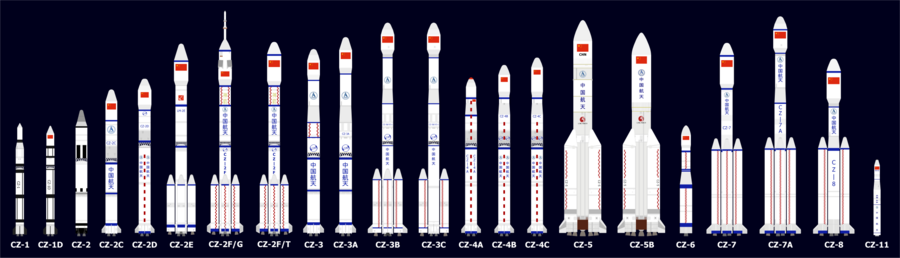
Long March
Rocket familyWikipedia
35
MENTIONS
7
EPISODES
7
PODCASTS
Search complete. 35 mentions across 7 episodes found for "Long March".
Sep 6, 2026

LeoHOST
Another thing, so this one was on July 10, 2026, and it is from the China space program, the state program to explore space.
LeoHOST
It was called Long March 10B, the rocket, and it lifted off the Hainan commercial space launch site.
LeoHOST
And 11 minutes after launch, they confirmed the recovery of the first stage, caught in a flexible net capture system with hydraulic damping on the sea platform.
LeoHOST
and not on legs in the net this time.

Anthony ColangeloHOST
We've got Andrew Jones, a correspondent at Space News, a writer at space.com, elsewhere on the internet covering all things spaceflight in China.
Anthony ColangeloHOST
That's, uh, a pretty expansive category 'cause it's everything from national policy to the new private or commercial companies that are starting up in China, the state organizations that are operating, the Long March vehicles, uh, the Chang'e missions.
Anthony ColangeloHOST
So much going on lately to talk about.
Anthony ColangeloHOST
Most importantly, a couple of newly recovered first stage boosters, uh, Zhuque-3, Long March 10B, have landed and been captured successfully in the last couple of months.
Anthony ColangeloHOST
Uh, we've got a Chang'e 7 mission coming up to the South Pole of the moon that's, uh, been a little bit mysterious in the last week or so to talk about.
Anthony ColangeloHOST
So thought it was a good time to have him on and talk about all things going on in China.
Anthony ColangeloHOST
Well, we shouldn't bury the lead, that, uh, there's been a couple of boosters landed or caught, uh, in China in the last couple of months.
Anthony ColangeloHOST
Uh, we're overdue talking about some of them.

Jan JekielekHOST
The August 5th moon crash of a nearly eight-thousand six-hundred-pound upper stage of a SpaceX Falcon 9 rocket created a new 60-foot wide crater, demonstrating the destructive power of a piece of space junk traveling at five thousand four hundred miles per hour.
Jan JekielekHOST
Since 1959, more than 60 spacecraft or other man-made objects have crashed into the moon, including the thirty-thousand-plus pound third stages of the Apollo 13 to 17 missions, which were used to create seismic tests, and the March 4th, 2022 impact of the six-thousand four-hundred-pound third stage of a Chinese Long March 3C rocket, which created a 95-foot crater.
Jan JekielekHOST
But on August 6th, 2026, Chinese state media were quick to tout that the Falcon 9 crash had been observed by China's Gongde One-Zero-One, a commercial space debris monitoring satellite just launched on July 24th on a Lijian-1 commercial space launch vehicle.
Jan JekielekHOST
On August 7th, Chinese state media CGTN reported, "A Chinese commercial space debris monitoring satellite has successfully tracked and recorded the moment a SpaceX Falcon 9 rocket second stage remnant smashed into the moon, marking a significant achievement for the country's commercial space monitoring capabilities." The day before, the South China Morning Post noted the Gongde One-Zero-One observation, "In a show of space surveillance strength, a newly launched Chinese satellite tracked a piece of a SpaceX Falcon 9 rocket crashing into the moon and captured footage of its impact." Eventually, the Gongde constellation will consist of 120 satellites.

Aug 22 · 2 Mentions
John BatchelorHOST
It looks like they stole the right plans this time.
John BatchelorHOST
None of that Long March 5 stuff.
John BatchelorHOST
China's achieved vertically soft landing unless we doubt the video.
John BatchelorHOST
Do you doubt it?
Bob ZimmermanGUEST
No, no, there's no question of this.
Bob ZimmermanGUEST
This is actually the second time China has now successfully covered a first stage.
Bob ZimmermanGUEST
In July, a Long March 10B successfully landed a first stage on a barge in China's sea, catching it with nets.
Bob ZimmermanGUEST
So that could be refurbished and reused.

AveryHOST
OK, so China and rockets.
AveryHOST
We were just talking about this two episodes ago, right? The Long March failure and the fast recovery.
AnnaHOST
Right, but this is a completely different story, and honestly a bigger one long term.
AnnaHOST
That was China's state space program, Long March rockets run by the state-owned main contractor.
AnnaHOST
This is China's commercial sector, and specifically a company called Landspace.
AveryHOST
Which does what exactly?

ZhenfeiHOST
This explosion not only tore apart the aerospace achievements that the CCP prides itself on, but it also ripped open the most hidden wound in Xi Jinping's heart.
ZhenfeiHOST
On the evening of August 10th, at the Wenchang spacecraft launch site in Hainan, the Long March 7A carrier rocket, which we'll refer to as the Long March 7A from here on, roared to life and lifted off, carrying the ChinaSat-4B satellite.
ZhenfeiHOST
About 85 seconds later, a blinding flash of fire erupted in the night sky, and the rocket disintegrated and fell into the sea.
ZhenfeiHOST
Three hours later, Xinhua News Agency announced that the rocket had experienced an abnormal flight, the launch mission had failed, and the cause was under further analysis and investigation.
ZhenfeiHOST
After all, aerospace development is something that succeeds through explosions.
ZhenfeiHOST
But if you put this launch under a microscope, you'll find five extremely unusual aspects to it.
ZhenfeiHOST
First of all, the Long March 7A is no novice just starting out.
ZhenfeiHOST
Although it did explode once during its maiden flight in 2020, starting in 2021, it has been smooth sailing, successfully launching 16 times in a row without a single hitch.