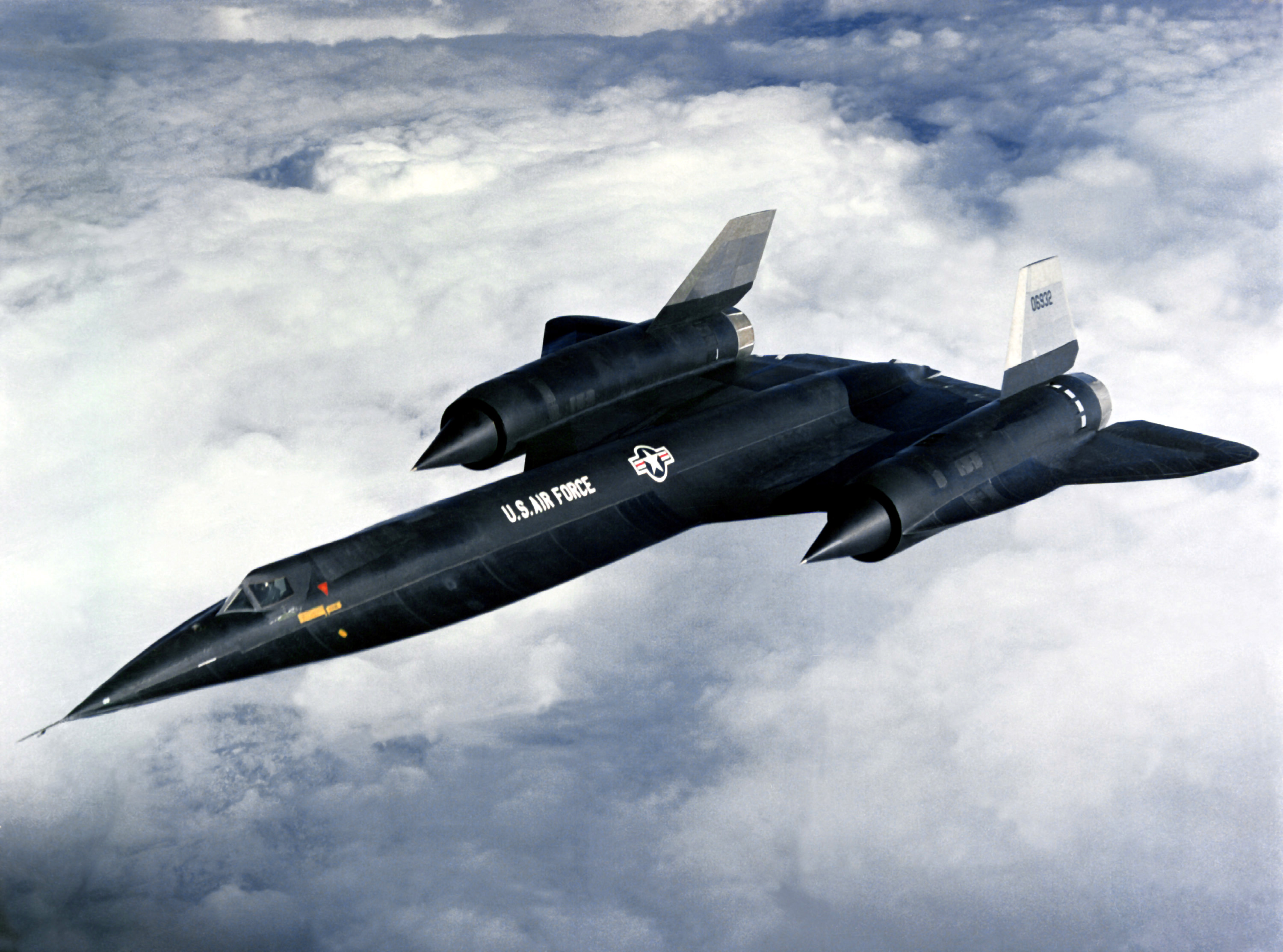
Lockheed A-12
Reconnaissance aircraftWikipedia
8
MENTIONS
6
EPISODES
6
PODCASTS
Search complete. 8 mentions across 6 episodes found for "Lockheed A-12".
Sep 16, 2026

JoyHOST
The, okay, strange that this guy's got this part-time job as a guard, but his regular job is at, working for Lockheed.
JoyHOST
But then you know that, um, the CIA actually had a highly t- a highly secret A-12 Oxcart project, um, that they were developing as the U-2 spy plane's successor, and this was, the plane was being developed at Lockheed in the Burbank site while this gentleman worked there.
NikkiHOST
Okay.
JoyHOST
Okay, so let's go back to, real quick, the U-2.

LuisHOST
And Just to give a little bit more context before we move on, in 1955, there were two planes that were tested, two U-2 bomber planes.
LuisHOST
One of them was the Lockheed U-2, and the other one was the A-12 Oxcart.
LuisHOST
These were top-secret planes that were being worked on and developed at the time, and they Whether or not those were developed using alien technology, I mean, that's for you to infer.
LuisHOST
It could be a possibility that it was, or like you said before, it could just be that it was heavily guarded because these were two top secret planes that we were going to use during the Cold War, and we did not want any secrets leaking out to the Soviets.

Seriah AzkathHOST
[laughs]
Richard DolanGUEST
... uh, the CIA, um, was behind a, a report that came in, in Studies in Intelligence, that's their journal, written by a man named Gerald K. Haines, which was a study supposedly, allegedly s- a study, uh, I think it's very, very weak, of all the sightings of U-2 aircraft and the A-12 Oxcart, which is the SR-71 Blackbird, uh, in the '50s and '60s.
Richard DolanGUEST
And what, what Haines argued is that most, he actually said m- the majority of these UFO sightings of that period were of those aircraft.
Richard DolanGUEST
Such a specious, faulty argument.

Mike TorresHOST
But the response from the Skunk Works was to go even faster and higher.
Mike TorresHOST
The A-12 and its successor, the SR-71 Blackbird, first flown in 1964, remains to this day the fastest air-breathing aircraft ever built, Mach 3.2. At altitude, it was essentially untouchable.
Mike TorresHOST
By the time a surface-to-air missile could be fired and reach the SR-71's altitude, the aircraft was already miles downrange.
Sarah ChenHOST
Meanwhile, on the commercial and transport side, Lockheed was also making significant moves in those decades.

Daven HiskeyHOST
While difficulties with the ejection seats led to all four chimpanzees used in the project dying, the partial results obtained indicated that supersonic ejection was indeed survivable.
Daven HiskeyHOST
As a result of these and other findings, crews of the Lockheed A-12, YF-12, and SR-71 Blackbird, designed to fly at speeds exceeding Mach 3, were fitted with conventional RQ-201 ejection seats, the crews themselves being protected from wind blast and frictional heating by the pressure suits.
Daven HiskeyHOST
The surprising effectiveness of this system was demonstrated on January the 25th, 1966, when SR-71 test pilot Bill Weaver and Jim Zwayer suffered an engine flame-out, causing the aircraft to spin out of control and break apart.
Daven HiskeyHOST
As Weaver later recalled, "I didn't think the chances of surviving an ejection at Mach 3.18 and 78,800 feet were very good.
Daven HiskeyHOST
The SR-71 then literally disintegrated around us.
Daven HiskeyHOST
From that point, I was just along for the ride." Miraculously, Weaver survived with only minor injuries, though Zwayer was killed instantly as the aircraft broke up.
Daven HiskeyHOST
That same year, on July the 30th, pilot Bill Parks and launch control engineer, or LCO, Ray Torick, were flying an M-21, a modified two-seat A-12 designed to launch the unmanned supersonic D-21 reconnaissance drone at a speed of Mach 3.25 and an altitude of 24,000 meters, or 80,000 feet.
Daven HiskeyHOST
The crew ignited the D-21's ramjet engine and released the drone.