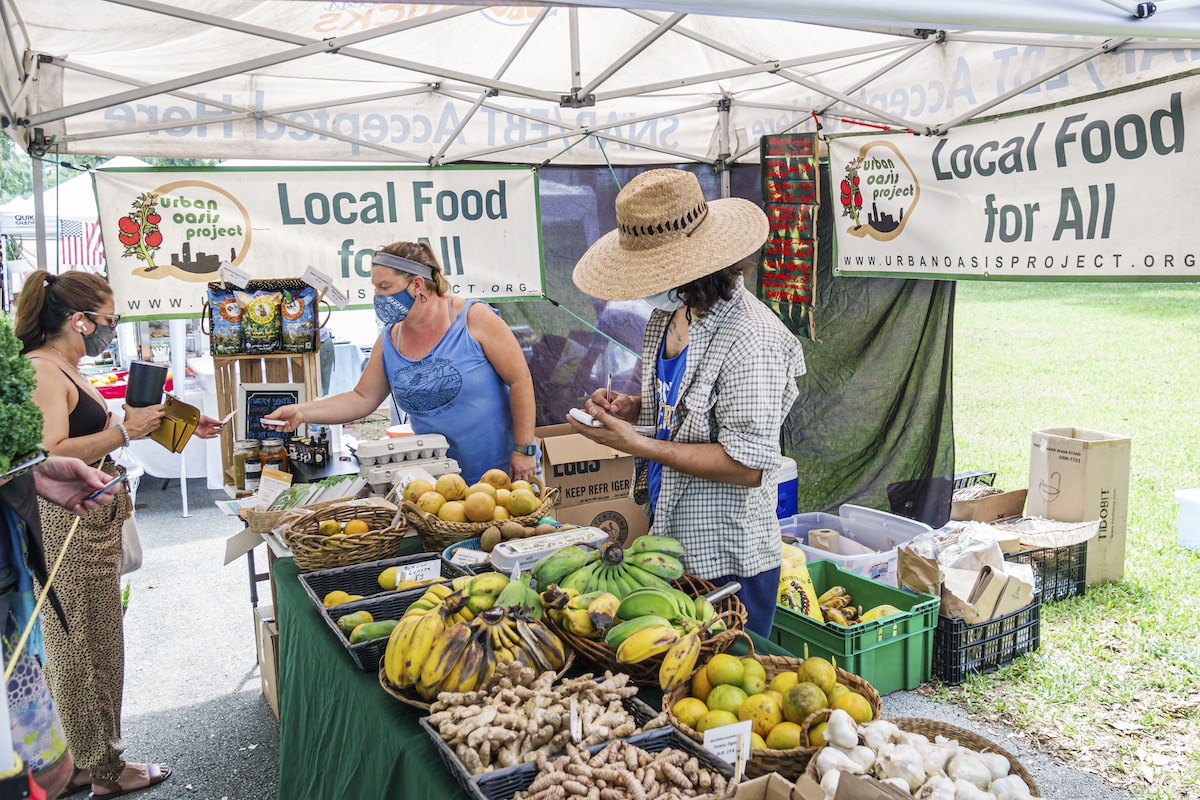
Local food
52
MENTIONS
11
EPISODES
11
PODCASTS
Search complete. 52 mentions across 11 episodes found for "Local food".
Nov 3, 2026

Niamh McGooleCORRESPONDENT
We have panels with people like Ciarán Nugent and Blána Jo Lachlan and we're delighted to have Nuala Rigney and Bridget O'Connor and Thomas O'Connor.
Niamh McGooleCORRESPONDENT
So they're all going to be talking about issues relating to nature-based solutions, building community resilience, local food and how we bring communities together and strengthen our networks with each other.
Catríona FallonMODERATOR
One of the things that's coming through is this whole idea that in order for a community to be resilient to climate change, it has to be resilient in the first place.
Catríona FallonMODERATOR
It's very hard to move on beyond the initial basic wants of life.
18 MINS LATER
Nuala RigneyPANELIST
If you
Catríona FallonMODERATOR
had 30 seconds each, because that's all Niamh is going to give me, if you had 30 seconds each, could you think of one action that you could recommend to the audience here if they were to go home and do one thing that would help to make us more resilient?
Thomas O'ConnorPANELIST
Nuala has a minute to think about it I was saying it earlier just being conscious being conscious of where you spend your money the most powerful thing we have as individuals and as a community is where we spend our Euros and for me in this food system understanding that when you spend your money on a local farmer or a local food producer or get food from a local person rather than supply from the larger retail units and the outlets you're actually keeping that money cycling within your community.
Thomas O'ConnorPANELIST
And it is the place you can have the most positive benefit, not just for the food you're eating, but for the environment and the downstream health consequences that are going to happen from bad food that we are importing.

Karen MortonHOST
And then it's that exciting bubble, you know, like autumn coming, what is going to come next? And speaking of coming next, because Pam or Pamela is going to be speaking at a very special food story event.
Karen MortonHOST
It's really about championing, you know, community and local food sources and those in hospitality.
Karen MortonHOST
And for everybody, all of us to have a voice within that event.
Karen MortonHOST
So what I'd love you to do, listeners, is just to take note and have a pen and paper handy, because on Saturday, October the 3rd, there's just going to be this great big food street, a big food story.

Chloe WatermanGUEST
JBS has been convicted of corruption, bribery, and yet they still have this contract.
Chloe WatermanGUEST
The USDA should cut off those companies, should cut off the companies that have labor violations, environmental violations, corruption charges, and instead give schools the freedom to take those funds and spend it on local food from sources that they trust, from sustainable farms that are doing things the right way.
Lance MigliaccioHOST
Yeah, you know, it's interesting because we see that different times, different companies get caught with their hand in the cookie jar.
Lance MigliaccioHOST
And you would think that would be an immediate, nope, you don't get any more contracts.
36 MINS LATER
Lance MigliaccioHOST
Do you feel like there's a lobbying group that's trying to continue to support these industrial food suppliers?
Chloe WatermanGUEST
Yeah, the big beneficiaries of the U.S. state foods program, the multinational companies, they have lobbyists in D.C. and certainly they are advocating to keep the status quo when it comes to our school meal program.
Chloe WatermanGUEST
So, for example, one of the things that we're advocating for is for school districts to be able to take the dollars that are going to the Tysons for through the U.S. state foods program instead get that cash to spend on local food.
Chloe WatermanGUEST
That benefits the school, it benefits the local farmer, but it doesn't benefit Tyson.

Trey MaloneGUEST
Still really was not convinced that I wanted to do anything rural or ag, like none of that really.
Trey MaloneGUEST
So it took a while for me to realize that the frustration I was feeling about growing up in that rural place was actually a signal that said that my passion is actually trying to figure out how those places survive and thrive.
Trey MaloneGUEST
And so that's what led me to local foods.
Trey MaloneGUEST
That's what led me to what I study now.
Trey MaloneGUEST
Like I said, there are not many places in the world that study agribusiness at the level that Purdue does.

Zach LahnGUEST
The least accountable system is what we have right now.
Zach LahnGUEST
So I just say, like, the idea that we couldn't create local food systems, by the way, we had them.
Zach LahnGUEST
We did once have them.
Zach LahnGUEST
But the idea we couldn't create them again even better with technology, it's the same idea that somebody would say is like, you know, 20 years ago, oh, you'd never stay in a stranger's house.

Liv LightGUEST
So that includes administering double up food bucks in Arizona, which helps folks with SNAP EBT afford more fresh produce, as well as the farmer's market nutrition program, like you mentioned.
Liv LightGUEST
another program helping people to afford more fresh locally grown fruits and vegetables so we do programs that help people expand their access to fresh produce and then we also do sort of systems work I like to say so that includes advocacy and policy so really looking at what are the what are the barriers that you know people and local food farmers are facing how do we advocate for for better easier policies for you know more people to get access to local food more resiliency in our food and farming systems and then we also engage in planning.
Liv LightGUEST
So this is a little bit jargony, but basically working on different municipal levels.
Liv LightGUEST
And that can influence, you know, plans, you know, a food action plan, you know, at a city level or a county level.
13 MINS LATER
Liv LightGUEST
And, um, eventually when I, you know, got to studying, I, um, in more in college, I, um, pursued some work in health, um, or minor, I should say in health and wellbeing and more of that public health.
Liv LightGUEST
And I think that's where I got started.
Liv LightGUEST
I, I volunteered, um, in a local food justice network and got to experience some different volunteering.
Liv LightGUEST
And that's, I think where I really cemented, you know, I really care about food, food justice and, and working in that as a career.

Michelle SharpGUEST
There's community art activities, cooking.
Michelle SharpGUEST
There's just getting to talk and engage with other people who care about local food and the sourcing and the question of that.
Michelle SharpGUEST
It's really, it's an exciting group to be a part of and to see what they're building and to talk about the idea of knowing your food, know your farmer, know your sourcing, right? But that like every time we think about shopping for food or alcohol or non-alcoholic beverages it's agriculture behind it right this is an agriculture show where we get to sip sample and shop And it's the coolest darn people who are a part of it.
Michelle SharpGUEST
Like the makers, the small businesses and farms who are part of it, Laura, they're just like – they're my idea of a celebrity,
Laura HedlundHOST
But they're well worth upcharge for a fancy
Michelle SharpGUEST
day.
Michelle SharpGUEST
Compared to other events, like... we are underpricing this, right? Like the idea is to make this local food as accessible as possible for as many people as possible.
Laura HedlundHOST
And which partners are available, which partners are putting this show on and this event on?

Rachel OpioGUEST
You have to remember, especially distance that food travels matters.
Rachel OpioGUEST
So getting local and hyper local food and having that accessibility is really key to being able to capture all the nutrients from the food and actually do something for yourself.
Rachel OpioGUEST
So that's like the biggest reason that local organic food is so important.
Greg PetersonHOST
One of the big things that people don't realize is the moment you pick a fruit or a vegetable, the nutrient density starts to decline.
16 MINS LATER
Greg PetersonHOST
And I think we're going to see a significant increase in food prices because of that.
Greg PetersonHOST
And growing our own in our front and backyard can help address that.
Greg PetersonHOST
So what is the role of small and urban farms in strengthening our local food systems, Rachel?
Rachel OpioGUEST
Sure.

Tessa BarreraHOST
The FDA recorded 266 food recalls in the first six months of this year, and more and more Houstonians are looking for local options when it comes to what they serve on the dinner table.
Tessa BarreraHOST
The Texas Center for Local Food aims to build the relationships necessary for a resilient Texas food economy.
Tessa BarreraHOST
This organization also aims to educate and connect farmers and ranchers to local and regional markets in our state.
Tessa BarreraHOST
They want to provide direct support to farmers markets throughout Texas.
Tessa BarreraHOST
So joining us now live to tell us more about food systems and the role they play in the lives of Houstonians is executive director for the Texas Center for Local Food, A.J.
Tessa BarreraHOST
Beard.
Tessa BarreraHOST
A.J., welcome to Hello Houston.
AJ BeardGUEST
There's processing, distribution, supply.

Tessa BarreraHOST
The FDA recorded 266 food recalls in the first six months of this year, and more and more Houstonians are looking for local options when it comes to what they serve on the dinner table.
Tessa BarreraHOST
The Texas Center for Local Food aims to build the relationships necessary for a resilient Texas food economy.
Tessa BarreraHOST
This organization also aims to educate and connect farmers and ranchers to local and regional markets in our state.
Tessa BarreraHOST
They want to provide direct support to farmers markets throughout Texas.
Tessa BarreraHOST
So joining us now live to tell us more about food systems and the role they play in the lives of Houstonians is Executive Director for the Texas Center for Local Food, A.J.
A.J. BeardGUEST
Beard.
A.J. BeardGUEST
A.J., welcome to Hello Houston.
A.J. BeardGUEST
But there's all that stuff in between.
1 more episode mentions Local food.
Create an account to see the whole feed, search across every transcript, and follow the entities you care about.