Loan-to-value ratio
75
MENTIONS
30
EPISODES
27
PODCASTS
Search complete. 75 mentions across 30 episodes found for "Loan-to-value ratio".
Sep 11, 2026

Steven BushbaumGUEST
From the credit clock or, say, property clock standpoint, we look at the DSCR, 3.11 times coverage.
Steven BushbaumGUEST
or current LTV, 44.2%.
Steven BushbaumGUEST
You look at that and say, well, that looks pretty good.
Steven BushbaumGUEST
But then this other part of your property clock on your income statement says, well, yeah, but NOI just dropped by a quarter.
25 MINS LATER
Lonnie HendryHOST
But if you look at some of the data, values are still climbing.
Lonnie HendryHOST
People are still optimistic on the future.
Lonnie HendryHOST
The LTV on this deal was 71% in original origination in 97.
Lonnie HendryHOST
On paper, it's 60%.

Denzel RodriguezGUEST
The lower your DTI, the more the bank wants to lend to you.
Denzel RodriguezGUEST
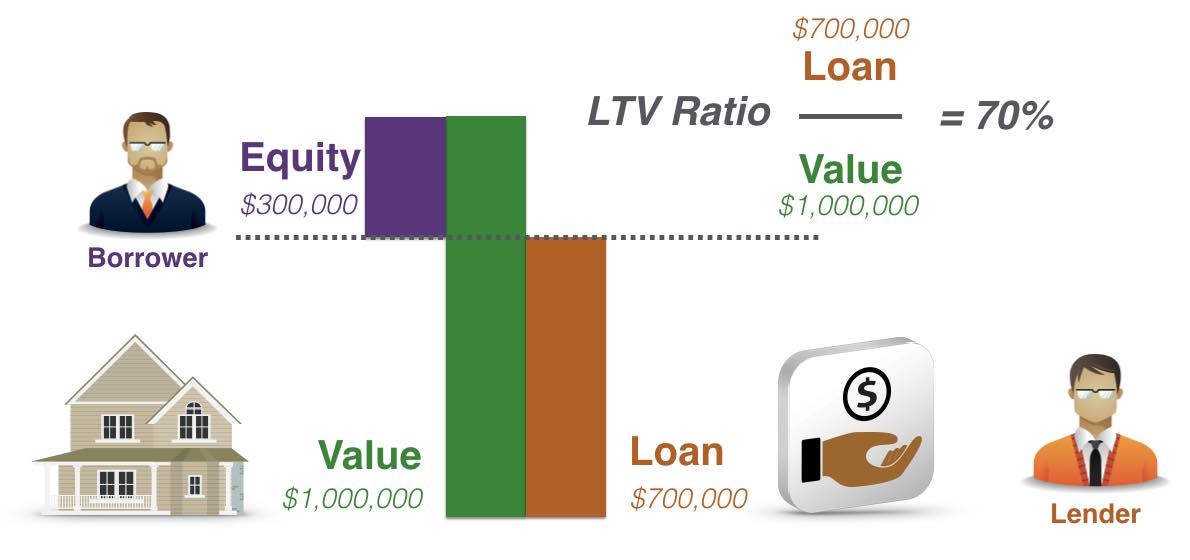
LTV stands for loan to value.
Denzel RodriguezGUEST
The lower the loan to value.
Denzel RodriguezGUEST
So if your value of your home is 500 K and you owe 300 grand, you've got say $200,000 of equity.
Denzel RodriguezGUEST
Well, if the market tanks, real estate tanks, now your home is valued lower than how much you owe on the property.
Denzel RodriguezGUEST
So that would put the banks at risk and you frankly at risk as well of having your HELOC be frozen or the credit line reduced below what the new valuation of that property is.
Denzel RodriguezGUEST
So I tell folks, stay below 90%, try to go to 70 or 80% LTV because it's less risky, number one.
Denzel RodriguezGUEST
And number two, The banks see it as less of a risk.

Chris DrzyzgaGUEST
And they were a little bit unique because they were a long-term holder.
Chris DrzyzgaGUEST
They had very low d- uh, LTV.
Chris DrzyzgaGUEST
They only had about 30%, uh, LTV on the asset.
Chris DrzyzgaGUEST
Um, so they had a little bit more flexibility, um, uh, than, than most others.
Chris DrzyzgaGUEST
So they were able, from their treasury strategy, they were very convicted on, on Bitcoin.
Chris DrzyzgaGUEST
They had a h- very high percentage of, um, Bitcoin exposure every single week.
Chris DrzyzgaGUEST
Because of the low LTV on this particular property, they were able to take out a, a very small conservative, um, loan on the property, small, low six figures, and they put that, um, those tax-free proceeds into STRC, and we refer to that as, as digital rent, right? I thought of it as like, you know, real estate owners are always looking for supplemental sources of income, right? The most, um, uh, similar here or the best example comparison is a cell tower, right? You get a Verizon tower or an AT&T tower on your roof, and they're paying your rent, right? Um, fantastic way to add value.
Chris DrzyzgaGUEST
Um, in this scenario, they were able to, uh, use that digital, um, rent as a way to enhance the net operating income of the property, uh, which in turn allowed them to increase their Bitcoin purchases on the back end.

Randy ZimnochHOST
Um- And if they do lend, which most will still, but they will restrict or, uh, or, or pricing will be higher.
Randy ZimnochHOST
And what I mean by restrict, uh, they'll just say, "Hey, instead of, uh, LTV being 80 or 90% of purchase, we're only gonna do 75 of purchase price, uh, on the loan." So they'll just lower their leverage, which then minimizes their risk, right? Uh, so that's more typical in the coastal and, and disaster-prone areas, because there are many, like California, um, many parts of Florida, right? Those are considered disaster-prone areas, and we still lend there a lot, right? But there's could be some adjustments, uh, like I said.
Randy ZimnochHOST
Um, two types of appraisals that you might expect when dealing with, uh, flip loans.
Randy ZimnochHOST
Many, many, uh, capital partners do desktop appraisals.
6 MINS LATER
Randy ZimnochHOST
And what that calculation looks like is everything I mentioned above, if we use the same example, we, we calculate the loan to total cost by taking three hundred thousand plus the seventy, that's the total cost to you, the investor/borrower.
Randy ZimnochHOST
And then if we were to lend the ninety percent-- if we take the ninety percent of three seventy, your total cost, that equals three hundred and thirty-three.
Randy ZimnochHOST
So some capital partners will say, "The most we can give you on this loan, regardless if everything else checks out, if the ARV is seventy-five percent or under, uh, LTV, but if the ninety percent rule is not-- doesn't work here, then we have to lower your loan amount." And if we did that in this example, we actually are short seven thousand.
Randy ZimnochHOST
Meaning ninety percent of three seventy, which is the loan-to-cost, right? Which many capital partners have it at ninety percent, some have it even lower.

Michael TangumaHOST
Where imagine if you have a mobile app, like let's say it's Robinhood, and you own your Bitcoin ETF, and you have your exposure through it, and you effectively have that in a, a securitized version.
Michael TangumaHOST
And you say, "Hey, I wanna pledge, you know, 50% LTV," whatever, and those dollars move into your dollar account that you already have with Robinhood, and you have a card against it.
Michael TangumaHOST
Uh, or the reverse as well, like if you have a portfolio with a million dollars in equities and you want 10% leverage because you wanna go buy some Bitcoin, right? And then you lever that up.
Michael TangumaHOST
Like you can just see how there's utility there.

HoomanGUEST
I, I think where we've been able to is, is one, listen, as vacancies are never a good thing, right? So here's the thing.
HoomanGUEST
If, if you want to, if you want to maximize the rent so you can get the best CMHC kind of LTV, that's a different story, but that's not the game that we play, right? For every one month that one of our units is empty, that's $2,500, $3,000 that we lose, right? So for us it's like how do we maintain full vacancy, right? And that speaks to how do we do our terms, how do we, how do we manage our trades, how do we make sure that we achieve the most in, in, in the least amount of time? And, and it's because we have an internal property management team that we have full control over, it's easier for us than, you know, folks who are gonna have to hire a third party for a property manager.
HoomanGUEST
The other is utilities, is listen, I'll give you the simplest, silliest, silliest example that saved us tremendous amount of money.
HoomanGUEST
For those folks who have houses in Toronto, they realize the mess that is Toronto Water, right? That it's like they, none of the meters work.

John BurleyGUEST
I didn't do the traditional borrow money and pay you 8% or 10% or 6% because when I started, hard money lenders were five points.
John BurleyGUEST
18% interest, and they only loaned you 65% of LTV, and we hadn't even come up with the term LTV yet.
John BurleyGUEST
It was just like, if it's worth 100 grand, son, I'll loan you 65,000.
John BurleyGUEST
You need 35,000 skin into the game.

Anupam GuptaHOST
Okay.
Anupam GuptaHOST
Let's get into LTVs, okay? LTV, folks, is loan to value.
Anupam GuptaHOST
Um, what is that? How do you manage gold price fluctuations during the tenure of a gold loan? Like, if it is a loan against securities, you know, if the share market drops, then you'll call for a margin, and I have to pay that up.
Anupam GuptaHOST
How does that work in gold? Let's first start with, uh, the LTV.
Shripad JadhavGUEST
LTV.
Anupam GuptaHOST
What's, what's that?
Shripad JadhavGUEST
So, uh, you know, with the new guideline, which is effective from 1st April 2026, RBI has dis- you know, made the distinction between the consumption loan-
Shripad JadhavGUEST
Let's say wedding, some expenses or some, some family expenses, domestic expenses, all these things.

Dionne BassGUEST
How to properly pre-qualify loans.
Dustin OwenHOST
So you're talking like DTI, LTV, income calculation, reading AUS.
Dionne BassGUEST
Reading a credit report.
Dustin OwenHOST
Reading a credit report.

GraceHOST
Yeah.
GraceHOST
Well, I was just gonna say, Jamie in our community last week posted about this and said, "Tell me, what lenders have you closed and would use again? What are your CLTV limits you're seeing right now? What are the meaningful differences in qualification/underwriting between products? What are your draw periods?" Like, she's literally going out there and getting the data so she knows who to move forward with, who to not work with, and if she's getting the best rates out there.
AmeliaHOST
I also saw a post the other day that was a pretty complex, Lexi posted it, where basically she was, she had a really unique situation on her hands where a lender pulled out last minute, and now they're having to go through the underwriting process again, and the lender is requiring some different things this time around, so just asking, "Have, has anyone ever handled this in the past, or are there any creative ways that we're not thinking about this?" And there, there were a few good responses on that, and that was even something when I read it, I was like, "Wow, I've never heard anything like this.
AmeliaHOST
I've never..." But there were people in the community who had some talking points to share with Lexi.
20 more episodes mention Loan-to-value ratio.
Create an account to see the whole feed, search across every transcript, and follow the entities you care about.