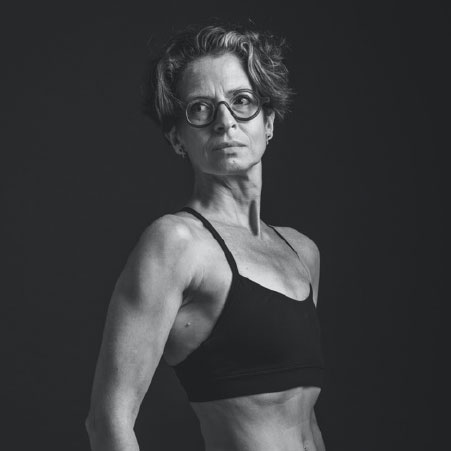
Liz O'Riordan
Surgeon
11
APPEARANCES
10
PODCASTS
Oct 12, 2026


Nuala McGovernHOST
Um, we're not speaking about her, uh, throughout, uh, this discussion, but we want to know how common are people like her and what is the appeal as you see it?

Liz O'RiordanGUEST
She is one of a huge number of people who are selling medical misinformation and making money off it, and I had no idea this existed until I got cancer myself.
Liz O'RiordanGUEST
And I understand why you're drawn to it, because when you're faced with cancer, you're vulnerable, you're scared, you're frightened, you want control, certainty, and hope.

Liz O'RiordanGUEST
The whole point of examining your breasts is to squish your breast tissue flat against your chest wall, trying to feel a lump between your hand and the ribcage.
Liz O'RiordanGUEST
And if you've got breasts that have doubled over, you're feeling two thicknesses of breast tissue, which is why lying back in bed or in a bath just lifts the whole breast onto your chest wall.
Liz O'RiordanGUEST
That's why we get people-- and I examine women lying back with their head on a pillow.
Liz O'RiordanGUEST
You are feeling with the flat of your fingers bent at the knuckles, and you are pushing down really hard, and you're just moving your fingers in little circles all the way around the breast.
18 MINS LATER

Jasmin DhillonHOST
So were you able to take HRT? Are women who, um, who have estrogen, uh, related breast cancer able to take HRT, or is that something that should, can't really be done?

Liz O'RiordanGUEST
That all depends on who you talk to and which country you're in, because the most group of doctors who think mammograms and breast screening doesn't save lives and actually the professor who pushed for it in the very beginning now says we shouldn't.
Liz O'RiordanGUEST
I'm going to tell you what I believe and what the NHS breast screening believes, and then I'll explain why it's a bit different in the States.
Liz O'RiordanGUEST
The whole point of screening is to screen a healthy population with no symptoms.
12 MINS LATER

Sophie UlianoHOST
So if we were all taught years ago to perform these very formal breast exams, is that still advice that you would give or has the thinking shifted more towards sort of breast awareness or knowing what's normal for you? Obviously, we think about a lump, but what else should we be looking for?


Adrian ChilesHOST
You've gone in a different direction at all, obviously, but it didn't work like that for you.
Liz O'RiordanGUEST
And it's weird that people think having that inside knowledge makes you somehow better at your job.
Liz O'RiordanGUEST
I've known some amazing surgeons who don't have their own disease, but I was more empathetic.
Liz O'RiordanGUEST
I understood what the patients were going through and I wanted to be more like the breast care nurse and say, yes, this is...

MolHOST
I feel like I could send us down a whole path of just a really anxious place to be in at the moment.
Liz O'RiordanGUEST
So the place I go to to see if something does or doesn't cause cancer is CRUK because they pay people to go through the research and put it up.
Liz O'RiordanGUEST
And I use that for the basis of my book, The Cancer Roadmap, which tells you what does and doesn't cause cancer that we have proof.
Liz O'RiordanGUEST
There are lots of things that are now coming up like parabens and cosmetics and perfume and hair dye and straighteners.
Liz O'RiordanGUEST
I have a cosmetic line that doesn't have this chemical in, so buy it here and buy my non-plastic stuff.
16 MINS LATER
MolHOST
What do you think patients teach doctors more than the other way around, being on both sides of it?


Sean TassoneHOST
What did you discover? And I want you to start with your story just so ladies know, but then I want to pivot that into what did you discover that your surgical training had kind of failed to teach you about living through breast cancer?
11 MINS LATER
Sean TassoneHOST
Where do you think the menopause advocates are kind of overstating the certainty or the safety of this?


Liz O'RiordanGUEST
So I think the first thing is to remember when someone says they can cure cancer with mistletoe, there are over 200 different types of cancer.
Liz O'RiordanGUEST
There are over 48 different varieties of breast cancer when you take the cell type and the receptor type.
Liz O'RiordanGUEST
So it's actually finding people who've got a cancer that's similar to you to get the best chance of it working.
Liz O'RiordanGUEST
And I think it's realising if it worked, you'd get it for the NHS on free if it was safe, if there's a data behind it.
13 MINS LATER


Pippa GouldenHOST
And especially within the cancer world, there's always change and new things coming out and new people and discussions to be had, isn't there? So yeah, I think keeping people aware of what you're doing is a really good thing to do from a strategy perspective.
Liz O'RiordanGUEST
So this one was really hard to write because I had some major life upheavals during it.
Pippa GouldenHOST
It's not just cancer specifically, is it? I mean, look at what you've achieved

KateHOST
Sexually harassed, expected to perform without cracking, and trained to cope alone, and even your husband had no idea how much pressure you were under.
Liz O'RiordanGUEST
Yeah, so I trained back in the '90s, early 2000s, and it is still happening today, but back then, I was training with the males, and sexual harassment was common.
Liz O'RiordanGUEST
I was the only female trainee in a group of men, and before the days of iPhones, so what do you talk about? And I was asked to go make tea, or there was sexual advances.
Liz O'RiordanGUEST
It was part of the banter, and you got on with it because you wanted to operate.
19 MINS LATER
KateHOST
So what would you advise people, then, if they've got this demanding job? Because we all need to look after ourselves better, so what would your advice be for people?
Liz O'RiordanGUEST
I think I was surprised to see that, um, tobacco and red meat are risk factors for breast cancer, and it's quite scary because I may think I got breast cancer 'cause I had a bacon sandwich every weekend as a junior doctor.
Liz O'RiordanGUEST
And I think it's-- we know lifestyle factors reduce the risk of getting cancer, and but the effect on an individual person is really small.
Liz O'RiordanGUEST
If you were eating two bacon sandwiches a day, your risk may go up by eleven percent, but that's actually an extra one woman in a thousand if you're forty.
Liz O'RiordanGUEST
So the impact for me as a woman is small, but if you take that globally, we can prevent millions of breast cancers.
Liz O'RiordanGUEST
But these boring lifestyle factors, they're not sexy, they're not exciting, and it's really hard to push that message home.
Liz O'RiordanGUEST
But we also know for people listening that following these lifestyle factors after diagnosis can also reduce the risk of breast cancer coming back.

Liz O'RiordanGUEST
It's an opening for everyone to hop on and share their beliefs to be known by him.