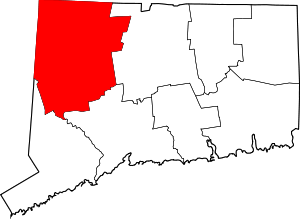
Litchfield County
County in ConnecticutWikipedia
21
MENTIONS
16
EPISODES
12
PODCASTS
Search complete. 21 mentions across 16 episodes found for "Litchfield County".
Sep 27, 2026

Steve StocktonNARRATOR
was settled in the mid-18th century, much like many other areas of Connecticut.
Steve StocktonNARRATOR
The first Dudleys from England, via Guilford, arrived in the Litchfield Hills in 1747.
Steve StocktonNARRATOR
They played a pivotal role in forming a prosperous community, then known as Owlsberry, primarily driven by the burgeoning iron industry in the region.
Steve StocktonNARRATOR
The settlers constructed homes, farmed the land, and forged iron, leading to the town's growth and prosperity.

speaker_14NARRATOR
This will not seem strange when you consider what sort of people this country is inhabited by.
speaker_14NARRATOR
the iron industry almost equally widespread was the art of ironworking one of the earliest and most picturesque of colonial industries lynn massachusetts had a forge and skilled artisans within fifteen years after the founding of boston The smelting of iron began at New London and New Haven about 1658, in Litchfield County, Connecticut, a few years later, at Great Barrington, Massachusetts, in 1731, and near by at Lenox some thirty years after that.
speaker_14NARRATOR
New Jersey had ironworks at Shrewsbury within ten years after the founding of the colony in 1665. iron forges appeared in the valleys of the delaware and the susquehanna early in the following century and iron masters then laid the foundations of fortunes in a region destined to become one of the great iron centers of the world virginia began iron-working in the year that saw the introduction of slavery although the industry soon lapsed it was renewed and flourished in the eighteenth century governor spotswood was called the tubal cane of the old dominion because he placed the industry on a firm foundation Indeed, it seems that every colony except Georgia had its iron foundry.
speaker_14NARRATOR
Nails, wire, metallic ware, chains, anchors, bar and pig iron were made in large quantities, and Great Britain, by an act in 1750, encouraged the colonists to export rough iron to the British Isles.
Steve StocktonHOST
She was the granddaughter of a prominent former governor of Wyoming, meaning she came from a lineage of distinct political influence and considerable wealth.
Steve StocktonHOST
In that summer of 1952, Connie was sent east to attend Camp Sloane, a prestigious YMCA-operated summer camp nestled in Litchfield County, Connecticut.
Steve StocktonHOST
The camp operated under the strict pious motto of others, a philosophical principle that campers must always put the needs of their peers before themselves.
Steve StocktonHOST
Now, for Connie, a sheltered girl from the wide open American West, the rigid social ecosystem of a New England preteen summer camp proved toxic.
Steve StocktonHOST
When the Connecticut State Police finally took charge, the investigation quickly became one of the largest and most desperate missing person searches in New England history.
Steve StocktonHOST
Because of the Smith family's wealth and political standing, immense resources were deployed.
Steve StocktonHOST
Connie's father flew in from Wyoming, chartering private aircraft to fly low over the dense Litchfield County canopies while spotters scanned the undergrowth with binoculars.
Steve StocktonHOST
National Guardsmen and hundreds of volunteers formed human chains throughout the wilderness.
Steve StocktonHOST
The quiet town of Cornwall was settled in the mid-18th century, much like many other areas of Connecticut.
Steve StocktonHOST
The first Dudleys from England, via Guilford, arrived in the Litchfield Hills in 1747.
Steve StocktonHOST
They played a pivotal role in forming a prosperous community, then known as Owlsberry, primarily driven by the burgeoning iron industry in the region.
Steve StocktonHOST
The settlers constructed homes, farmed the land, and forged iron, leading to the town's growth and prosperity.

speaker_3ADVERTISER
Any door, the right support.
speaker_1NARRATOR
taking the colonial area through its entire length and breadth we find individual houses of almost every description from the superb mansions of the carters in virginia and of the vassals in massachusetts to the small wooden frame buildings forty by twenty feet or thereabouts with a shade on the back side and a porch on the front and the simple houses of the country districts or the western frontier hundreds of which were small of one story unpainted covered with rough-hewn or sawn flat boards weathers stained with few windows and no panes of glass and without adornment or architectural taste one traveler speaks of the small plantation houses in maryland as very bad and ill contrived their furniture mean their cooks and housewifery worse if possible and another says that an apartment to sleep in and another for domestic purposes with a contiguous storehouse and conveniences for their live stock gratified the utmost ambition of the settlers in frederick county many a colonist north of the potomac lived in nothing better than the crib or block house which was made of squared logs and roofed with In contrast to the typical square-built houses of New England, the Dutch along the Hudson and even to the eastward in Litchfield County, Connecticut, built quaint low structures which they frequently placed on a hillside in order to utilize the basement as living rooms for the family.
speaker_1NARRATOR
The better colonial houses were wainscoted and paneled or plastered and whitewashed, and the woodwork, trim, cornices, stair railings and newel posts, was often elaborately carved.
speaker_1NARRATOR
floors were sometimes of double thickness and were laid so that the seam or joint of the upper course shall fall upon the middle of the lower plank which prevents the air from coming through the floor in winter or the water falling down in summer when they wash their houses roofs were covered with tiles slates shingles and lead though much of the last was removed for bullets at the time of the revolution flat tiles made in philadelphia and elsewhere were used for paving chimney hearths and firebacks imported from england were widely introduced among the pennsylvania germans wood stoves were generally used but soft coal brought as ballast from newcastle liverpool and other ports from england and scotland was also for sale stone coal or anthracite was familiar to pennsylvania settlers as early as seventeen sixty three but until just before the revolution was not burned as fuel except locally and on a small scale wood was consumed in enormous quantities and we are told that at nominy hall there were kept burning twenty-eight fires which required four loads of wood a day there were few professional architects for colonial planters and carpenters did their own planning and building what is sometimes called a carpenter's colonial style was often designed on the spot or taken from batty langley's sure guide the builder's jewel or the british smybert the painter and paint-shop man of boston designed faneuil hall and succeeded in creating a very unsuccessful building architecturally the first professional architect in america was peter harrison who drew the plans for king's chapel the redwood library the jewish synagogue and brick market at newport yet even he combined designing with other applications in truth there was no great need of architects in colonial days styles did not very much certainly not in new england and the middle colonies and a good carpenter and builder could do all that was needed there were scores of houses in new england similar to samuel seabury's rectory at hampstead a story and a half high in front with a roof of a single pitch sloping down to one story in the rear low ceilings everywhere four rooms with a hall on the first floor a kitchen behind and three or four rooms on the second story the brick houses were more elaborate and were sometimes built with massive end chimneys between which was a steep pitched roof with dormers and a walk from chimney to chimney many feet wide other houses made of wood as well as brick had hipped roofs with end chimneys or roofs converging to a square center and a railed lookout all the nearly one hundred and fifty colonial houses still standing in connecticut conform to a common type though they differ greatly in the details of their paneling mantels cupboards staircases closer open beamed ceilings fireplaces and the like some had slave quarters in the basement others under the rafters and what was called in one instance the black hole many of even the better houses were unpainted inside and out many had paper hung or tacked afterwards pasted on the walls and in a few noteworthy cases in new england the chimney breasts were adorned with paintings the floors were usually bare or covered with matting rugs were used chiefly at the bedside but carpets were rare philadelphia which was famous for the uniformity of its architecture must have contained in seventeen sixty many houses of the style of that built for provost smith of the college of philadelphia in addition to a garret this dwelling had three stories respectively eleven ten and nine feet high the brick outside walls were fourteen inches thick and the partition walls of the same material nine inches there were windows and window-glass heavy shutters a plain cornice cedar gutters and pipes the woodwork inside and out was painted white and all the rooms were plastered no mansion is made of white marble steps but there may have been such for no philadelphia house was complete without them the southern houses both on the plantations and in the towns varied so widely in their style of architecture that no single description will serve to characterize all such buildings as the governor's palace at williamsburg tryon's palace at new bern and the government house at annapolis were handsome buildings provided with conveniences for entertainment and that at new bern contained rooms for the gathering of assembly and council the most representative southern plantation house was of brick with wings the kitchens on one side and the carriage house on the other sometimes attached directly to the central mansion and sometimes entirely separate or connected only by a corridor in the carolinas and georgia however there were many rectangular houses without wings built of wood or brick with rooms available for summer use in the basement the roof was often capped with a cupola and commanded a wide prospect the dwelling-houses of charleston were among the most distinctive and quaint of all colonial structures some of them were divided into tenements quite unlike the tenements and flats of the present day for in addition to its independent portion of the house each family had its own yard and garden overseers houses were as a rule small about twenty feet by twelve with brick chimneys and plastered rooms a typical savannah house had two stories with a handsome balcony in front and a piazza the whole length of the building in the rear with a bedroom at one end and a storehouse at the other the dining-room was on the second floor and everywhere for convenience and comfort were to be found closets and fireplaces among the gentry in a country where storms were frequent electrical rods were in use and in seventeen sixty three one alexander bell of virginia advertised a machine for protecting houses from being struck by lightning though what his contrivance was we do not know the town halls and court-houses generally followed english models with public offices and assembly-rooms on the upper floor and a market and shops below the southern court-houses were at first built of wood and later of brick with shingled roofs heavy plank floors and occasionally a cupola or belfry those of the eighteenth century either included the prison and pillory or were connected with them the inadequacy of jailed accommodation was a cause of constant complaint not only did grand juries and newspapers point out the need of quarters so arranged that debtors felons and negroes should not be thrown together but the occupants themselves protested against the nauseating smells and odors in some of the prisons it is true a separate cage was provided for the negroes and in north carolina prison bounds covering some six acres about the building were laid out for the use of the prisoners an arrangement which was not abolished till the nineteenth century

speaker_2UNKNOWN
¶¶
speaker_3UNKNOWN
You got it, you got it You got it, you got it I know you got soul ¶¶ Have yourself a ball Just keep right on dancing Dancing in the hall See ya You are listening to WPKN 89.5 FM Bridgeport, independent, listener-supported community radio for Fairfield, New Haven, Litchfield, Suffolk Counties, and streaming worldwide at WPKN.org.
speaker_2UNKNOWN
Tell me what to do Trying hard to sleep Tell me what to do Tell me what to do Tell me what to do That's what I believe
speaker_4UNKNOWN
Four musicians who are among the most important in the contemporary world in the field of jazz.
42 MINS LATER
speaker_2UNKNOWN
Sometimes I'm dreaming So many different names Just so I'm pretty.
9 MINS LATER
speaker_2UNKNOWN
¶¶
DonnieHOST
You are listening to WPKN 89.5 FM Bridgeport, independent, listener-supported community radio from Fairfield, New Haven, Litchfield, Suffolk Counties, and streaming worldwide at WPKN.org.
DonnieHOST
Yes, that was Soda Stereo on WP Can 89.5 FM.

Paul NorthHOST
Of course, there's artisanal labor in capital, too, right? It takes on a kind of luxury, like the Arethusa of capitalism.
Paul NorthHOST
It takes on a kind of luxury status, and only certain people can afford it, and it really can't supply the needs of the masses, right? When Arethusa gets into the supermarkets, it will dispense with its farm in Litchfield County.
Paul NorthHOST
So these are the laws of capital that don't describe every single instance of labor, but it does describe, in general, these historical periods and analytically exactly what the difference is in the capital system.
Paul NorthHOST
Now we're talking about...

Mr BallenHOST
Okay? Let's get into today's story.
Mr BallenHOST
[upbeat music] It was a bright summer day in nineteen oh six, and Dr. William C. Clark and his wife Harriet were driving slowly through a beautiful part of northwestern Connecticut called Litchfield County.
Mr BallenHOST
Litchfield is a rural, very hilly area with lots of winding country roads, and the Clarks were there to try to scout out an area to build their second home.
Mr BallenHOST
The couple lived full-time in New York City, where Dr. Clark was an oncologist, which is a cancer doctor, and he was also a professor at the Columbia College of Physicians and Surgeons.
Steve StocktonNARRATOR
The quiet town of Cornwall was settled in the mid-18th century, much like many other areas of Connecticut.
Steve StocktonNARRATOR
The first Dudleys from England, via Guilford, arrived in the Litchfield Hills in 1747.
Steve StocktonNARRATOR
They played a pivotal role in forming a prosperous community, then known as Owlsberry, primarily driven by the burgeoning iron industry in the region.
Steve StocktonNARRATOR
The settlers constructed homes, farmed the land, and forged iron, leading to the town's growth and prosperity.

George CiverisHOST
Um, what do you...
George CiverisHOST
Do you have an opinion about, are you aware of, like, Connecticut as a trend? This is something that keeps g- like, Litchfield County.
Sam TaggartHOST
No, I'm not aware of this.
George CiverisHOST
This is something that people love to tell you, people that are, like, in the art world or, you know, s- kind of see themselves as slightly more sophisticated than, like, the upstate, um, millennial, uh, you know, pillow that says snacks vibe.
Sam TaggartHOST
Yeah, yeah.
George CiverisHOST
Um, people love to move to Litchfield County.
George CiverisHOST
I'm not convinced.
George CiverisHOST
Haven't been.
6 more episodes mention Litchfield County.
Create an account to see the whole feed, search across every transcript, and follow the entities you care about.