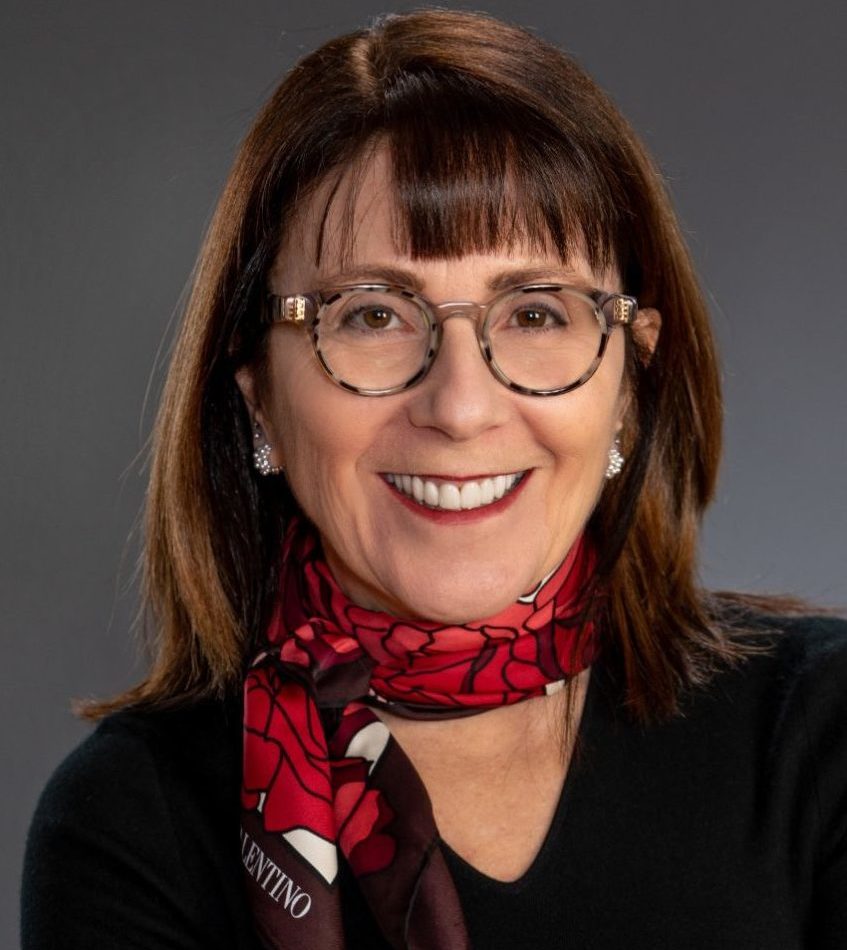
Lisa Feldman Barrett
Canadian-American psychologistWikipedia
34
MENTIONS
24
EPISODES
23
PODCASTS
Search complete. 34 mentions across 24 episodes found for "Lisa Feldman Barrett".
Sep 22, 2026

Srini PillayGUEST
Now, a lot of people don't realize that they're going through life with their brains already deciding about their failure.
Srini PillayGUEST
Lisa Feldman Barrett, a couple months ago, just published a really beautiful paper, excruciating detail, showing that categorization is baked into the brain.
Srini PillayGUEST
So we usually think we'd collect data Then we analyze the data, and then we figure out the answer based on that.
Srini PillayGUEST
But what they found was when you show up to any situation, you're already showing up with the past having influenced you.

Karl FristonGUEST
And it leads to some interesting questions that you can now choose how fine grained your selfhood is.
Karl FristonGUEST
Um, is it, um, just good and bad or is it sort of, you know, um, you're embarrassed, frightened, angry, caring, curing, whatever, um, you know, have a very fine grained and it leads to all sorts of interesting notions about, um, alexithymia and dyslexithymia if you've just got good versus bad for example I reckon I don't feel good versus bad not a very expressive model it may be a simple model and therefore may have the greatest model evidence if indeed you can be in a world where you're just good or feeling good or feeling bad but generally speaking for things like you and me it's much more fine grained and then you start to think about how that carving emotional space at its joints in the right way, the most simple way, but still retains a degree of expressiveness, relates to sort of cardinal theories of emotion, you know, the kind that people like Lisa Feldman Barrett talk about, or If you lean more towards people like Mark Soames, you'd be looking at sort of the synthesis that people like Panksepp brought to the table in terms of needs and affects and drives that basically are a reflection of our generative models of ourselves or ourselves in different situations.
Karl FristonGUEST
Does that answer your question? Yeah, no, that's
speaker_1HOST
fascinating.

Mario SikoraHOST
ahead, Mike.
Lee FieldsHOST
I was just going to say for people who might be listening who don't know the long relationship that Creek has with his favorite neuroscientist, Lisa Feldman Barrett is the LFB that he was referring to talking about that neuroscience.
Lee FieldsHOST
That's okay.
Lee FieldsHOST
I'm fine to bat a little clean up for you.

Cathi SpoonerHOST
So in today's episode, we're going to talk about some developmental expectations, why a child's developing neurocircuitry matters for self-regulation.
Cathi SpoonerHOST
this whole idea that, um, came out of the work of Lisa Feldman Barrett, which is what she calls the theory of constructed emotions.
Cathi SpoonerHOST
Um, and so if we, if we use that theoretical lens and we're looking at, well, where did these emotions come from? And that's, she takes a different approach than Yak Pinksep who had more of a biological, um, You're everyone's born with these neuro circuits.
Cathi SpoonerHOST
So she takes a little different approach than that theoretical model.
Cathi SpoonerHOST
All of these are going to influence the development So what does that mean for how emotions are constructed when we're talking about children and emotional development in children and how do, and they're always having new experiences and the younger they are, the newer the experiences are.
Cathi SpoonerHOST
Right.
Cathi SpoonerHOST
And so that's where I found that this article by Holman, Zoof and Feldman Barrett, which I, um, put in the, the description for today's episode, and the title of it is Emotion Words, Emotion Concepts, and Emotional Development in Children.
Cathi SpoonerHOST
And kind of in a nutshell, it's a very extensive article, but in a nutshell, for the purposes of today's live stream episode or podcast episode, whichever one you're listening to, then what they propose is in a nutshell, is that children's brain development begins with developing emotion concepts based on their internal experiences and their observations of others' use of emotion words and responding to those things going on, including cultural nuances learned in those experiences, which is really kind of fascinating.

Srini PillayGUEST
There was a really cool study recently that caught my attention.
Srini PillayGUEST
It's a study by Lisa Feldman Barrett and a colleague that showed that categorization is baked into the brain.
Srini PillayGUEST
which is it inverts how we think and it relates to this analysis piece.
Srini PillayGUEST
A lot of times we think we arrive at a conclusion after assimilating information, right? So we think, yeah, the reason I know that I'm not gonna lose weight is that I like cakes and I like eating whatever I feel like eating and I haven't really lost this, therefore I'm not gonna lose weight.

Elizabeth KochNARRATOR
Welcome to The Science of Perception Box.
Elizabeth KochNARRATOR
This week, our guest is Dr. Lisa Feldman Barrett.
Elizabeth KochNARRATOR
As Dr. Barrett's work shows, emotions are physical sensations that meet a story in our mind, a story constructed from our historical context, past events, and beliefs we took on when we were very young, which means no matter how powerful we feel something inside of us, that emotion is an interpretation, not objective fact.
Elizabeth KochNARRATOR
When we see that, our entire world begins to shift.
Elizabeth KochNARRATOR
I was Snow White in elementary school, and I was very nervous to get on stage in front of all, you know, this big audience.
Elizabeth KochNARRATOR
And I remember my mom said to me, like, "Those butterflies you feel, it's not nervousness, it's g- it's excitement." And when I reframed that, it changed my perspective.
Elizabeth KochNARRATOR
So Dr. Lisa Feldman Barrett, thank you so much for being here and for sharing your research and your perspective on emotion.
Elizabeth KochNARRATOR
I think it's gonna be really interesting for our audience because there's so many theories of emotion out there, so really appreciate you sharing your perspective.

Virginia EubanksGUEST
Yeah, how do you stop research and just do it? So there's a neuroscientist who I talk to in the book whose work I really, really admire.
Virginia EubanksGUEST
Her name is Lisa Feldman Barrett, and she's probably best known for a book called How Emotions Are Made.
Christine ReedHOST
Hmm.
Virginia EubanksGUEST
But the book of hers that I read that really sort of changed how I think about a lot of things is a book called Seven and a Half Lessons About the Brain.
Virginia EubanksGUEST
Both of those are true, but there is this sort of false dichotomy that's being, that's, that sometimes shows up in the way we talk about it.
Virginia EubanksGUEST
Either it's all body or it's all story, and there's sort of nothing in between.
Virginia EubanksGUEST
And Lisa Feldman Barrett's work really helped me think through some more productive, for me, ways of thinking about post-traumatic stress disorder.
Virginia EubanksGUEST
So something that's important, a piece of context that's important to know, is two years after getting turned away from the behavioral health crisis unit, I was also diagnosed with post-traumatic stress disorder, what's called collateral or vicarious PTSD.
Cathi SpoonerHOST
So we're looking at how the brain has made meaning out of past experiences, what's going on in the moment.
Cathi SpoonerHOST
And also if we're kind of following this idea of The Theory of Constructed Emotions by Lisa Feldman Barrett.
Cathi SpoonerHOST
Then we're also looking at this idea of the role of culture and the cultural context in which meaning is made about situations, about emotions, and about responses and behaviors, right? All of that gets stored away and the brain uses this information to figure out, well, what do I need to do next? So If we're looking at from that standpoint of neuroscience, so we're thinking about the brain is making meaning of what's going on and predicting what needs to be happening next.
Cathi SpoonerHOST
And that behavior, that information gives you data as the play therapist.

Maria WadeGUEST
Neuroscience gives a lot of appreciation for our human experiences and explains a lot.
Maria WadeGUEST
And I normally said, Lisa Feldman Barrett, I appreciate her for a few things that I discovered in her writing.
Maria WadeGUEST
First of all, that our emotions are not reactions.
Maria WadeGUEST
We are not reacting to the world.

Paul GrimmondGUEST
That's sad, isn't it? Another paper which mapped weather patterns and stock market returns across 26 countries for 15 years found that sunny weather makes a statistical difference to stock market returns.
Paul GrimmondGUEST
Lisa Feldman Barrett, who's one of the chief researchers, says, in my lab, we manipulate people's affect without their knowing, and it influences whether they experience a stranger as trustworthy, competent, attractive, or likeable, and they even see the person's face differently.
Paul GrimmondGUEST
So what I want to say to you is that actually our emotions are driving our thinking as much as our thinking is driving our emotions.
Paul GrimmondGUEST
But when we are unable or unaware of what's going on for ourselves emotionally, we have this sense that we are actually just rational decision makers that are functioning away.
14 more episodes mention Lisa Feldman Barrett.
Create an account to see the whole feed, search across every transcript, and follow the entities you care about.