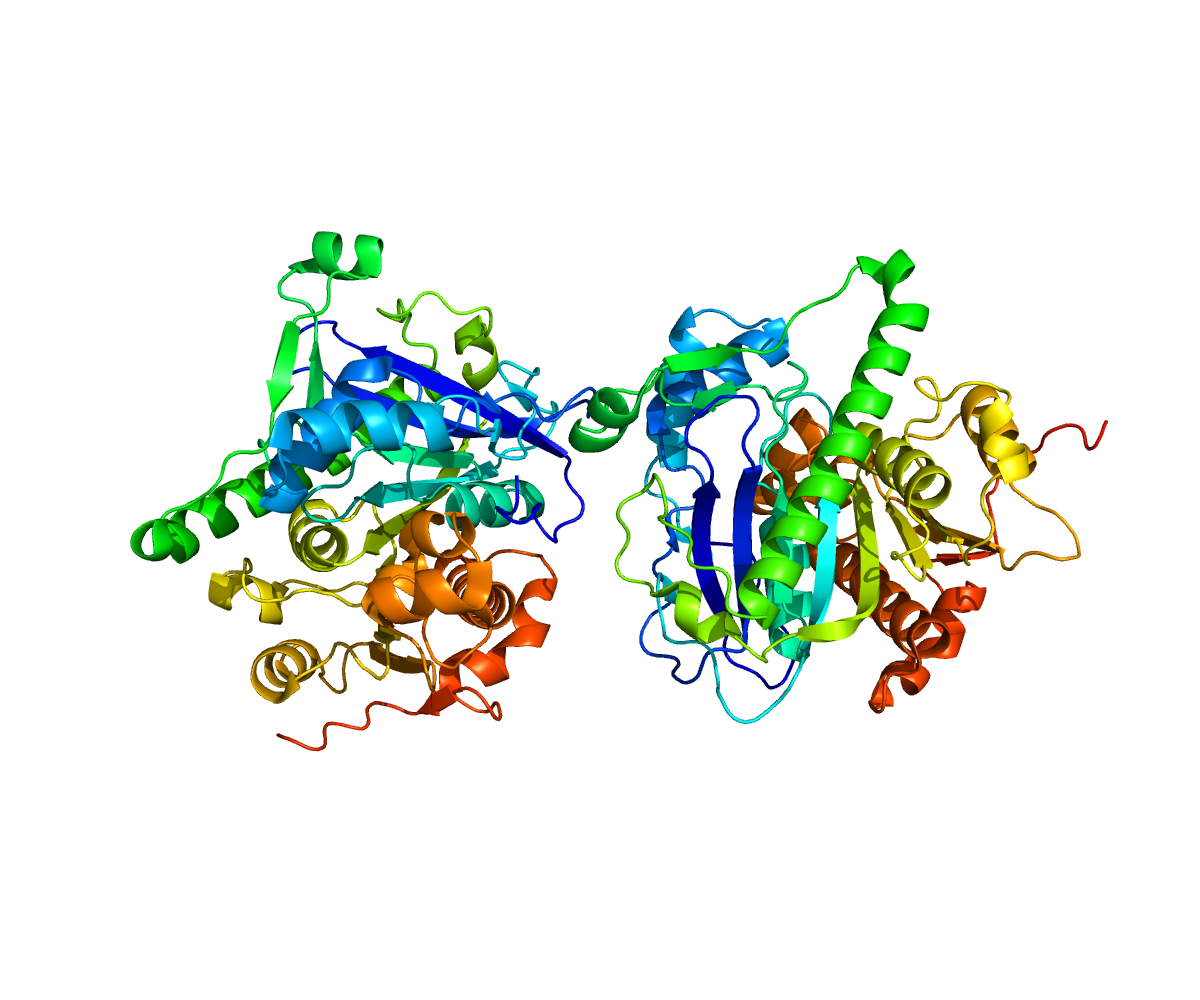
Lipoprotein-associated phospholipase A2
ProteinWikipedia
15
MENTIONS
13
EPISODES
13
PODCASTS
Search complete. 15 mentions across 13 episodes found for "Lipoprotein-associated phospholipase A2".
Sep 22, 2026

Ivan RusilkoHOST
Like you said, HSCRP, massive.
Ivan RusilkoHOST
PLAC or the LPPLA2.
Ivan RusilkoHOST
That's a mouthful of word salad.
Ivan RusilkoHOST
Then you have, right? But I think hyperglycemia is one of the causes of cardiovascular disease.

Fred HarveyHOST
And then Quest does another thing where it looks at the inflammation in your plaque.
Fred HarveyHOST
If you Google the Cleveland Heart Labs report, they will give you a sample report and you can see where the chemicals that are tested in the Cleveland Heart Labs actually indicate where you're having problems, starting with rancid fats and rancid cholesterol that start the plaque formation, going on into high-sensitive C-reactive protein and ADMA that show vascular reactivity, and on into the higher level, really inflammatory plaque tests Myeloperoxidase, abbreviated MPO, and LP-PLA-2.
Fred HarveyHOST
It's another lipoprotein that shows that your plaque is like a pus ball ready to explode.
Fred HarveyHOST
These are really important tests that I rarely see the cardiologists looking at.

Jim LaValleGUEST
And then there's a couple other things that come with it.
Jim LaValleGUEST
Lipopro- Like, so there's LP, lipoprotein, PLA2.
Jim LaValleGUEST
It's carrying around a bunch of garbage.
Jim LaValleGUEST
You, you know, the more LP-PLA2 you got, the more garbage you got in your body.
Jim LaValleGUEST
Like you said, carrying it through your arteries.
Jim LaValleGUEST
Um, and then oxidized LDL.

speaker_0HOST
OK, I've heard of that.
speaker_1HOST
And there are also mice engineered to lack a specific inflammatory enzyme called PLA2G7.
speaker_0HOST
Okay.
speaker_1HOST
When the researchers checked these naturally long-lived mice, they found that they natively have much lower C3 cleavage in their visceral fat as they aged.

Mario GietlHOST
That means it's a relatively good reflection of inflammation somewhere in the body, so in the system.
Mario GietlHOST
a few more specific markers if it's just about blood vessels for example this LPPLA2 which you can measure is also very very specific or homocysteine when it comes to vascular inflammation you know there's a bit of other stuff It's also very super cheap.
Mario GietlHOST
You can also do it as part of a routine checkup.
Mario GietlHOST
But we are mainly concerned with this topic of inflammaging.

Tom RogersHOST
For example, when I see somebody that has bad arthritis, their CRP is always high, you know, despite a pretty negative cardiac workup.
Tom RogersHOST
So I like to get a myeloperoxidase level, an Lp-PLA2 level, um, and look and see how oxidized the LDL is, see which pathway is it going through, through your liver.
Tom RogersHOST
Is it going through an A pathway, which is a preferred LDL pathway, or the, the B pathway? If you have an A pathway, which is on the Cleveland, um, you know, your liver's able to, to get rid of the, the bad LDL particles more efficiently than if it was going through the B pathway.
Tom RogersHOST
So there's a lot of little things, you know, um, with a coronary, you know, CTA or just a plain coronary calcium scoring and not an angiogram, uh, that's minimal, that's reassuring.

Patty DeversHOST
I mean,
Shilpa SaxenaGUEST
you probably, some of us are nerdy and we're looking at our coronary artery calcium score and checking our LPPLA2, but the average consumer feels like they're They're not at risk.
Michael ChapmanHOST
Yeah.
Shilpa SaxenaGUEST
Or they're like at such normal risk that like everybody's got high cholesterol.

Philip OvadiaGUEST
And again, this is newer because we're really just getting to the high fatel- high fidelity CT angiograms, uh, that we can really actually now differentiate, um, you know, the, like the thickness of the fibrous cap, uh, that can help us to determine, you know, are plaques potentially stable or unstable.
Philip OvadiaGUEST
There are some blood markers, uh, that, uh, are being looked at and investigated, uh, along these lines as well, things like LP-PLA2, uh, also known as the plaque test, PLAC test, uh, that, uh, is supposed to help differentiate between unstable and stable plaques.
Philip OvadiaGUEST
Uh, and I've had, I don't know, I, I would say I'm mixed, uh, mixed Use of it in my practice, um, uh, because there are a number of these markers, myeloperoxidase being a number, uh, another one, and oftentimes you check this whole panel, uh, so ADA, ADMA, SDMA, uh, myeloperoxidase, LP-PLA2, and, you know, two of them are up and two of them are down, and you're like, "Okay, what do we do with this?" Uh, so, um, i-in terms of the CAC scan, um, you know, again, progression is important, and I do think any progression is a bad sign.
Philip OvadiaGUEST
Now, um, even within progression, though, it gets more complicated.
Philip OvadiaGUEST
And so, you know, I encourage people and, you know, if you're able to do this or get a good radiologist to do it for you, you actually want to look at the pictures because there's a difference in progression if you're, if that patient has developed new areas of calcification versus previous areas of calcification that have gotten denser calcium.

Philip SnyderGUEST
We need to talk about ways to work on your stress.
Philip SnyderGUEST
LP-PLA2 or lipoprotein PLA2, that's a marker that can tell you, without having to do additional tests, do you have unstable plaques in your arteries? This enzyme starts to get released when you have these unstable plaques.
Philip SnyderGUEST
And the higher the enzyme, the more you want to be cautious and maybe consider a test if that level is high, coronary artery calcium is high.
Philip SnyderGUEST
There's another test called an angiogram, which you have to get contrast for that.

Gary HuberHOST
There are blood tests we do that give us some feedback on how stable the plaque is.
Gary HuberHOST
Your test will tell me if it's soft, but if it's low density, friable, dangerous, then we look at lab markers that shed light to that, right? So you look at Lp-PLA2, F2-Isoprostane, even something as basic as CRP gives you some feedback as to how stable that plaque is, 'cause as we said earlier, even soft plaque can rupture, and that's what causes most problems.
Gary HuberHOST
So we're trying to make the plaque, number one, stable and smaller, and reduce inflammation.
Gary HuberHOST
So your test folds into what we do just perfectly.
3 more episodes mention Lipoprotein-associated phospholipase A2.
Create an account to see the whole feed, search across every transcript, and follow the entities you care about.