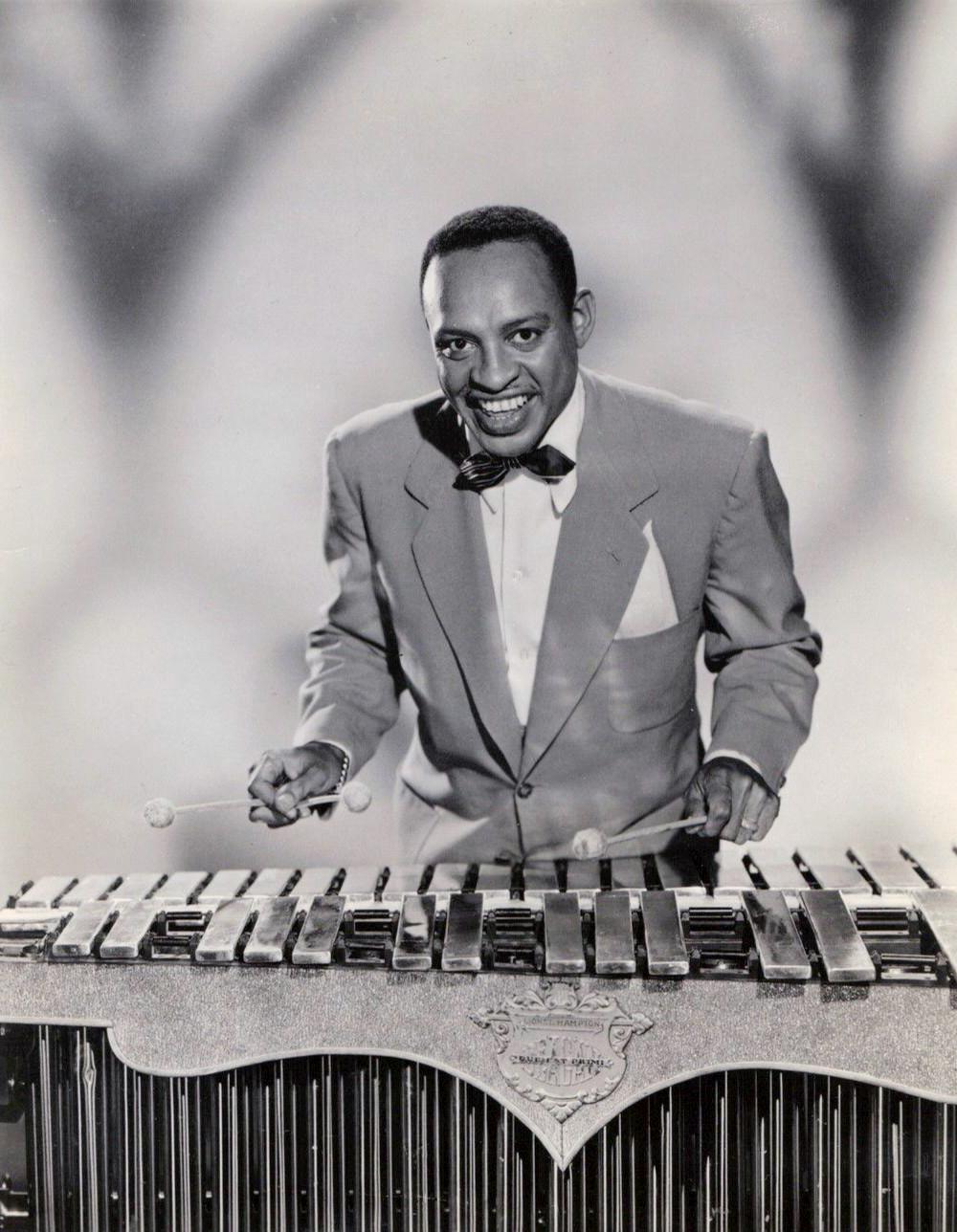
Lionel Hampton
American vibraphonist and percussionistWikipedia
24
MENTIONS
20
EPISODES
15
PODCASTS
Search complete. 24 mentions across 20 episodes found for "Lionel Hampton".
Sep 29, 2026

Jake BrennanHOST
His family moved to Seattle, where Quincy began his music career at the age of 12, playing trumpet and learning to write arrangements for jazz orchestras.
Jake BrennanHOST
This is where he later met and became friends with 16-year-old Ray Charles, backed Billie Holiday while he was still only 14, and talked his way into a future gig with bandleader Lionel Hampton.
Jake BrennanHOST
Quincy then headed to Boston to attend what would become Berklee College of Music.
Jake BrennanHOST
But at school, there was no action, so Quincy Jones then hit the road with Lionel Hampton, and the road was a grind.
Jake BrennanHOST
Eventually, Quincy relocated to the bebop center of the universe, New York City, to try his hand as an arranger professionally.
Jake BrennanHOST
And in the Big Apple, his talent took off, but the money was slow to come, so Quincy split for Hollywood and his career erupted.

Karina LongworthHOST
Though he was just turning six, Topper had already become a jazz aficionado, and luckily his mom had a great Rolodex.
Karina LongworthHOST
Libby hired an all-star lineup to perform, including Benny Goodman, Gene Krupa, Lionel Hampton, and Billie Holiday, who had recently recorded and released her rendition of Moanin' Low.
Karina LongworthHOST
Topper, who dressed himself in a sailor suit for the occasion, was determined to stay up until midnight.
Karina LongworthHOST
His portion of the party concluded with his mom and Billie duetting on a rendition of Happy Birthday, and Libby singing him to sleep with a solo performance of You Are My Sunshine.

John ClarkHOST
Here, he plays just ukulele and sings in the vocal group.
John ClarkHOST
And then, of course, Louis Armstrong on trumpet and singing, Sam Cokie on steel guitar, George Archer and Harry Batty on guitars, Joe Nawhi on bass, and Lionel Hampton guesting on drums and vibraphones.
John ClarkHOST
done in Los Angeles in August of 1936 for DECA.
John ClarkHOST
We're going to hear two more tunes from a few months later.
John ClarkHOST
These are in New York without Lionel Hampton, March 24th, 1937, but the same group.
John ClarkHOST
We're going to hear On a Little Bamboo Bridge, followed up by Hawaiian Hospitality.
John ClarkHOST
Then we're going to play one of the non-Louis things.

Matt the CatHOST
Jesse Poe Simpkins is on bass, and Eddie Bird is playing the tubs.
Matt the CatHOST
Don't Worry About the Mule is Louis Jordan's second number one of 1946, and it replaced Lionel Hampton's Hey Baba Rebop at the top of the chart.
Matt the CatHOST
Mule rose to number one during the week of March 23, 1946, just as Decca Records was issuing this next record, Salt Pork West Virginia.
Matt the CatHOST
Now to the best of my knowledge, Salt Pork West Virginia is the first record to feature electric guitar for Louis Jordan.

GlynnisHOST
Jeffrey being the youngest of 12 siblings.
GlynnisHOST
His family already had major musical roots, Jeffrey and Billy's father being Clarence Leggs Osborne, a jazz trumpeteer who played alongside greats such as Lionel Hampton, Duke Ellington, and Count Basie.
GlynnisHOST
So by 1974, the group was fully stacked and they also had additional members, Celeste Cole, Henry E. Davis, and Robert Santiel.
GlynnisHOST
The group later relocated to Los Angeles, and they signed a recording contract with AMM Records under their new name, Love, Togetherness, and Devotion, or notably known as LTD.

Lindsey NelsonSOUNDBITE_SPEAKER
It's the Rheingold Central Park Music Festival.
Lindsey NelsonSOUNDBITE_SPEAKER
With Lionel Hampton, Nebo Brummel, Theodore McKell, The Mitchell Trio, Miriam McKeeba, Jimmy Smith, Freddie and the Dreamers, and lots more.
Lindsey NelsonSOUNDBITE_SPEAKER
Addition's only a dollar.
Lindsey NelsonSOUNDBITE_SPEAKER
Watch your paper for the complete summer schedule and ticket information, or you can phone 249-7750.
Lindsey NelsonSOUNDBITE_SPEAKER
It's the Rheingold Central Park Music Festival.
Lindsey NelsonSOUNDBITE_SPEAKER
With Lionel Hampton, the Bo Brummels, Theodore McKell, the Mitchell Trio, Miriam McKeeba, Jimmy Smith, Freddie and the Dreamers, and lots more.
Lindsey NelsonSOUNDBITE_SPEAKER
Admission's only a dollar.
Lindsey NelsonSOUNDBITE_SPEAKER
Watch your paper for the complete summer schedule.
Ralph KinerSOUNDBITE_SPEAKER
Thelonious Monk.
Ralph KinerSOUNDBITE_SPEAKER
Lionel Hampton.
Ralph KinerSOUNDBITE_SPEAKER
Arthur Dreisach.
Ralph KinerSOUNDBITE_SPEAKER
The Four Tops.

Tim CollinsGUEST
[laughs] The first, I think f- I think the first recorded vibraphonist is maybe Red Norvo.
Tim CollinsGUEST
There were some people that had played xylophone and then moved over to vibraphone, but really Lionel Hampton is the guy that- Put it on the jazz map.
Tim CollinsGUEST
He was playing with Benny Goodman.
Tim CollinsGUEST
He was also a, a drummer playing with Louis Armstrong, and the studio had a vibraphone sitting in the corner, and he was like, "What's that?" You know.
Tim CollinsGUEST
And the rest is history.
Tim CollinsGUEST
But Lionel Hampton is the first big voice, you know, big influence on the instrument.
Tim CollinsGUEST
And then you have Milt Jackson, who took and applied bebop language to it.
Tim CollinsGUEST
Then you have Bobby Hutcherson, who started...

Philip D. GibbonsHOST
Malcolm did seek employment, this revolved around the ability to have a few dollars in his pocket to finance the pursuit of what quickly became an all-consuming interest, women.
Philip D. GibbonsHOST
One of the most interesting positions that Malcolm acquired was shining shoes at the Roseland Ballroom, one of Boston's premier jazz venues in which he interacted with such celebrities as Count Basie, Lionel Hampton, and Duke Ellington.
Philip D. GibbonsHOST
He also was attempting to seem legitimate to Ella.
Philip D. GibbonsHOST
Much of his other employment consisted of running numbers, occasionally selling small amounts of reefer or marijuana as he gravitated towards hanging out with other older members of Boston's black nightlife crowd.
10 more episodes mention Lionel Hampton.
Create an account to see the whole feed, search across every transcript, and follow the entities you care about.