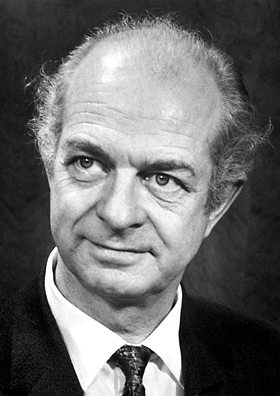
Linus Pauling
American chemistWikipedia
113
MENTIONS
70
EPISODES
52
PODCASTS
Search complete. 113 mentions across 70 episodes found for "Linus Pauling".
Nov 26, 2026

Dan DavisGUEST
The really important thing about that is why we think vitamin C does help you get over a cold.
Dan DavisGUEST
And that turns out to be a 55-year-old story, which is essentially down to one really famous scientist, Linus Pauling.
Dan DavisGUEST
Linus Pauling was the celebrity scientist of his time.
Dan DavisGUEST
He won two Nobel Prizes.
Dan DavisGUEST
He won a Nobel Prize for some calculations around the nature of a chemical bond.
Dan DavisGUEST
And then him and his wife, Ava Helen, did lots of speeches and campaigning against nuclear weapons.
Dan DavisGUEST
And Linus Pauling won a second Nobel Prize for peace.
Dan DavisGUEST
So people are listening to what he says.

Michael SavageHOST
They want you to believe that you don't need it.
Michael SavageHOST
Now, Linus Pauling was the greatest genius of his time and probably for the next hundred years.
Michael SavageHOST
And then the medical establishment spent as much time as they could debunking the vitamin C theory.
Michael SavageHOST
They knew nothing about it.
Michael SavageHOST
I don't know when I started this.
Michael SavageHOST
Maybe in the 70s.
Michael SavageHOST
In the 70s, when I was exposed to orthomolecular nutrition and Linus Pauling, one gram a day.
Michael SavageHOST
Now, I'm going to tell you Dr. Cathcart's bowel tolerance theory.

Marc BinkleyHOST
There's the concern about us losing our ability to have critical thinking because we're just following the answers and the prompts that AI is giving us.
Marc BinkleyHOST
So there's some of those things, but I do think there is also the flip side of that conversation, which is that I want to say Linus Pauling, I think is the guy who said this, that the best way to have a good idea is have lots of them.
Vassilis DourosHOST
Fair.
Vassilis DourosHOST
Yeah.

Jay StinnettGUEST
Then he goes and he gets involved with niacin and vitamin C.
Jay StinnettGUEST
So he's right there with Pauling and all those folks, and they come up with something that really is helpful to people, and it's just a vitamin.
Jay StinnettGUEST
So it goes from this to this.
Jay StinnettGUEST
People want to talk about this stuff, right? But when it comes to something, you can walk into any store and just about get it.

Dan DavisGUEST
The really important thing about that is why we think vitamin C does help you get over a cold.
Dan DavisGUEST
And that turns out to be a 55-year-old story, which is essentially down to one really famous scientist, Linus Pauling.
Dan DavisGUEST
was the celebrity scientist of his time.
Dan DavisGUEST
He won two Nobel Prizes.
Dan DavisGUEST
He won a Nobel Prize for some calculations around the nature of a chemical bond.
Dan DavisGUEST
And then him and his wife, Ava Helen, did lots of speeches and campaigning against nuclear weapons.
Dan DavisGUEST
And Linus Pauling won a second Nobel Prize for peace.
Dan DavisGUEST
So people are listening to what he says.

Mark HymanHOST
Abraham Hoffer, orthomolecular psychiatry.
Mark HymanHOST
In fact, Linus Pauling, who won two Nobel prizes, one for discovering the structure of protein, the other for the Nobel Peace Prize for the Nuclear Test Ban Treaty.
Mark HymanHOST
He basically wrote this paper that started the whole field called Orthomolecular Psychiatry, published in one of the leading science journals called Science.
Mark HymanHOST
And it was called Orthomolecular Psychiatry, about correcting, ortho means to straighten, and molecular means molecules, to straighten molecules to fix your psychiatric issues, right? So how did you kind

Stephanie GrayHOST
Bland began his career in academia as a university professor.
Stephanie GrayHOST
In the early 1980s, he became a protege of a two-time Nobel laureate, Dr. Linus Pauling.
Stephanie GrayHOST
That's pretty cool.
Stephanie GrayHOST
Dr.
7 MINS LATER
Jeffrey BlandGUEST
So I think I got a really broad exposure to the bigger issues of health in terms of how it connects into our environment, how it connects into agriculture, how it fits into our food, how it fits into lifestyles, how it fits into pollution and the exposure to toxins.
Jeffrey BlandGUEST
So all of that became part of kind of my evolving education in the 14 years that I was a professor.
Jeffrey BlandGUEST
Then transitioned out of that after my couple of years with Linus Pauling on sabbatical leave to say what I really wanted to do is teach doctors how to do nutritional medicine in their practice.
Jeffrey BlandGUEST
Because I think this is not an area that's taught in schools and it's an unmet need.

Michael BeheGUEST
Nonetheless, it's interesting that knowing how life works is not the same thing as knowing how to fix things, knowing how to, say, cure diseases.
Michael BeheGUEST
An example I like to use in when I teach biochemistry is that The mutation behind sickle cell disease was discovered about 75 years ago in the late 1940s by a man named Linus Pauling, a very brilliant scientist.
Michael BeheGUEST
And here it is 75 years later, and we're still struggling to try to help people who suffer from sickle cell disease.
Michael BeheGUEST
That mutation is a little change in hemoglobin, just one amino acid residue out of hundreds and hundreds that... is that are present in hemoglobin.

Ronald HoffmanHOST
I don't think that's a problem.
Ronald HoffmanHOST
I think, you know, maybe Linus Pauling was a little off base telling people to take 10, 15, 20,000 per day because you give yourself a kind of pretty good case of diarrhea if you do that.
Ronald HoffmanHOST
But, you know, I think some of these levels are
Jacob TeitelbaumGUEST
pretty paltry.

Michael RankinGUEST
So it's logical that you would have melanoma if your body is toxic.
Michael RankinGUEST
And what's the number one thing that's been proven by 50 years of research, going back to Dr. Linus Pauling, vitamin C protects the body from melanoma better than anything else that's ever been done.
Michael RankinGUEST
Vitamin C.
Steve HarperHOST
Well, to your point, I don't know if you've heard about these clinical trials, but they used high concentration of vitamin C.
Michael RankinGUEST
So when people say we're waiting for the studies, well, listen, Steve, I've been implementing the so-called studies, right, for 40 years.
Michael RankinGUEST
We've been doing these things for 40 years, okay? We don't need the studies.
Michael RankinGUEST
We studied Linus Pauling.
Michael RankinGUEST
He did all the studies we need to know about vitamin C.
60 more episodes mention Linus Pauling.
Create an account to see the whole feed, search across every transcript, and follow the entities you care about.