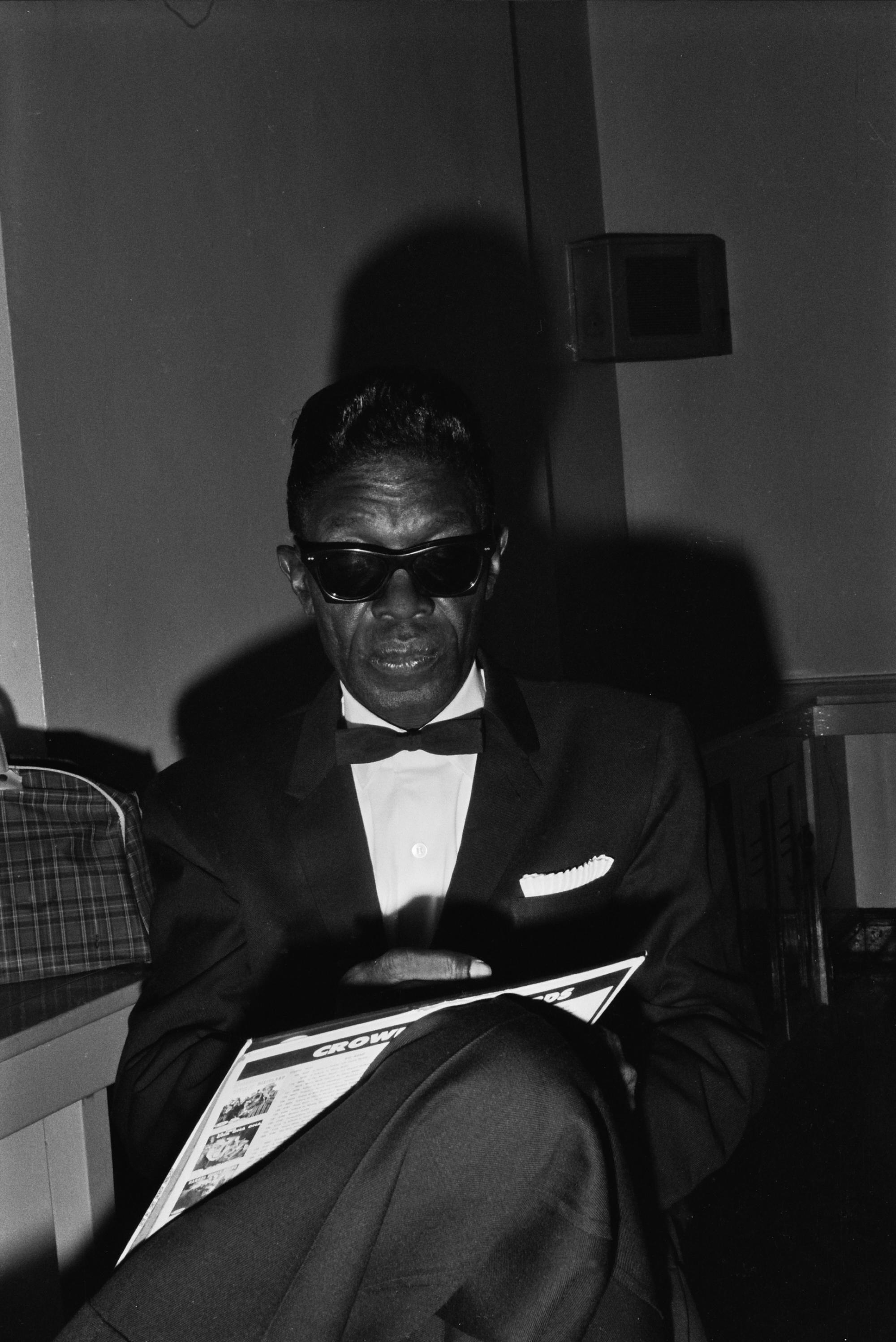
Lightnin' Hopkins
American singer and songwriterWikipedia
27
MENTIONS
21
EPISODES
20
PODCASTS
Search complete. 27 mentions across 21 episodes found for "Lightnin' Hopkins".
Oct 28, 2026

Noe SochaGUEST
And for me, a lot of that was sort of the same feeling that I had when I listened to Bob Dylan or Neil Young to that matter.
Noe SochaGUEST
Like if you listen to Blind Edward Jefferson or Lightning Hopkins or John Lee Hooker, you know, Robert Johnson, Donnie Johnson, all these guys, like each one has its own voice, his own expression.
Noe SochaGUEST
there is just some sort of freedom to that, because that was the beginning of that music.
Noe SochaGUEST
So you didn't really have the standardized form.

Dick ShurmanGUEST
I just found that out later.
Dick ShurmanGUEST
But their son played me some Lightning Hopkins when we were visiting them one time.
Dick ShurmanGUEST
So that was
ParkerNARRATOR
a

Ben MartinHOST
me a lot of like, I'm sure you've seen them.
Ben MartinHOST
There's a series of live videos of Lightning Hopkins where he's kind of on a stage and he's like the only thing that's lit.
Ben MartinHOST
And he's doing that a lot.
Ben MartinHOST
He's just kind of...

P.W. FentonHOST
I am your host, P.W. Fenton.
P.W. FentonHOST
On this day in 1960, Sonny Terry joined Lightnin Hopkins in the studio for Last Night Blues, and Lightnin did the singing.
Lightnin' HopkinsSOUNDBITE_SPEAKER
You know I went home last night.
Lightnin' HopkinsSOUNDBITE_SPEAKER
On that very same day, Lightning and Sonny recorded Conversation Blues and Sonny Terry did the singing.
Sonny TerrySOUNDBITE_SPEAKER
I want to tell you something, Junior.
Sonny TerrySOUNDBITE_SPEAKER
Well, I want you to tell me something to make me see.

Rich BonnifaceNARRATOR
No audience here.
Rich BonnifaceNARRATOR
no stage no microphone no one listening only a teenager's bedroom in palo alto with the door shut and clothes on the floor and a bottle of cheap wine pushed under the bed where his mother will not see it and in the quiet very softly so that nobody in the rest of the house will notice a harmonica the teenager was ron mckernan he was fourteen or fifteen when jerry garcia met him a few years younger than the rest of the crowd at kepler's and the chateau and he was hanging around the edges of every scene in town garcia was by his own account the only person around who played any blues on the guitar so the boy attached himself to him garcia gave several versions of how it went and they all agree on the important part ron would come to the parties where garcia was playing blues and he would watch very carefully and then he would go home and learn it all on the sly he picked up the basic lightnin hopkins style just by watching and listening then he took up the harmonica garcia spent countless hours in that bedroom listening to the old records he called it a mess stuff thrown everywhere ron had a habit of lounging around in just a shirt and his underpants you would knock and he would say come on in man his mother Garcia said, would check in about once every five hours to see if he was still alive, Robert Hunter was less charmed at first, he remembered a scruffy teenage kid in a fatigued jacket, drinking Thunderbird wine, the sort of guy one would ordinarily discourage from coming to one's parties, except Hunter said, he played a hell of a harmonica, and that was his passport, Hunter did not know any other harmonica players at all.
Rich BonnifaceNARRATOR
David Nelson was simply amazed that this kid could play Robert Johnson and Lightnin Hopkins material when hardly anyone else was doing it.
Rich BonnifaceNARRATOR
He was so authentic, Nelson said, and Garcia added the thing that everyone eventually learned about Ron.
Rich BonnifaceNARRATOR
His real strength was sitting around a room with a bottle of wine and an acoustic guitar, playing the blues and making up the words as he went.

Jerry QuijanoHOST
This week in 1971, a Texas blues legend took the stage two nights in a row at an iconic Austin music venue.
Jerry QuijanoHOST
Jason Mellard with the Center for Texas Music History at Texas State University brings us the story of Lightnin' Hopkins' electrifying performances at the Armadillo World Headquarters.
Jason MellardCORRESPONDENT
This week in Texas music history, lightning strikes twice at the Armadillo.
Jason MellardCORRESPONDENT
Lightnin' Hopkins, guitarist, vocalist, and arguably Texas' greatest blues performer, took the stage in Austin at the Armadillo World Headquarters for two nights, October 22nd and 23rd, 1971.
Jason MellardCORRESPONDENT
Hopkins was born in the early 19-teens in Centerville and grew up there and in the East Texas communities of Leona and Crockett.
Jason MellardCORRESPONDENT
By his own account, he was encouraged by the legendary Blind Lemon Jefferson while playing guitar at the age of eight at a Baptist gathering in Buffalo, Texas, and by the age of 10 was performing alongside another blues pioneer, Texas Alexander.

speaker_0NARRATOR
if it wasn't for Chris Strakowitz and Mac McCormick.
speaker_0NARRATOR
He created the label R. Hooley Records to release the work of Mance Lipscomb, Lightning Hopkins, and other authentic blues artists.
speaker_0NARRATOR
Well, it turns out that Clifton and Lightning were related, sort of.
speaker_0NARRATOR
Lightning's wife was Clifton's cousin, and once Clifton moved to Houston, they met up a lot.
6 MINS LATER
speaker_0NARRATOR
The song, Harry Coates had had a top ten hit with in 1946. and it too had been recorded at Gold Star Studios in Houston.
speaker_0NARRATOR
Interestingly, Cliff had traveled over to Pasadena to Huey Mew's studio and recorded another album there at about the same time.
speaker_0NARRATOR
Like his cousin-in-law, Lightning Hopkins, he didn't seem to concern himself with contracts that tied him to one label.
speaker_0NARRATOR
The album, while it was recorded with much more modern equipment, just doesn't have the authenticity of the Arhuli records and didn't do much to help Clifton's career.

David BrownHOST
I know a lot of folks are, that's for sure.
David BrownHOST
Hey, listen, coming up, we're going to be taking a look at the week in Texas music history, and I hear that Lightning Hopkins is on the agenda.
David BrownHOST
Also, politicians pledging more affordable energy.
David BrownHOST
Sounds great, right? Any substance to the promises? A closer look at that and a whole lot more as the Texas Standard continues.

JackGUEST
And it was this dark, uncanny, heavy feeling without it being heavy.
JackGUEST
And it was really, it all started with this one artist from like the early 1900s called Lightning Hopkins.
JackGUEST
And he had this song called Bring Me My Shotgun.
JackGUEST
And it is the darkest, heaviest song you've ever heard.
Rich BonnifaceNARRATOR
When the publicity around him grew too loud, he told the whole city to go by the name Emmett Grogan.
Rich BonnifaceNARRATOR
Then, years later, he wrote an autobiography under his own name, and one deadhead newsletter called it highly egotistical a saint of free lunch then or a hustler with very good timing or both depending on the afternoon in the panhandle the pots are empty now scraped clean and stacked the wooden frame stands alone on the grass on the page it reads like a scrap of a play a radio studio in san francisco the band sitting around a table the host going from one to the next when he gets to the organ player somebody says the name out loud and calls it a horrible name the host asks for his real one the answer is short and who influenced you mostly blues people he says and then he lists them lightnin hopkins bobby bland little junior parker little walter that was ron mckernan whom everybody called pigpen in the spring and summer the band first went east he was the man out front his father had been a rhythm and blues disc jockey and pigpen grew up singing along with records garcia met him in palo alto when pigpen was 14 or 15 a kid hanging around the only guitar player in town who could play the blues he watched garcia closely went home and learned the lightning hopkins licks on the sly Then he took up the harmonica.
Rich BonnifaceNARRATOR
Robert Hunter said the harmonica was his passport.
Rich BonnifaceNARRATOR
Without it, nobody would have let that scruffy teenager into the parties, and he was shy.
Rich BonnifaceNARRATOR
Garcia said Pigpen was deathly afraid to play in front of anybody.
Rich BonnifaceNARRATOR
He had practiced harmonica in secret for a long time.
Rich BonnifaceNARRATOR
then one night at a folk club he finally got up with garcia behind him on guitar and sang like lightnin hopkins and it blew everybody's mind by the time the dead flew to new york pigpen had a small choice set of numbers that were his alone Wilson Pickett's In the Midnight Hour, Junior Parker's Next Time You See Me, Slim Harpo's King B, Good Morning Little School Girl, the old Sonny Boy Williamson Blues, which the dead seem to have learned from a Junior Wells arrangement.
Rich BonnifaceNARRATOR
Blair Jackson points out that apart from Midnight Hour, almost none of these had been hits outside the rhythm and blues charts.
11 more episodes mention Lightnin' Hopkins.
Create an account to see the whole feed, search across every transcript, and follow the entities you care about.