Light pollution
72
MENTIONS
18
EPISODES
18
PODCASTS
Search complete. 72 mentions across 18 episodes found for "Light pollution".
Oct 17, 2026

Kaitlin HaaseHOST
Almost like 60% of all insect life is active at night and lots of other wildlife.
Kaitlin HaaseHOST
And I just wanted to know, how can we support these nocturnal insects and other wildlife and, And specifically, I want to talk about like light pollution and how that impacts these night active animals.
Bethany AbrahamsonGUEST
Yeah, definitely.
Bethany AbrahamsonGUEST
Unfortunately, you know, we have our lights on at night for safety and visibility and things because, you know, as humans, we don't really see well in the dark, not compared to a lot of other animals.

Marissa ParrottGUEST
We'll identify it for you and pop it on an interactive map, and that way you can help us to gather the data that means we can learn more and best protect the bogong moths into the future.
Josh BryantHOST
[gentle music] Experts are hoping that the habits we pick up to keep the moths away could get people thinking about the other effects of light pollution.
Josh BryantHOST
Marnie Ogg is founder of the Australasian Dark Sky Alliance.
Josh BryantHOST
Marnie, firstly, if there are a lot of bogong moths outside your house, might it be time to rethink how much light you're putting out?
Marnie OggGUEST
And so that's having a huge detrimental impact to our environment.
Marnie OggGUEST
So every light that you'll, you've got on in your backyard, um, your television light even going throughout to the outside, all those sorts of things can really have a, a, um, an, an impact on our species, including yourself.
Josh BryantHOST
And so if this has got people wanting to do a, a, a light stocktake, as it were, or your neighbors, I guess, depending on where [laughs] where the light's pointing, what are the tips for cutting down on, on your light pollution?
Marnie OggGUEST
Yeah, great question, Josh.

speaker_4ADVERTISER
Get ready for the season with Woodhouse Ford.
Josh BryantHOST
Experts are hoping that the habits we pick up to keep the moths away could get people thinking about the other effects of light pollution.
Josh BryantHOST
Marnie Ogg is founder of the Australasian Dark Sky Alliance.
Josh BryantHOST
Marnie, firstly, if there are a lot of bogong moths outside your house, might it be time to rethink how much light you're putting out?
Marnie OggGUEST
And so that's having a huge detrimental impact to our environment.
Marnie OggGUEST
So every light that you've got on in your backyard, your television light even going throughout to the outside, all those sorts of things can really have a... and impact on our species, including yourself.
Josh BryantHOST
And so if this has got people wanting to do a light stock take, as it were, or your neighbours, I guess, depending on where the light's pointing, what are the tips for cutting down on your light pollution?
Marnie OggGUEST
Yeah, great question, Josh.

Marissa ParrottGUEST
Music
Josh BryantHOST
Experts are hoping that the habits we pick up to keep the moths away could get people thinking about the other effects of light pollution.
Josh BryantHOST
Marnie Ogg is founder of the Australasian Dark Sky Alliance.
Josh BryantHOST
Marnie, firstly, if there are a lot of bogong moths outside your house, might it be time to rethink how much light you're putting out?
Marnie OggGUEST
And so that's having a huge detrimental impact to our environment.
Marnie OggGUEST
So every light that you've got on in your backyard, your television light even going throughout to the outside, all those sorts of things can really have a... and impact on our species, including yourself.
Josh BryantHOST
And so if this has got people wanting to do a light stock take, as it were, or your neighbours, I guess, depending on where the light's pointing, what are the tips for cutting down on your light pollution?
Marnie OggGUEST
Yeah, great question, Josh.

speaker_4ADVERTISER
If you know, you Vrbo.
Josh BryantHOST
Experts are hoping that the habits we pick up to keep the moths away could get people thinking about the other effects of light pollution.
Josh BryantHOST
Marnie Ogg is founder of the Australasian Dark Sky Alliance.
Josh BryantHOST
Marnie, firstly, if there are a lot of bogong moths outside your house, might it be time to rethink how much light you're putting out?
Marnie OggGUEST
And so that's having a huge detrimental impact to our environment.
Marnie OggGUEST
So every light that you've got on in your backyard, your television light even going throughout to the outside, all those sorts of things can really have a... and impact on our species, including yourself.
Josh BryantHOST
And so if this has got people wanting to do a light stock take, as it were, or your neighbours, I guess, depending on where the light's pointing, what are the tips for cutting down on your light pollution?
Marnie OggGUEST
Yeah, great question, Josh.

Doireann GarrihyHOST
Thank you both so much for joining me.
Doireann GarrihyHOST
Let's jump right into it by asking if you can explain what light pollution actually is for those of us who aren't quite sure.
Georgia McMillanGUEST
Yeah, quite simply, it's the inappropriate or excessive use of artificial light at night in the outdoors.
Georgia McMillanGUEST
So it's light where it shouldn't be at the wrong place at the wrong time.
Doireann GarrihyHOST
OK, and what impact does light pollution have on our night skies? Does it affect wildlife?
Georgia McMillanGUEST
It does, sadly, greater than we think.
Georgia McMillanGUEST
So light pollution affects wildlife from anything from migratory birds who use the stars to navigate to coastal species who are distracted by shoreline.
Georgia McMillanGUEST
lights, confusing them with moonlight, to insects that use polarised moonlight to lay eggs, aquatic species, pretty much every species you can think of.

Eric LamberetHOST
So Westchester University is showing out for sexual violence survivors.
Eric LamberetHOST
Let's go next to Westchester residents leading the fight against light pollution.
Cara CorridoniHOST
Yeah.
Cara CorridoniHOST
So, uh, state, Penn State Brandywine professor and Westchester Green Team member, Tim Lawler, was, uh, interviewed by WHYY, uh, last month and talking about light pollution, uh, and how we can, uh, what we can do to kind of- Combat that, and, you know, as you said, uh, the solutions a- in this area are really, they're not big, he says.
Cara CorridoniHOST
You know, we're not asking, we're not asking an industry to stop using fossil flu- fu- fuel.
Cara CorridoniHOST
We just say, "Turn down your lights, and use warmer lights, and shut them off if you can." That's it.
Cara CorridoniHOST
Um, Tim has been working with State Rep Chris Pielli on legislation that would reduce light pollution on state and state-funded properties.
Cara CorridoniHOST
But it really is something that we can all be a little more cognizant of, and, you know, just turn off those lights at night if you don't need them.

Steve GouldHOST
Well, you'll be pleased to know the album is far from boring, because it's nothing to do with the movie.
Steve GouldHOST
And I'm gonna play you a track called Light Pollution, which is very much on the raucous side.
Steve GouldHOST
And in fact, there's even some growling going on in there.
Steve GouldHOST
So I thought we'd have a trilogy of raucousness to kick off this week's show.
11 MINS LATER
speaker_6ADVERTISER
Progzilla Radio, making progressive rock cooler than the other side of the pillow.
Steve GouldHOST
Before the break, a trilogy of raucousness came to a dramatic end with German band The Ocean off their latest and eleventh album Solaris.
Steve GouldHOST
That was Light Pollution.
Steve GouldHOST
Mmm, so now that you've been suitably raucoused, I think we'll go a little more tranquil.

Barbara ScullyPANELIST
I don't think we have any legal.
Barbara ScullyPANELIST
We've no laws here around light pollution, I don't think.
Barbara ScullyPANELIST
Yeah.
Barbara ScullyPANELIST
So I don't think she has any legal framework.
Seán MoncrieffHOST
He's so wrong.
Seán MoncrieffHOST
Wildlife is immensely important, especially when other things are going on in the world.
Seán MoncrieffHOST
Light pollution is horrible because one person can cause so much harm.
Seán MoncrieffHOST
Another person says, Anne says, bats will not feed.

Tegan TaylorHOST
The secret is you don't actually have to wait till bin night to look at the stars.
Tegan TaylorHOST
A citizen science project is asking you to go outside tonight, look up and record what you see in a quest to get a better handle on light pollution around the globe.
Tegan TaylorHOST
Also ahead, a company has created an AI avatar of silent film star Greta Garbo to sell ball bearings.
Tegan TaylorHOST
What thought have you given, if any, to how your digital memory is preserved? It's all coming up here on ABC Radio National.
19 MINS LATER
Tegan TaylorHOST
His second memoir, The Lucky Son, is out now.
Tegan TaylorHOST
This is Life Matters on ABC Radio National.
Tegan TaylorHOST
Coming up next, when you look up to the sky at night, what's your favourite constellation to look for? And is light pollution making it harder to pick out than it used to be? When you go outside at night, can you see stars? It might sound like a weird question if you live outside of a major city, but for a lot of Australians, the glow of our cities at night is making the stars harder to see, and it's getting worse.
Tegan TaylorHOST
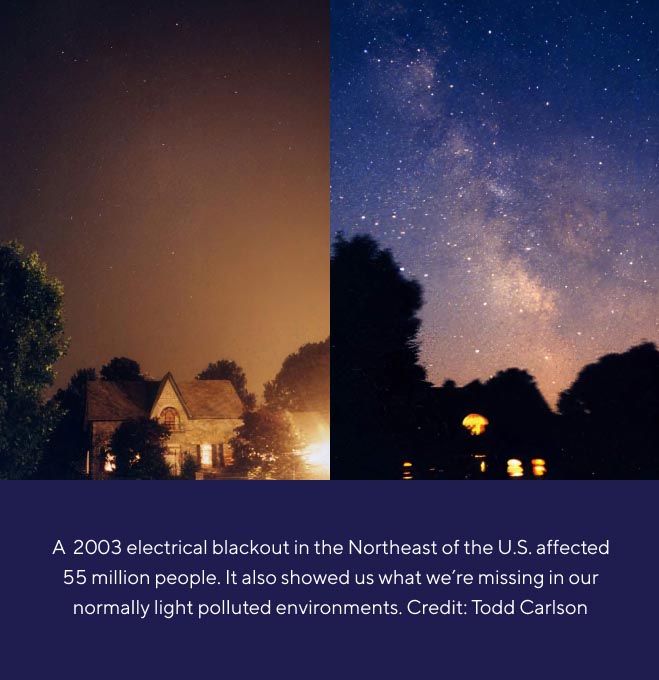
There's been data collected by citizen scientists... around the world and it's found that every year the night sky is becoming 10% lighter because of light pollution from our growing towns and cities.
8 more episodes mention Light pollution.
Create an account to see the whole feed, search across every transcript, and follow the entities you care about.