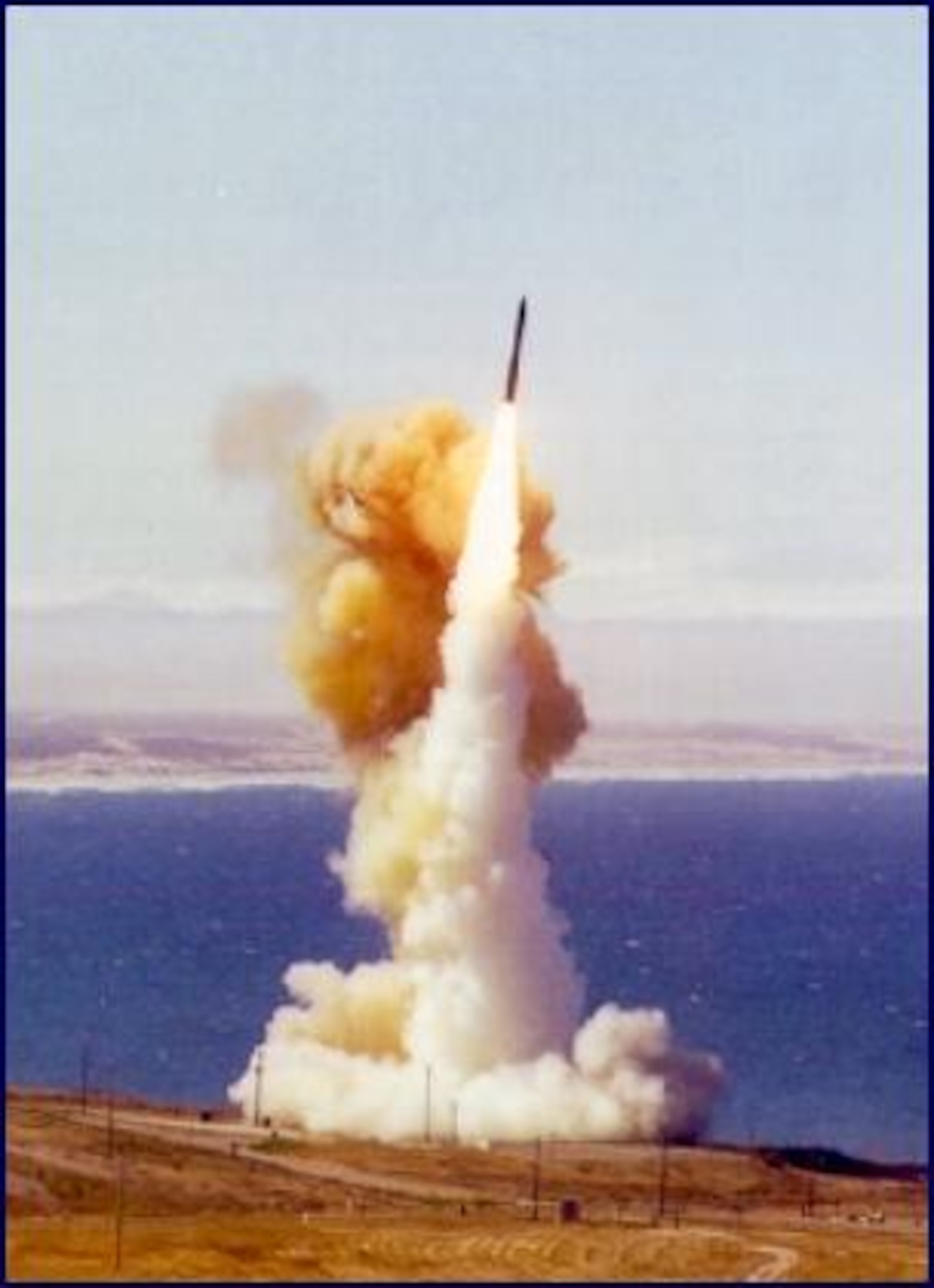
LGM-30G Minuteman III
22
MENTIONS
12
EPISODES
11
PODCASTS
Search complete. 22 mentions across 12 episodes found for "LGM-30G Minuteman III".
Sep 24, 2026

Larry HancockGUEST
We're less comfortable with expl- e- being a- able to explain, you know, why 1952, why 1957, why 1975.
Larry HancockGUEST
In 1974, '75, could I tell you that they're interested in revisiting all of the ICBM bases because that's the year when we moved to Minuteman III and put multiple reentry warheads on them and exponentially increased our ability for atomic war fighting? I could say that.
Larry HancockGUEST
It may be true.
Larry HancockGUEST
But there, you know, there, I have less confidence in saying that as I do in the scenario analysis.

Peter HuessyGUEST
We've never had a submarine out in the water beyond 40 years, but we do now.
Peter HuessyGUEST
The ICBMs are 55 years old, Minuteman III.
Peter HuessyGUEST
And the B-52 was first built 70 years ago.
Peter HuessyGUEST
So we've got very old systems that I have to hats off to the industry and the Air Force and the Navy for keeping these things alive and well.

John MearsheimerGUEST
And, uh, this organization, the acronym was SAMSO, uh, developed ballistic missiles.
John MearsheimerGUEST
Uh, at the time they were working on Minuteman III and eventually MX.
John MearsheimerGUEST
And in the process of spending two years at SAMSO, I learned a lot about ballistic missiles and what they could do, especially when it comes to defeating the other side's defenses.
John MearsheimerGUEST
Because I started at SAMSO in 1970, and you remember it was in 1972 when we had the first SALT agreement, and that SALT agreement put a cap on ballistic missile defense.
Peter HuessyGUEST
The idea of protecting Washington but leaving New York and everybody else unprotected was a non-starter.
Peter HuessyGUEST
So we built 100 interceptors in Grand Forks, North Dakota, to protect the Minuteman missiles that were there.
Peter HuessyGUEST
eventually the Pentagon said, you know, the Russians can overwhelm 100 interceptors because they have thousands of these warheads.
Peter HuessyGUEST
So it doesn't make any sense.
6 MINS LATER
Peter HuessyGUEST
now, submarines are about 40 – the oldest ones are 42 years.
Peter HuessyGUEST
We've never had a submarine out in the water beyond 40 years, but we do now.
Peter HuessyGUEST
The ICBMs are 55 years old, Minuteman III.
Peter HuessyGUEST
And the B52 was first built 70 years ago.

Gabe MurphyGUEST
Rather than scrapping it at that point, the Pentagon was forced to take a look at it by law and actually said, "No, we're gonna keep doing this, but now it's gonna be 81% over budget." By the way, we filed a FOIA request, Freedom of Information Act request, over two years ago for the documents around that decision, which shouldn't have been classified or anything, and we still haven't gotten a look at their rationale for that.
Gabe MurphyGUEST
As far as we're concerned, we should just get rid of the whole land-based leg of the nuclear triad, so intercontinental ballistic missiles, whether it's the, the Minuteman III that we currently have or this new Sentinel program.
Gabe MurphyGUEST
It's the most vulnerable leg of the triad.
Gabe MurphyGUEST
Everyone knows where these silos are, and we have more than enough firepower on our subs and bombers to ensure nuclear deterrence.

TowerHOST
The LGM-35A Sentinel is built by Northrop Grumman, and it is the designated replacement for one of the longest-serving weapon systems in American military history.
TowerHOST
The LGM-30 Minuteman III has been the backbone of the United States land-based nuclear deterrent for over fifty years.
TowerHOST
Fifty years.
TowerHOST
To put that in aviation terms, the Minuteman III was already in silos when the Douglas DC-9 was still a relatively new airliner.
TowerHOST
It has outlasted aircraft programs, space programs, and entire geopolitical eras.
TowerHOST
The Minuteman III entered service in nineteen seventy.
TowerHOST
The weapon was designed, engineered, and deployed during a Cold War arms race that no longer exists in the same form.
TowerHOST
And yet there it sat in hardened silos across Montana, North Dakota, Wyoming, Colorado, and Nebraska, maintained and upgraded over the decades, but fundamentally the same missile.

Amanda HeadHOST
But not only that, according to the secretary of the Air Force, Troy Mink, the military already has a space weapon that orbits around Earth.
Amanda HeadHOST
The secretary also mentioned that the Air Force plans to conduct the first launch pad test of the Sentinel Intercontinental Ballistic Missile next year, which will replace the 50-year-old Minuteman III program.
Amanda HeadHOST
Amazing to think about these things orbiting above our heads in the skies, but keeping us safe.
Amanda HeadHOST
And obviously the Trump administration is creating structures of deterrence, so it's no surprise that they've got something up there that's aiming to protect us.

Dan NewmanHOST
Mink also said the Air Force plans to conduct the first launch pad test of the Sentinel Intercontinental Ballistic Missile next year.
Dan NewmanHOST
The system, whose development is led by Northrop Grumman, will replace the 50-year-old Minuteman III program.
Dan NewmanHOST
Now, you want to hear more about it? There isn't any.
Dan NewmanHOST
They just kind of threw us out a few bones for us to think about.

George GerboHOST
Ben Wolfgang and John Seward report Air Force Secretary Troy Menick says his service expects to conduct the first launch test of the Sentinel intercontinental ballistic missile next year.
George GerboHOST
The Sentinel, whose development is led by Northrop Grumman, is intended to replace the now more than 50-year-old Minuteman III program as part of the nuclear triad.
George GerboHOST
Menick made the comments at the annual Air, Space, and Cyber Conference at National Harbor, Maryland.
George GerboHOST
New research by the Congressional Budget Office estimates global warming will lead to more older Americans visiting the hospital, but with fewer deaths.

Ken WilsbachGUEST
Uh, our capabilities have to be unquestioned, and the ability to execute at a moment's notice have to be a given, and they are.
Ken WilsbachGUEST
And as a result, it's, it's a valuable deterrent, and it will continue to be as we transition from Minuteman III to Sentinel.
Vago MuradianHOST
Sir, uh, it is an honor and pleasure having you on the program, uh, and already looking forward to having you back on for an even more extended discussion.
Vago MuradianHOST
Thanks so much.
2 more episodes mention LGM-30G Minuteman III.
Create an account to see the whole feed, search across every transcript, and follow the entities you care about.