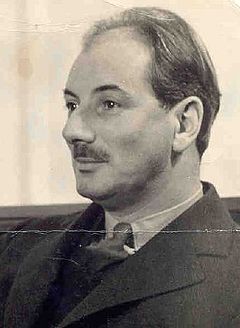
Lewis Mumford
American historian and sociologistWikipedia
16
MENTIONS
12
EPISODES
12
PODCASTS
Search complete. 16 mentions across 12 episodes found for "Lewis Mumford".
Sep 26, 2026

Jeff SpeckGUEST
... you know, in which everyone is surrounded by two tons of metal, uh, and a, and a ton of space, are really a super inefficient way to get around and, in fact, are, are really anti-city.
Jeff SpeckGUEST
Uh, Lewis Mumford, writing back in the middle of the 20th century, said, uh, "The right to, uh, bring a motor car to any address in a city is the right to destroy a city," and we've seen that happen.
Rick StevesHOST
Wow.
Rick StevesHOST
And in cities all over Europe now they have what's called a congestion fee, and unless you live there or have a special license for your car, if you'd go past that line into the center, you, you have a bill to pay.

Chadd WrightHOST
Uh, all right.
Chadd WrightHOST
Well, I'm gonna give you guys a quote here to think about as we move into our conversation today, and this is a quote from an American historian and a cultural critic named Lewis Mumford.
Chadd WrightHOST
All right? This quote comes from his book that was published in two volumes between 1967 and 1970, so that's been a while ago.
Chadd WrightHOST
This quote comes from his book called The Myth of the Machine.
13 MINS LATER
Chadd WrightHOST
Yeah.
Chadd WrightHOST
So, this, this was, um, again, digging more into what is the machine.
Chadd WrightHOST
I, I do think that going off of this quote that we just read from Mumford, where, um, he mentions the dominant minority, we identified them as, as elites, and then he talks about the individuals who become cogs in the wheel of the machine.
Chadd WrightHOST
Um, but then he goes on to talk about depersonalized collective organizations.

Paul KingsnorthGUEST
One of the authors I've used quite a lot in the book is...
Paul KingsnorthGUEST
It's Lewis Mumford, because Lewis Mumford, the great philosopher and critic of technology, wrote an enormous pair of books about the machine called The Myth of the Machine in the 1960s.
Paul KingsnorthGUEST
And he talks about the machine as being, and I find this quite convincing, a tendency within humanity.
Paul KingsnorthGUEST
So he traces the machine back to, for example, ancient Egypt, which he identifies as the first machine culture.

Nathan RadkeGUEST
And this is where, and this is why I'm on this podcast, not as an expert in science, but as somebody who can ramble on about philosophy.
Nathan RadkeGUEST
There is an American philosopher of technology named Lewis Mumford, and the Cold War turned into something that Mumford would have referred to as a mega machine.
Nathan RadkeGUEST
So what a mega machine is, it's a human-caused situation, often an undesirable one, often an absurd one.
Nathan RadkeGUEST
which starts to build momentum and inertia and develop an internal logic that justifies its continued existence and structure because of the industry that builds around it, because of the momentum that builds around it, that basically defends and justifies and even demands its continued existence.

Laurel LefkowNARRATOR
Burdick died in 1965, but his concerns about an automated state were bubbling up all over the place.
Laurel LefkowNARRATOR
In 1966, in The Myth of the Machine, the American critic Lewis Mumford lamented the rise of cybernetic intelligence, warning that under its automatic operation, man will become a passive, purposeless, machine-conditioned animal whose proper functions, as technicians now interpret man's role, will either be fed into the machine or strictly limited and controlled for the benefit of depersonalized collective organizations.
Laurel LefkowNARRATOR
Mumford described technological determinism, the idea that machines determine the course of history and represent a march of progress as a radical misinterpretation of the whole course of human development.
Laurel LefkowNARRATOR
This mistaken belief, he wrote in The New Yorker the next year, had to be abandoned if we are to get an adequate grip on our mechanized culture before we lose both our consciousness of human purpose and our confidence in being able to control our own creations.

Daniel Wortel-LondonGUEST
Yeah, so you've got in the 30s this wave of people who are criticizing the kind of go-for-broke speculation of the 1920s, and part of that is criticizing the real estate speculation.
Daniel Wortel-LondonGUEST
You have planners like Lewis Mumford, you've got housing advocates like Katherine Bauer, and they're all saying the for-private real estate market is just chaos, and we can't use it as a base for urban economies.
Daniel Wortel-LondonGUEST
Now, what's the alternative? For folks like Catherine Bauer, they're saying we need to build more public housing that's owned by folks not just interested in immediate for-profit sort of incentives, but are trying to meet the needs of an actually existing market, the large amounts of working class people in the city.
Daniel Wortel-LondonGUEST
And by doing that, you're going building housing that people need and that if you charge enough rent, you could potentially make them profitable.

Brian MerchantHOST
And I was like, that might be a bit much because as you said, there's some use cases like in public, if this was relegated to public institutions and research organizations where it's being used for potentially productive and benign purposes, you know, you could see some, there are like those handful of projects that get continually referred to, you know, preserving a language or doing this and that, which are some genuinely good stuff.
Brian MerchantHOST
But right now they function from where I'm sitting primarily as what, you know, Lewis Mumford would call a mega-technic bribe, right? It's like, oh, see, here's this one thing that they do that's so great.
Brian MerchantHOST
Like everything, meanwhile, the bulk of what they're actually doing.
Brian MerchantHOST
And there's no questions

Michael Abel DengGUEST
It's a 1930s Art Deco project, which was quite iconic.
Michael Abel DengGUEST
The historian Lewis Mumford called it America's best example of misplaced monumentality.
Michael Abel DengGUEST
What they did is they added an addition, which is kind of threaded into the old frame and then lifted above it.
Michael Abel DengGUEST
And there's this kind of folded geometry, very apparent.

Sarah FowlerHOST
Nothing is unthinkable, nothing impossible set to balanced, nothing impossible to the balanced person, provided it arises out of the needs of life and is dedicated to life's further development.
Sarah FowlerHOST
Lewis Mumford.
Sarah FowlerHOST
In recovery, we walk one foot in front of the other.
Sarah FowlerHOST
We live one day at a time.
2 more episodes mention Lewis Mumford.
Create an account to see the whole feed, search across every transcript, and follow the entities you care about.