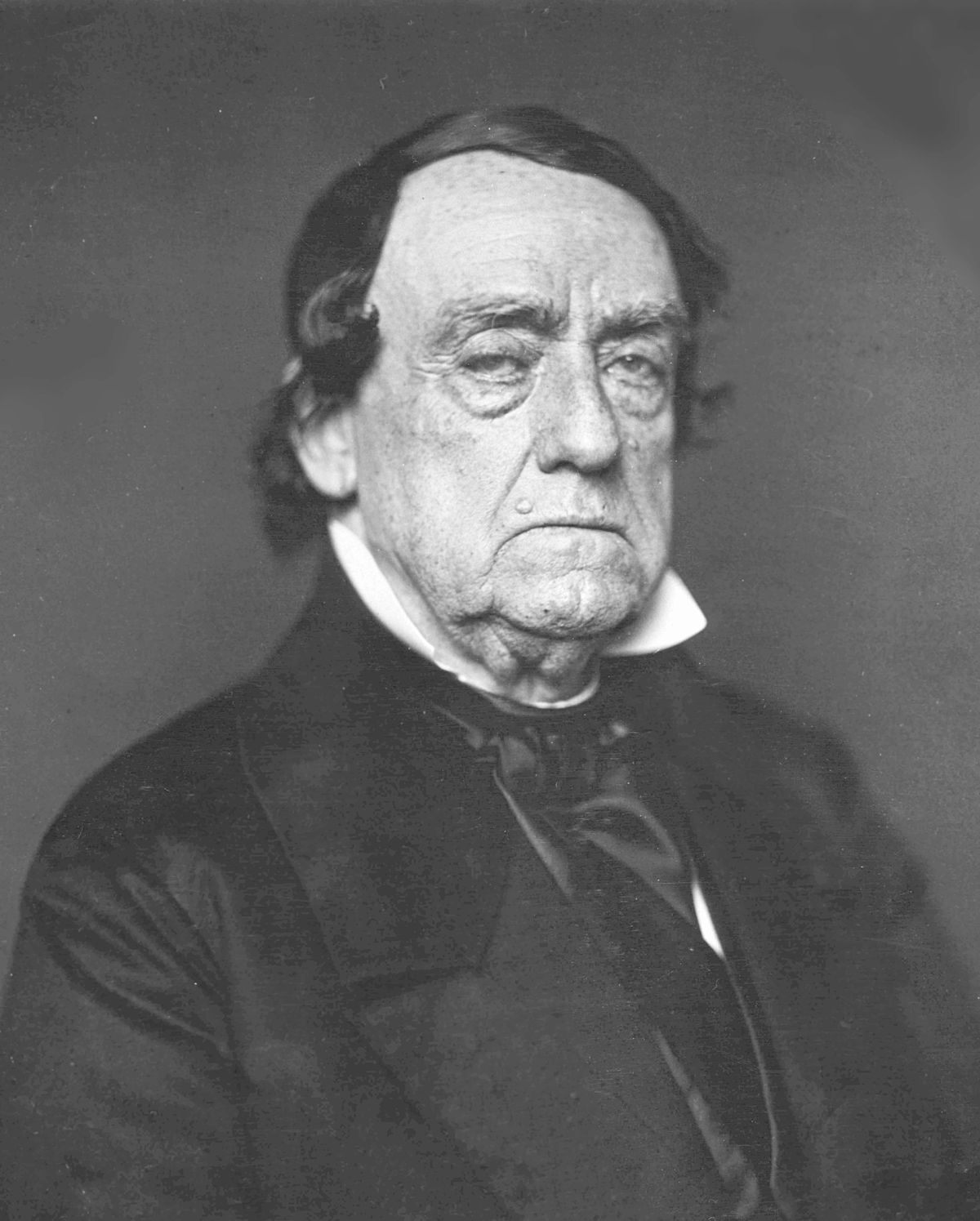
Lewis Cass
Former United States SenatorWikipedia
30
MENTIONS
12
EPISODES
10
PODCASTS
Search complete. 30 mentions across 12 episodes found for "Lewis Cass".
Sep 18, 2026

Ted LinhartNARRATOR
It often required four weeks or more for a letter from New England to reach Detroit, and the postage thereon was twenty-five cents.
Ted LinhartNARRATOR
General Lewis Cass, Misters Larned, Ten Eyck, Wetherall, Forsythe, John and Thomas Palmer and Judge Woodward, who afterwards made the plat of the city, were among the then prominent men of the territory.
Ted LinhartNARRATOR
In the same year, 1815, Uncle Harvey commenced blacksmithing on the ground where the Russell House now stands, making steel traps, axes and doing irregular custom work for the inhabitants.
Ted LinhartNARRATOR
There was but one other shop of the kind in Detroit, which was owned by a Frenchman named Peltier.

MWUSAHOST
He was a member of the Whig Party.
MWUSAHOST
And during the 1848 election, he defeated Lewis Cass.
MWUSAHOST
And he was a free soil candidate.
MWUSAHOST
I'm sorry.

Verla VieiraNARRATOR
In their efforts in this direction, they often found themselves in conflict with civil authorities who sometimes protected the traitors apprehended in such violations.
Verla VieiraNARRATOR
the fur trade continued in wisconsin while the population was primarily indian but by eighteen thirty five it was no longer of any significance in this area following the war of eighteen twelve the united states government set up fur trade factories at prairie du chien in green bay hoping by this means to control some of the evils one of the most vicious of which was the peddling of whiskey to the indians the whisky was usually diluted with water and adulterants such as turpentine or even corrosive acids added to restore the bite the government entry into the fur trade was unsuccessful the factors as the proprietors of the trade factories were called lacked experience in dealing with the indians they did not give credit advancements to them as did the other traders and the american fur company applied pressure on congress to end this system gradually this company acquired the fur trade monopoly in this area solomon juno milwaukee's famous founder was one of the american fur company's agents in what is now the state of wisconsin the gradual decadence of the fur trade of course increased the hardships of wisconsin tribes as settlers began encroaching on the indians land conflicts were inevitable john c calhoun the secretary of war in eighteen twenty five sponsored a plan for the removal of eastern tribes across the mississippi to the western plains it was believed that by furnishing them with equipment for hunting and farming they could survive readily and would be safe from further pressure by white homesteaders no one realized at this time how soon these western lands would be overrun by the relentless pressure of the american pioneer the land purchased from the indians was to be made available to american settlers the lands of certain tribes of wisconsin indians were to be included in this overall plan unfortunately for the smooth functioning of this operation the indians did not care to leave the land on which they and their ancestors had hunted for so long a time and travel to new hunting grounds in many instances they were not removed without a show of force sometimes with considerable blood being shed by both whites and indians In 1825, Lewis Cass and William Clark held a conference of Wisconsin tribes at Prairie du Chien.
Verla VieiraNARRATOR
They hoped to establish definite boundaries for the holdings of the different tribes in order to eliminate friction between them.
Verla VieiraNARRATOR
This would also facilitate future land purchases from the Indians.

speaker_15ADVERTISER
John C. Calhoun, the Secretary of War in 1825, sponsored a plan for the removal of eastern tribes across the Mississippi to the western plains.
Verla VieiraNARRATOR
it was believed that by furnishing them with equipment for hunting and farming they could survive readily and would be safe from further pressure by white homesteaders no one realized at this time how soon these western lands would be overrun by the relentless pressure of the american pioneer the land purchased from the indians was to be made available to american settlers the lands of certain tribes of wisconsin indians were to be included in this overall plan unfortunately for the smooth functioning of this operation the indians did not care to leave the land on which they and their ancestors had hunted for so long a time and travel to new hunting grounds in many instances they were not removed without a show of force sometimes with considerable blood being shed by both whites and indians In 1825, Lewis Cass and William Clark held a conference of Wisconsin tribes at Prairie du Chien.
Verla VieiraNARRATOR
They hoped to establish definite boundaries for the holdings of the different tribes in order to eliminate friction between them.
Verla VieiraNARRATOR
This would also facilitate future land purchases from the Indians.

John LinnellGUEST
James Buchanan, a moderate.
John LinnellGUEST
Lewis Cass, a general and expansionist.
John LinnellGUEST
From Nashville came a dark horse riding up.
John LinnellGUEST
He was James K. Polk, Napoleon of the stump.

Ted LienhartNARRATOR
In eighteen twenty-five, when but ten years of age, he feasted his eyes upon Lafayette during the latter's celebrated visit to the United States, and to the last declared that he had a vivid recollection of the lineaments of that distinguished personage.
Ted LienhartNARRATOR
Lewis Cass, De Witt Clinton, and other celebrities of his youth he also saw and heard at Lockport, while the presence in the village, on various occasions, of the noted Seneca chiefs, Tommy, Jimmy, Major Henry O'Beal, and others were to the young enthusiast in border history like visitations from a realm of fancy.
Ted LienhartNARRATOR
Lafayette was the subject of young Draper's first school composition.
Ted LienhartNARRATOR
His earliest article for the press, published in the Rochester Gem for April 6, 1833, was a sketch of Charles Carroll of Carrollton, the last of the signers.
Ted LinhartNARRATOR
It was located on Woodbridge Street, immediately in the rear of where the Fireman's Hall now stands.
Ted LinhartNARRATOR
Oliver Williams kept a tavern of less pretensions on Jefferson Avenue under the old elm tree, and another tavern was kept by the father of the late Judge C. W. Whipple down near the Cass farm.
Ted LinhartNARRATOR
These were the hotel accommodations of that period of the village of Detroit, then containing about one thousand inhabitants.
Ted LinhartNARRATOR
Emerson, Mack, and Conant were the leading mercantile house in Detroit at that time.
Ted LinhartNARRATOR
The mails from the East were very irregular and arrived only semi-occasionally.
Ted LinhartNARRATOR
It often required four weeks or more for a letter from New England to reach Detroit, and the postage thereon was twenty-five cents.
Ted LinhartNARRATOR
General Lewis Cass, Misters Larned, Ten Eyck, Wetherall, Forsyth, John and Thomas Palmer, and Judge Woodward, who afterwards made the plat of the city, were among the then prominent men of the territory.
Ted LinhartNARRATOR
In the same year, eighteen fifteen, Uncle Harvey commenced blacksmithing on the ground where the Russell House now stands, making steel traps, axes, and doing irregular custom work for the inhabitants.

Ted LinhartNARRATOR
In 1825, when but ten years of age, he feasted his eyes upon Lafayette during the latter's celebrated visit to the United States, and to the last declared that he had a vivid recollection of the lineaments of that distinguished personage.
Ted LinhartNARRATOR
Lewis Cass, DeWitt Clinton, and other celebrities of his youth he also saw and heard at Lockport, while the presence in the village, on various occasions, of the noted Seneca chiefs Tommy Jimmy, Major Henry O'Bail, and others were to the young enthusiast in border history like visitations from a realm of fancy.
Ted LinhartNARRATOR
Lafayette was the subject of young Draper's first school composition.
Ted LinhartNARRATOR
His earliest article for the press, published in the Rochester Gem for April 6, 1833, was a sketch of Charles Carroll of Carrollton, the last of the signers.

John KosmalskiGUEST
The other one not quite so obvious.
John KosmalskiGUEST
This gentleman here, this sinister-looking character, [laughing] his name is Lewis Cass.
John KosmalskiGUEST
You probably have heard of the Cass Corridor.
John KosmalskiGUEST
Yeah, it's a famous part of old Detroit, and it's now, I think they call it...

Ted LinhardtNARRATOR
In 1825, when but ten years of age, he feasted his eyes upon Lafayette during the latter's celebrated visit to the United States, and to the last declared that he had a vivid recollection of the lineaments of that distinguished personage.
Ted LinhardtNARRATOR
Lewis Cass, De Witt Clinton and other celebrities of his youth he also saw and heard at Lockport, while the presence in the village, on various occasions, of the noted Seneca chiefs, Tommy Jimmy, Major Henry O'Ball and others were to the young enthusiast in border history like visitations from a realm of fancy.
Ted LinhardtNARRATOR
Lafayette was the subject of young Draper's first school composition.
Ted LinhardtNARRATOR
His earliest article for the press, published in the Rochester Gem for April 6, 1833, was a sketch of Charles Carroll of Carrollton, the last of the signers.
2 more episodes mention Lewis Cass.
Create an account to see the whole feed, search across every transcript, and follow the entities you care about.