Levelized cost of electricity
48
MENTIONS
15
EPISODES
14
PODCASTS
Search complete. 48 mentions across 15 episodes found for "Levelized cost of electricity".
Oct 30, 2026

David LeitchHOST
But I just wanted to make an observation that in the short run, the softening phase that you've talked about, whilst we're building the new supply, we have to keep the old supply open.
David LeitchHOST
And this means, almost certainly, that the capture prices that solar and wind and batteries can get are going to be below their long-run marginal cost, their LCOE for their capital types.
David LeitchHOST
And indeed, coal and gas plants will also earn less than they really need and will also have to be supported because definitionally, during the transition, you're running oversupply.
David LeitchHOST
And I think market PPAs and market designs need to think about this.
David LeitchHOST
Funnily enough, in the longer run, I'm actually less worried, conceptually, whilst it would be nice to have a guaranteed takeout, in the end, the system should settle where Prozix earned their LCOE.
David LeitchHOST
That's what a good designed market actually delivers.
David LeitchHOST
Sorry.

Scott TinkerGUEST
A lot of places, that's true.
Scott TinkerGUEST
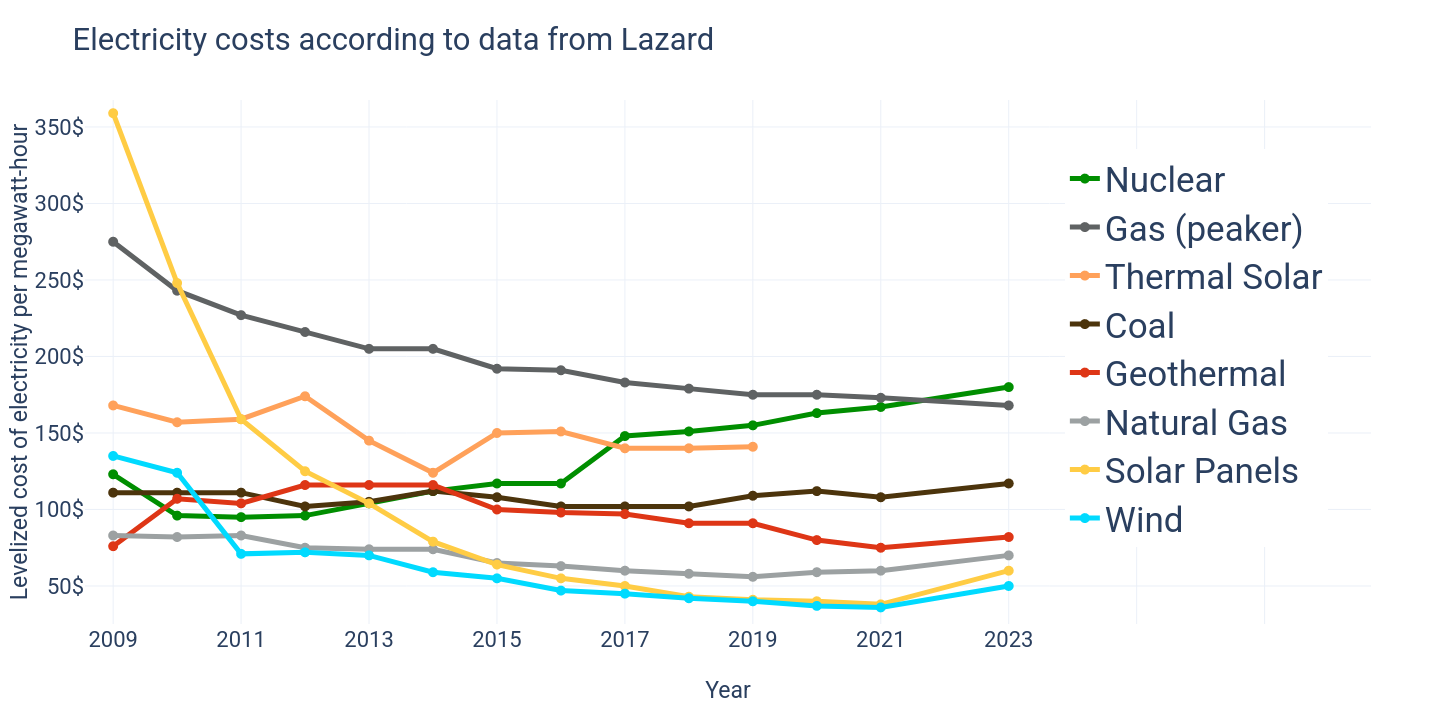
So what's the difference here? When you hear they're the cheapest, it's talking about a measure that came out of Lazard called LCOE, the levelized cost of electricity or energy.
Scott TinkerGUEST
Levelized,
Anthony FatseasHOST
and it sounds levelized.

Huimin FengGUEST
According to Envision, the turbine has been designed to meet European offshore operating conditions and regulatory requirements.
Huimin FengGUEST
And Envision also focused particularly on highlighting the turbine's potential to support reductions in levelized cost of energy, so LCOE.
Bayzard AyoubHOST
And in terms of Envision's strategy, how do you think it compares based on what they've stated so far with the approach that has been taken by Ming Yang in trying to enter the European market?
Huimin FengGUEST
Well, Envision's approach appears to be product focused at this stage, concentrating on promoting its technology.

Gerard ReidHOST
Laurent, I'm really looking forward to this conversation.
Gerard ReidHOST
We're going to talk about LCOE, Levelized Cost of Energy.
Gerard ReidHOST
And actually, Lazard's really have made this LCOE their term over the last, I don't know how long it's been.
Gerard ReidHOST
It's been 15, 20 years of this report coming out every year.
Gerard ReidHOST
It's amazing.
George BilicicGUEST
And these are also places where you can build things.
George BilicicGUEST
In the Northeast, California, Pacific Northwest, there's power demand, but it's very difficult to build anything in those areas.
Laurent SegalenHOST
Lazar is known for a lot of things, but in particular, when it comes to energy, you put together, and I guess that's the 18th year, your LCOE report.

Hill VadenHOST
And it sounds like there is appropriate cautious optimism around the opportunity for cost reductions based on what we saw in shale.
Hill VadenHOST
And the technology is already at a decent, you know, it's relatively comparable on an LCOE basis.
Hill VadenHOST
So... you know plenty of room for potential improvement there so we'll hand off to them now
Sam HumphreysHOST
enjoy
17 MINS LATER
Hill VadenHOST
I think nuclear is perhaps the closest.
Hill VadenHOST
And some would describe that as a premium electron, so a higher cost electron.
Hill VadenHOST
Can you talk about what some of those costs look like on an LCOE or levelized cost of electricity basis? and where you see some of the things going in terms of that LCOE becoming more competitive.
Melissa GreigGUEST
Sure.

Tim MontagueHOST
Yeah, let's talk about the quality issues raised.
Tim MontagueHOST
PV systems LCOE more than 20%.
John WeaverHOST
Everybody know what LCOE is? Levelized Cost of Electricity.
Tim MontagueHOST
Story in PV tech.
John WeaverHOST
So essentially, the failures of components, the downtimes of inverters, and the other negatives will lower the amount of electricity you generate, And increase the cost to get it working, which effectively makes the price of the energy you are allowed to sell to be financially viable 20% higher, which is a lot.
John WeaverHOST
So, oh, I subscribe to PV Tech, Timothy.
John WeaverHOST
I can jump in there for you.
John WeaverHOST
But they said that one line that I really liked, they said, our modeling reveals that the gap between an A-rated system and an F-rated system would drive the LCOE by 20%.

Jason BenchapongwimonGUEST
And so some of that offtake that's helping that FID may change.
Jason BenchapongwimonGUEST
And I suppose a greater indication of a market's health cost-wise, especially, would be sort of offtake awards happening now and seeing where... what LCOE developers are looking at now compared to what they were looking at three, four years ago.
Jason BenchapongwimonGUEST
Yeah,
Dan WisemanHOST
and I guess with FID as well, that's the turning point for a project.
Laurent SegalenHOST
And they have convinced some capital markets that they can do better.
Laurent SegalenHOST
And as you said, reach a level of economy where by and large, I don't know the price of the LCOE per megawatt hour because we see pretty much everything, but somewhere between $100 and $200 per megawatt hour.
Laurent SegalenHOST
Now, some people may say it's expensive, but as you pointed out at the beginning, there's a lot of value in the power which is delivered clean 24-7 and so on.
Laurent SegalenHOST
So that whole crowd, are they all the same? That whole private investors in SMR or developer?

Nico JohnsonHOST
I started by asking him what he was trying to fix.
David SiapGUEST
LCOE, levelized cost of energy, is a typical metric that we use to compare energy resources, and it's great on a project basis, but I think once you zoom out, it tends to fall, uh, short, uh, when we wanna talk about, you know, reliability, when we wanna talk about, uh, firming, right? That typically needs-- Uh, there's extra steps there, right? And so the marginal cost, firm cost capacity, the MCC, uh, takes that into account.
David SiapGUEST
It, it in- incorporates the, uh, this concept called the effective-- marginal effective load carrying capacity of, uh, a resource, which is essentially how much a resource will contribute to when, uh, when the grid is stressed during peak hours.
David SiapGUEST
Maybe that's the hottest summer day or these weird winter peaks that we're seeing.
David SiapGUEST
... as load grows, the peak grows, and that's how the build, uh, the, the grid rather, is, is built and planned and operated.
David SiapGUEST
And so I think the MCC better reflects that.
David SiapGUEST
In combination with LCOE, you get a pretty s- good picture, a better picture of, of, uh, a resource's true cost.
Nico JohnsonHOST
Is there an example that might be useful around what is a decision that I might make one way using LCOE that I would look at differently using MCC? In creating this metric, what is it that...

Blake MartinGUEST
So that's where primarily benefits from economies of scale.
Blake MartinGUEST
Now, when you're talking about solar technology, you really have to look at LCOE, which really considers the lifetime of the solar panel and the amount of power that it can output.
Blake MartinGUEST
And this is critically important because the largest solar industry is not necessarily rooftop solar that everybody imagines.
Blake MartinGUEST
It is industrial scale solar.
5 more episodes mention Levelized cost of electricity.
Create an account to see the whole feed, search across every transcript, and follow the entities you care about.